_1 The Stair maze

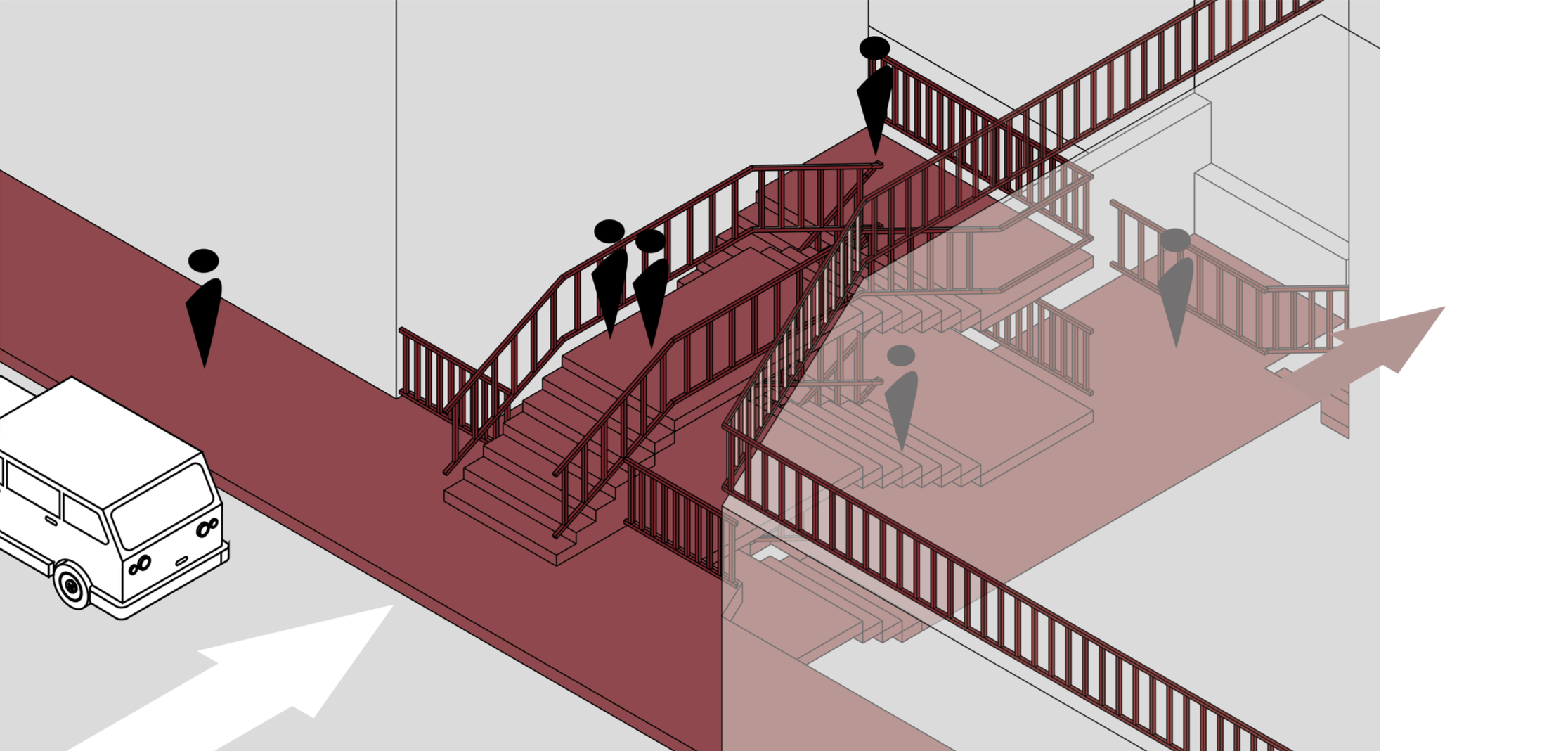
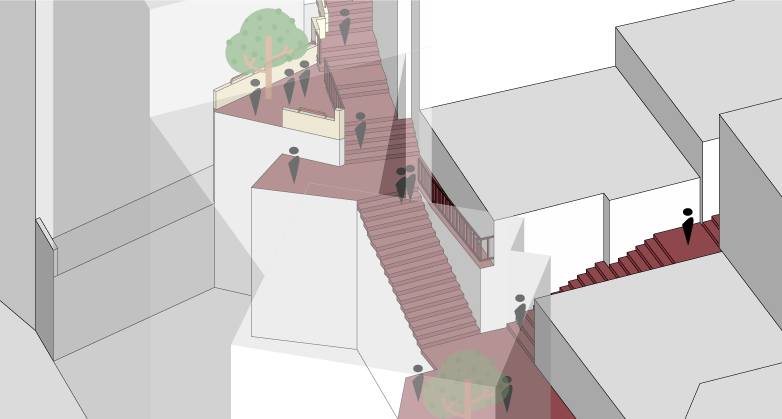
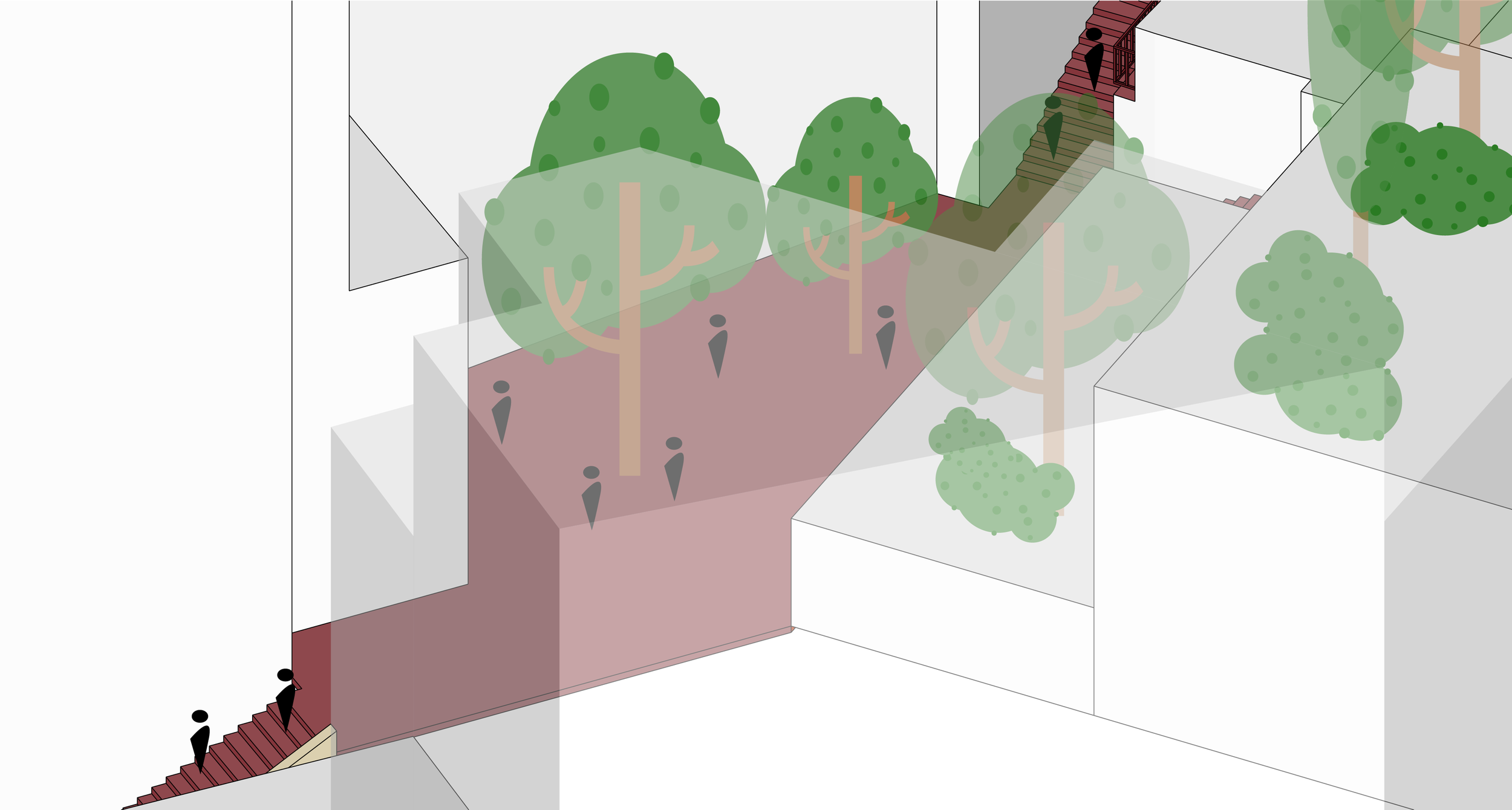
The stairs connect two different heights within the city, not only bridging a 14-meter elevation difference but also functioning as an infrastructural element linking residential buildings in Chongqing. Locals use them to access their homes, while others rely on them as a passage between different points in the city. Compared to walking the height difference, the stairs provide a more convenient and accessible route.
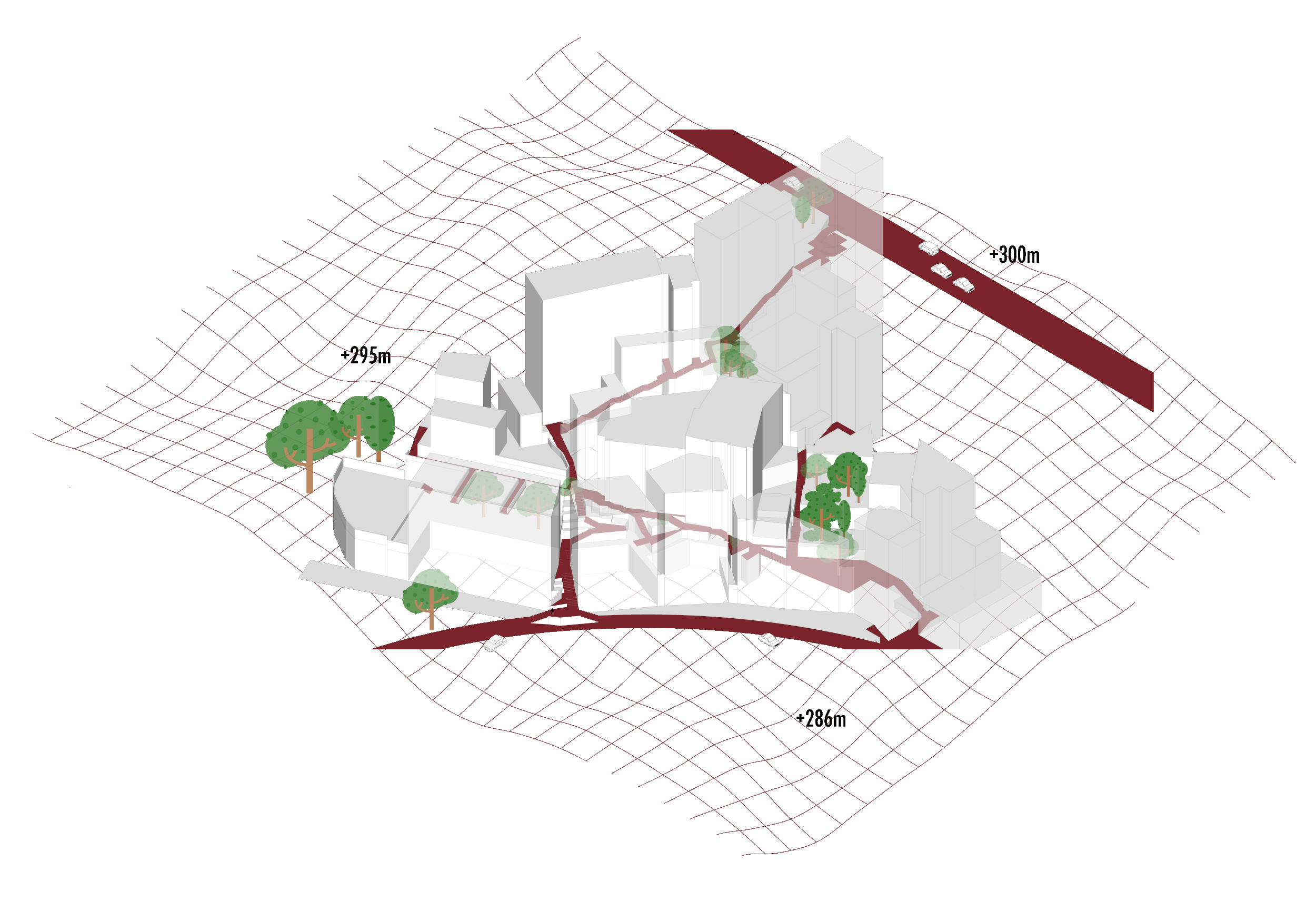

3D rendering of an urban landscape showing buildings, trees, roads, vehicles, and topographical grid lines with measurements in meters.
Maroon-colored map marker with the number one in white inside a teardrop shape.
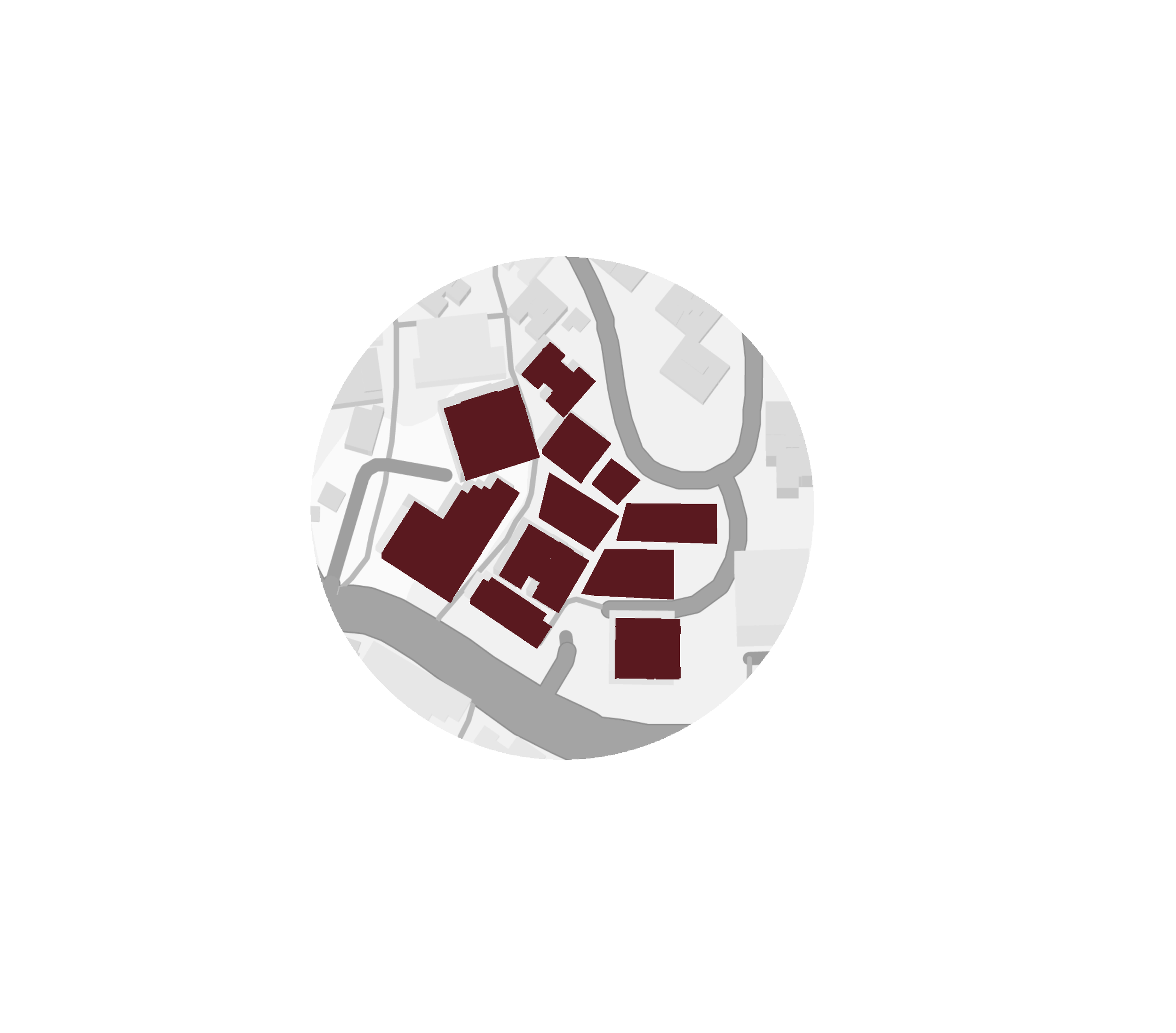
Map of a college campus highlighting specific building areas in dark red.
Isometric illustration of a multi-level staircase with five black human icons positioned at various points, a white vehicle at the bottom left, and arrows indicating movement directions.
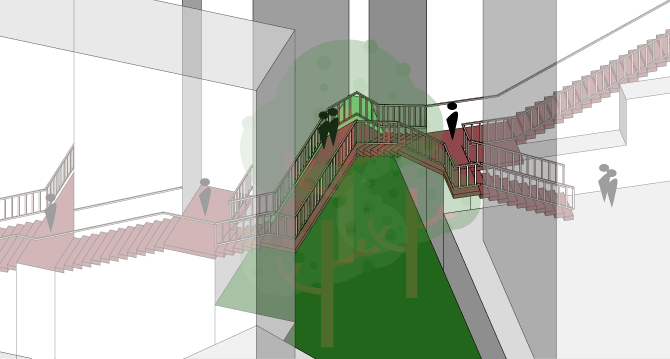
A digital rendering of an indoor multi-level staircase with people walking on it, surrounded by modern architectural design and a green tree silhouette in the center.

To assist residents in navigating this complex urban terrain, the railings are painted red, serving as a visual guide. This color-coded system helps pedestrians find their way efficiently through the intricate stair network. Additionally, bridges integrate with the stairs, further connecting residential blocks and mitigating the height disparity.
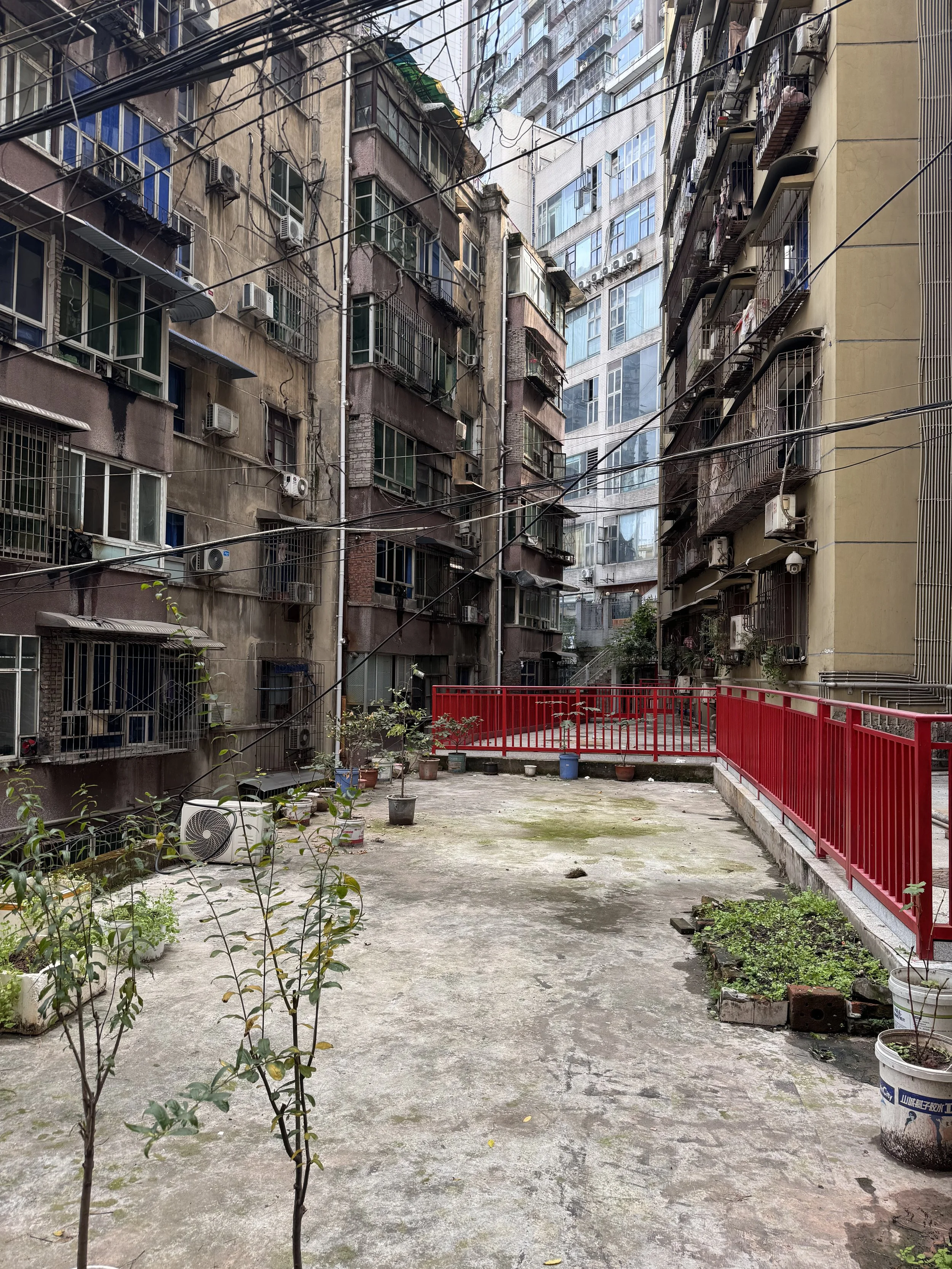
An urban courtyard surrounded by tall, weathered apartment buildings with numerous windows, some with air conditioning units. The courtyard has potted plants, a concrete surface with patches of moss, and a bright red railing along one edge, creating a stark contrast against the worn buildings.

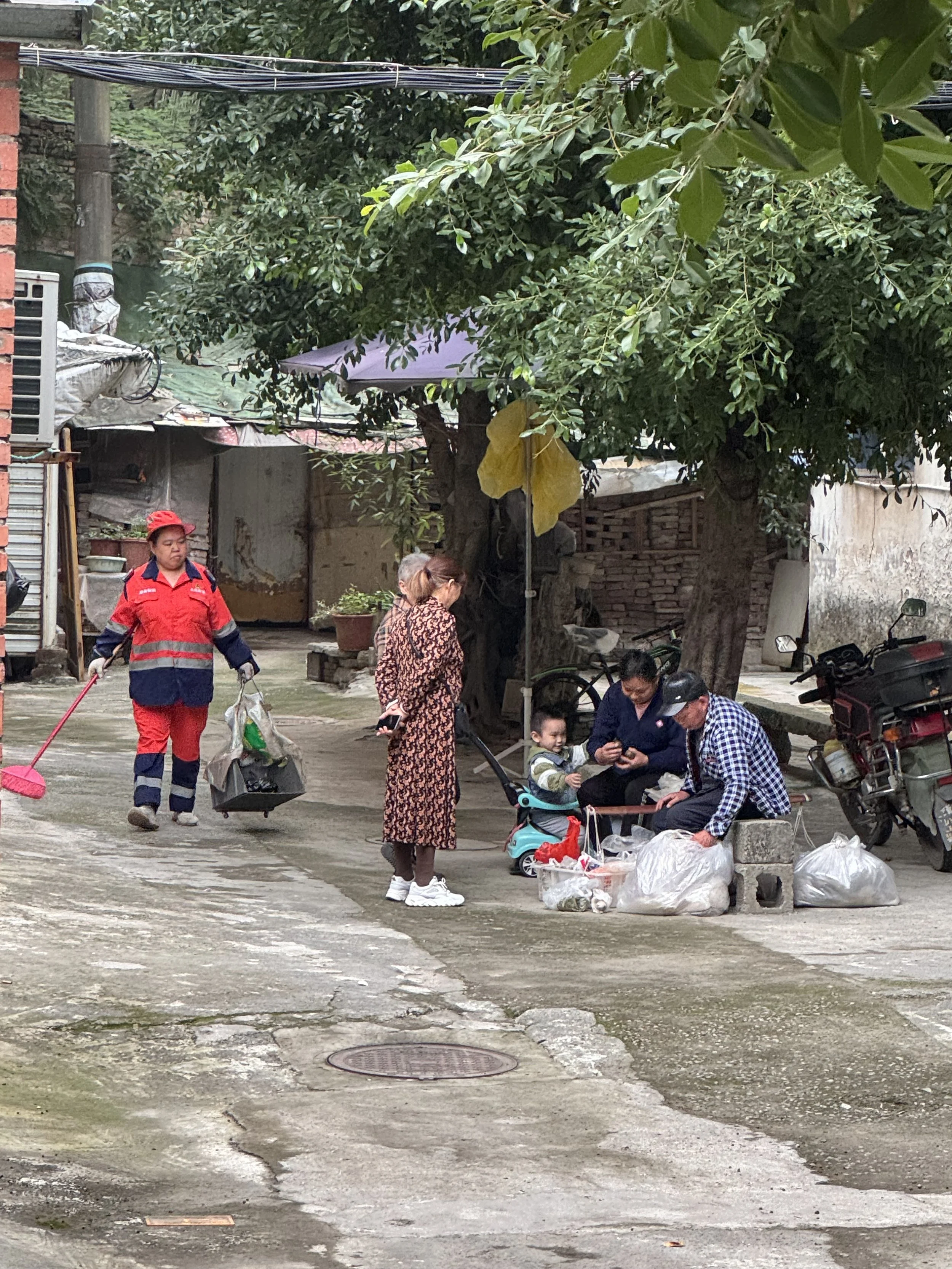
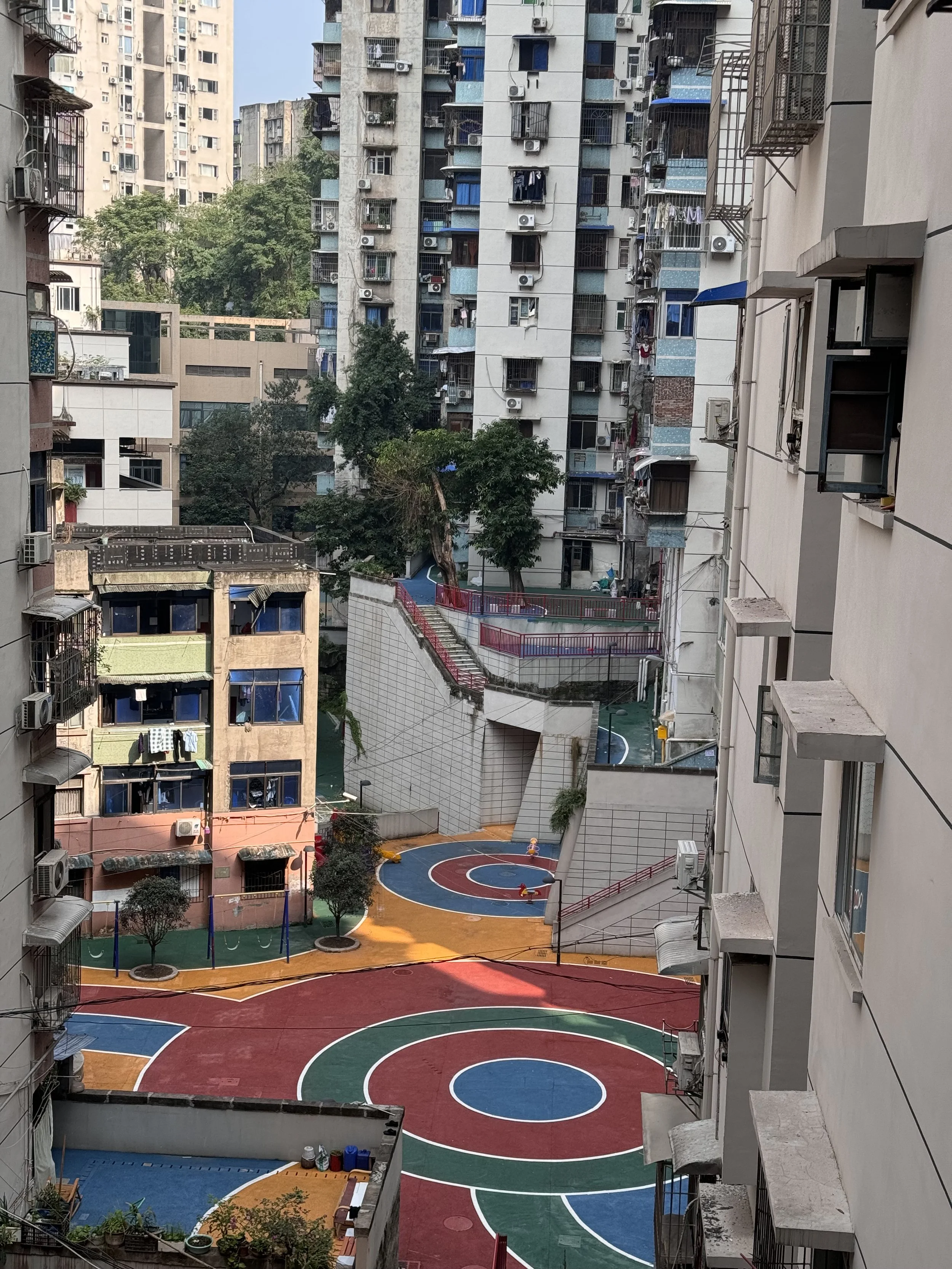
Within this network of stairs, social pockets are strategically incorporated, offering spaces for pedestrians to rest and interact. These pockets are equipped with benches for seating and trees for shade, creating a comfortable and inviting environment. Some of these spaces are wider and more expansive, functioning as entry points to buildings and residential blocks. Additionally, intermediate spaces between structures serve as active social hubs, accommodating parks, basketball courts, playgrounds, or simple resting areas, thus enhancing the quality of public space and fostering community engagement.
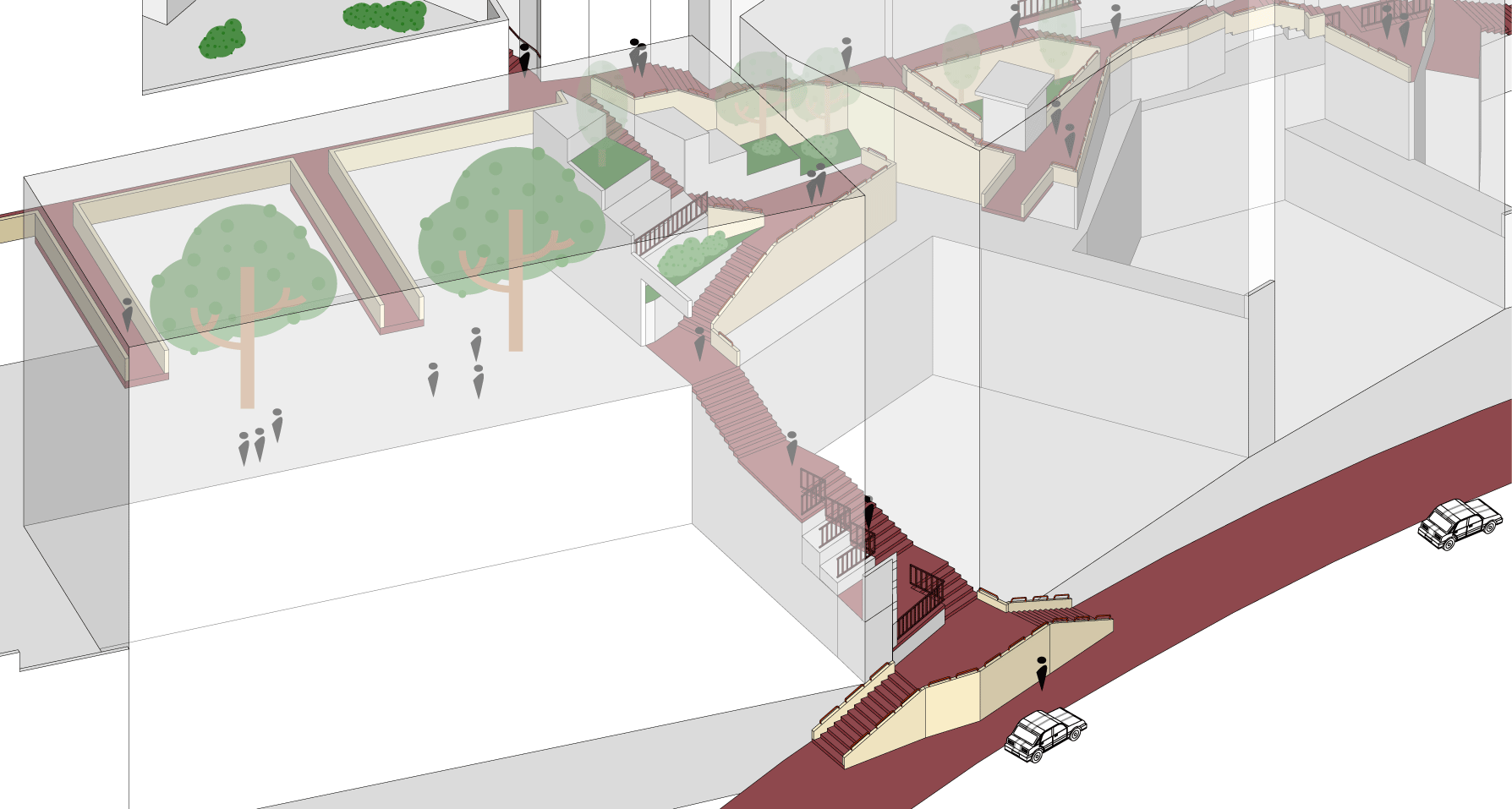
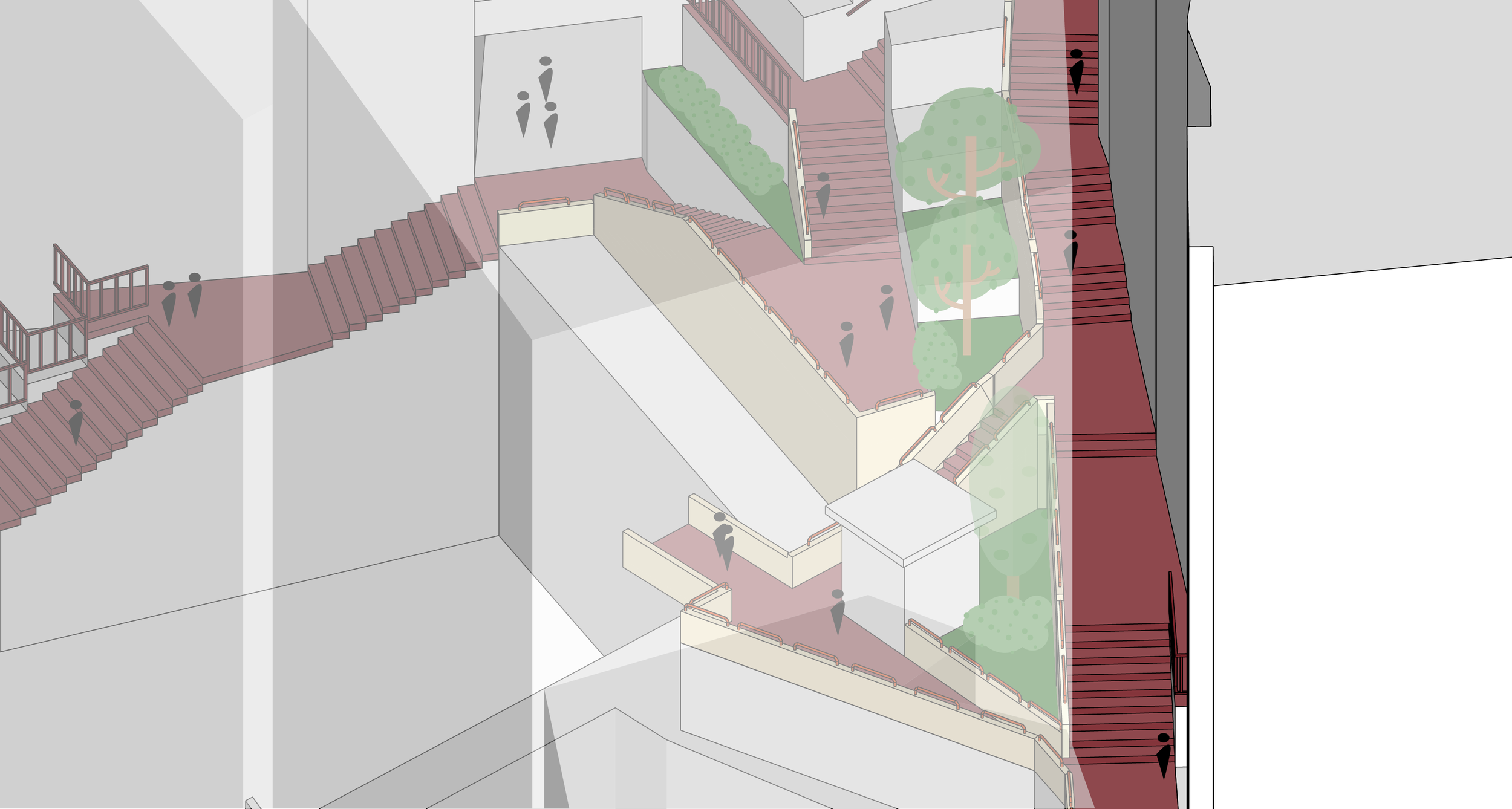
A digital illustration of an outdoor urban space with staircases, pathways, trees, and people walking around.
A digital rendering of a multi-level outdoor staircase and walkway with trees and green shrubs, featuring several people walking on the stairs and pathways.
Illustration of outdoor stairs with several people walking, tree, and urban buildings in the background.
An isometric illustration of a backyard with trees, bushes, and stairs leading to a small red house. The yard contains several large trees with round green foliage, smaller bushes, and a shaded pathway. There are two black figures walking down the stairs and another figure near the house, which has a staircase and a door.
A group of people, including a child, gathered around on a street corner. There are three adults and one child. The adults are sitting and standing near plastic bags with items, possibly selling or trading. One woman in a red and navy uniform is sweeping the street. There are bikes and motorcycles parked nearby under trees providing shade.

Due to the varied topography, certain building façades remain shielded from sunlight by the mountain. To address this, a gap is maintained between the buildings and the mountain face, connected by bridges. This space not only improves sunlight exposure but also creates shaded entry areas with trees and additional social spaces, further enriching the urban environment.
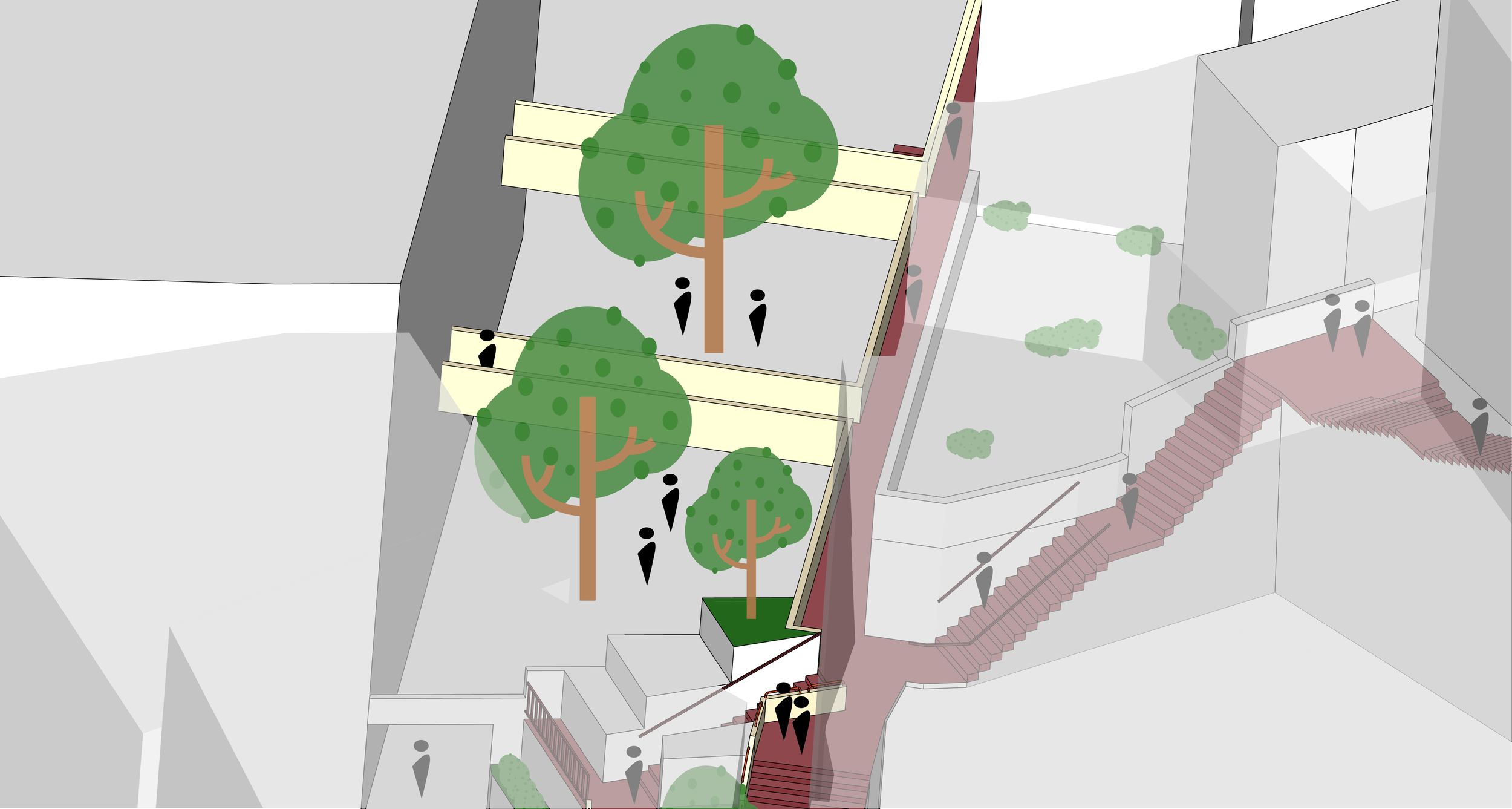
An architectural rendering of an outdoor stairway and walkway with trees, shrubs, and people walking around.
View of residential high-rise buildings surrounding a colorful playground with basketball courts and trees.

Lessons learned

Stairs for transportation, and connecting infrastructure in the city.

Number one inside a red circle.

Railing for navigation.

Number 2 inside a maroon circle

Social pockets for rest, informal activities, social interaction and cultural.

Number three inside a red circle with a black background.