
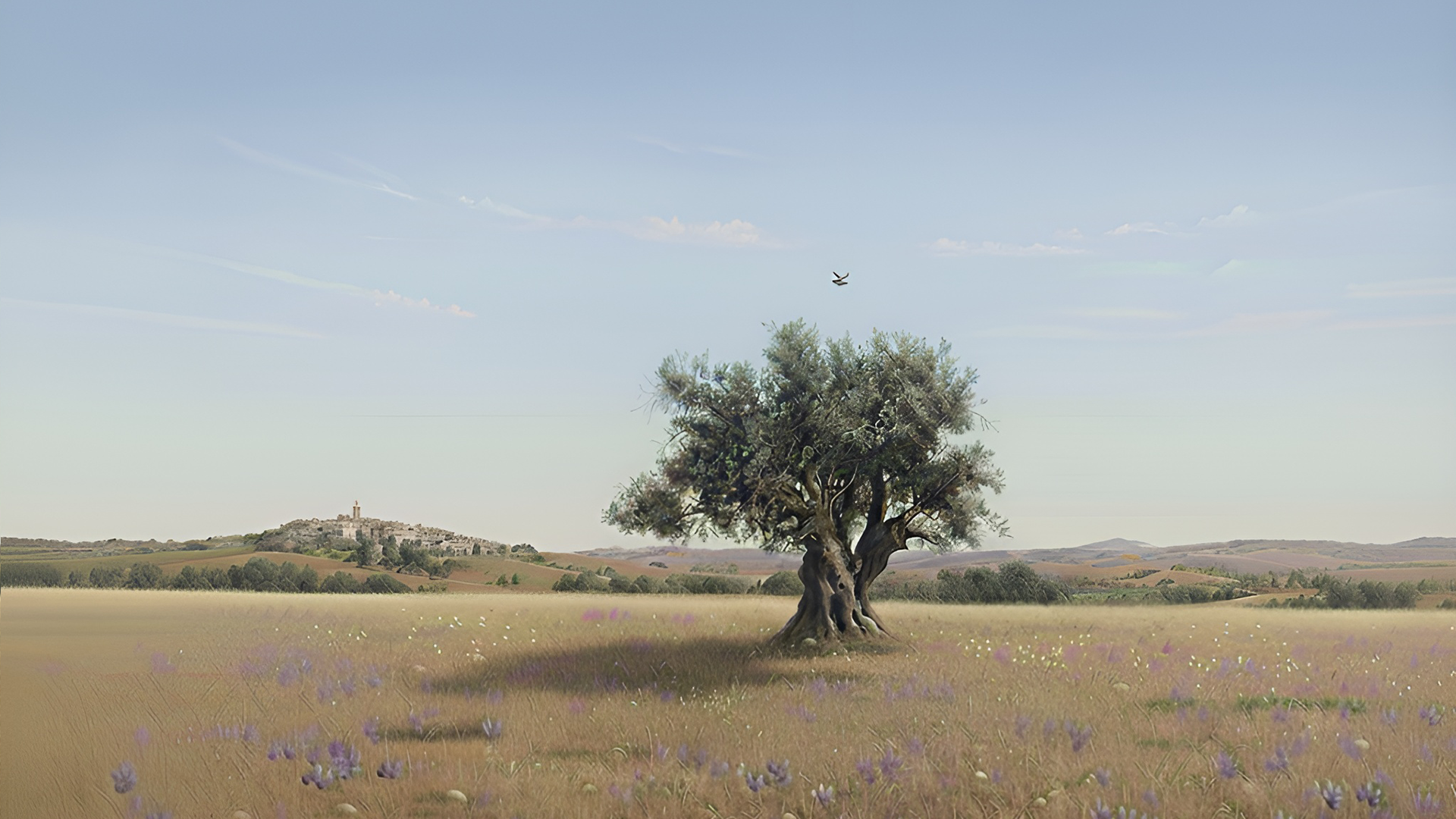
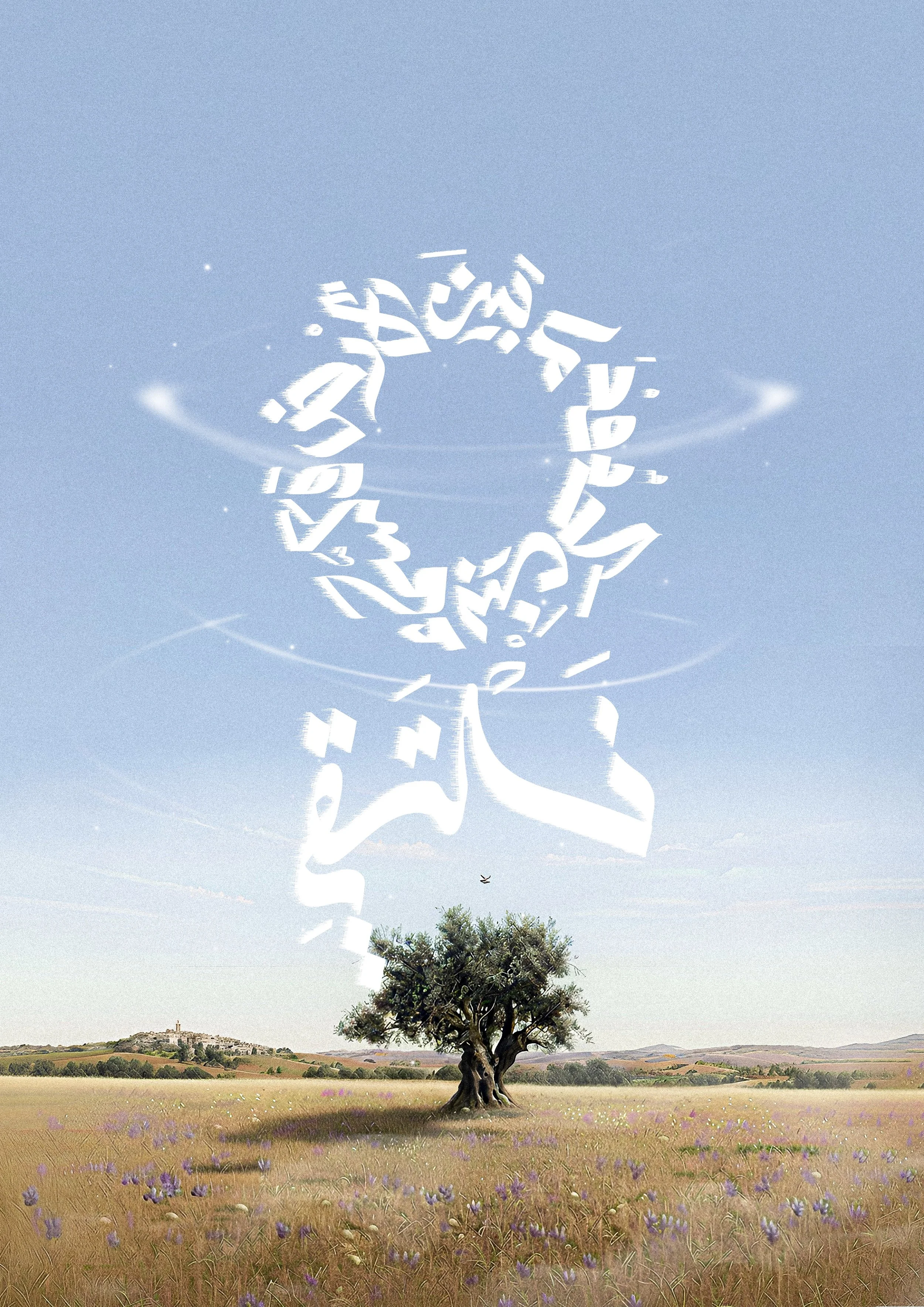
Between land and sky, between borders, we meet
The exhibition is a collaboration with MaMA (Media and Moving Arts) in Rotterdam. The exhibition explores Arab identity in a Dutch context. This exhibition space is an in-between space, representing the in-between world that the Arab diaspora navigates within. The space is a vessel connecting culture, religion, and languages, where the visitor navigates between them. Experiencing bicultural identity and, at the same time, connecting with stories and learning from other cultures, enriching their view.
The new generation within the Arab diaspora often oscillates between two lenses: a traditional one, rooted in inherited practices, and an Orientalist one, formed by Eurocentric stereotypes and biased perceptions. Both are as overwhelming as they are inaccurate, obscuring what truly connects young people in the Arab diaspora: a shared experience of living on the threshold between two worlds – balancing between Dutch and Arab, between past and present, between home and elsewhere.
This hybrid experience is centered in the exhibition Between Land and Sky, Between Borders, We Meet. Here, the visitor is encouraged to develop a unique perspective – one that reclaims and redefines Arab identities, moving beyond classical notions and contemporary political framings. Through the diverse perspectives and stories of a collective of artists living in the Netherlands and originating from West Asia and North Africa (WANA), the exhibition transcends imposed boundaries, with art as its compass. Beyond assumptions, prejudice, and inherited narratives,Between Land and Sky, Between Borders, We Meet creates a space where connection outweighs the borders that separate Arabs. One where the diaspora is no longer the subject of the story, but its storyteller.
The exhibition "Between land and sky, between borders, we meet" was on display from 5 december 2025 till 1 februari 2026 @mamarotterdam
Location
Rotterdam
Year
2025 - 2026
Space
MaMA
(Media and moving Arts)
Role
Curator
Collaborators
Fares Whbe
Joelle Deeb
Leila Ali Deeb
Saffa Khalil
Siwar Kreytem
Younes Chergui
Guests events
Razeen
Hasan Hashas
Project
Art exhibition
Cultural events
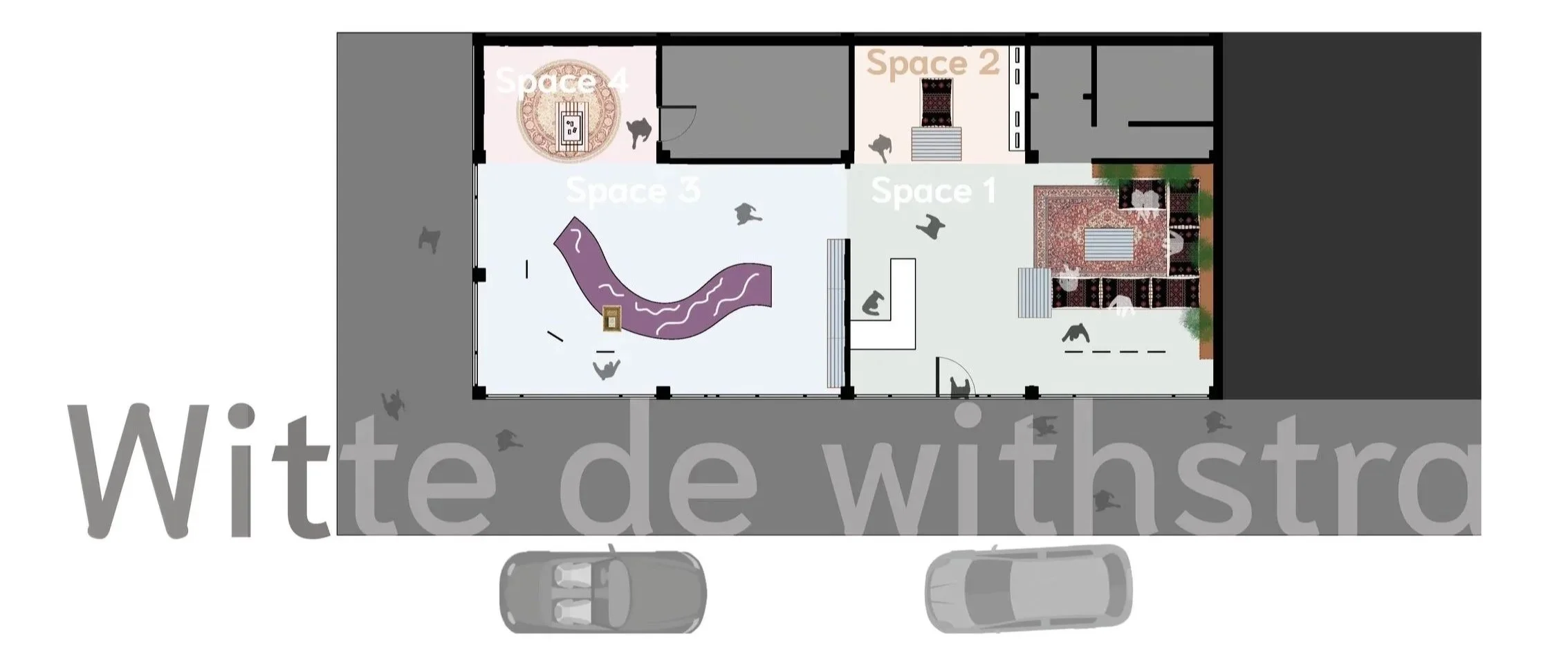
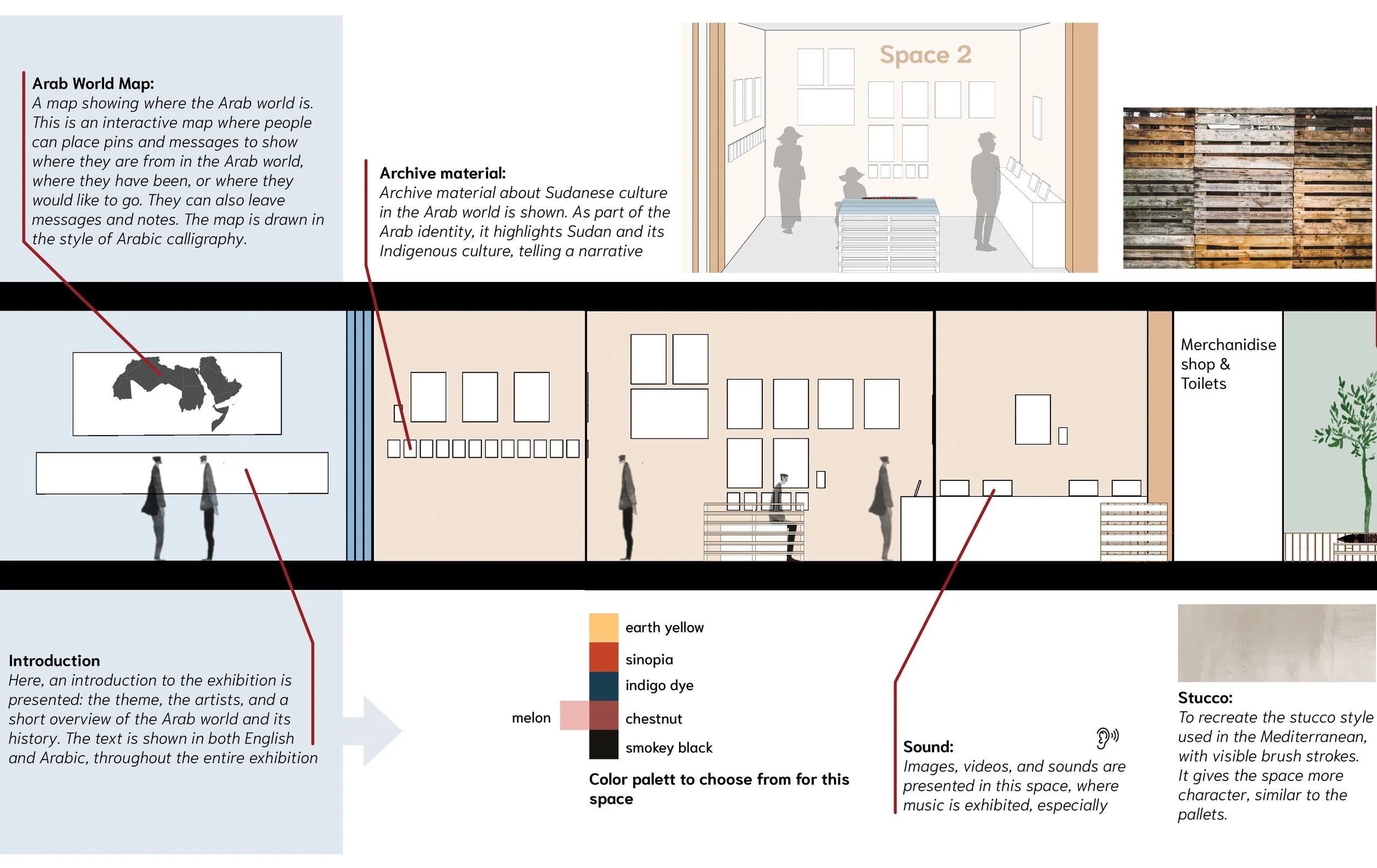
Floor plan concept The exhibition consists of four spaces that will host artists from different regions in West Asia and North Africa living in the Netherlands. These spaces represent different regions of the Arab world. Their art represents stories of the Arab diaspora in the Netherlands. Two of the spaces will showcase the tradition and history of the existing Arab culture, taking the visitor into a nostalgic experience. The other two spaces show art and contemporary stories of the Arab diaspora in the Netherlands, allowing the visitor to relate to other Arab diaspora.
Space 1 Mashriq
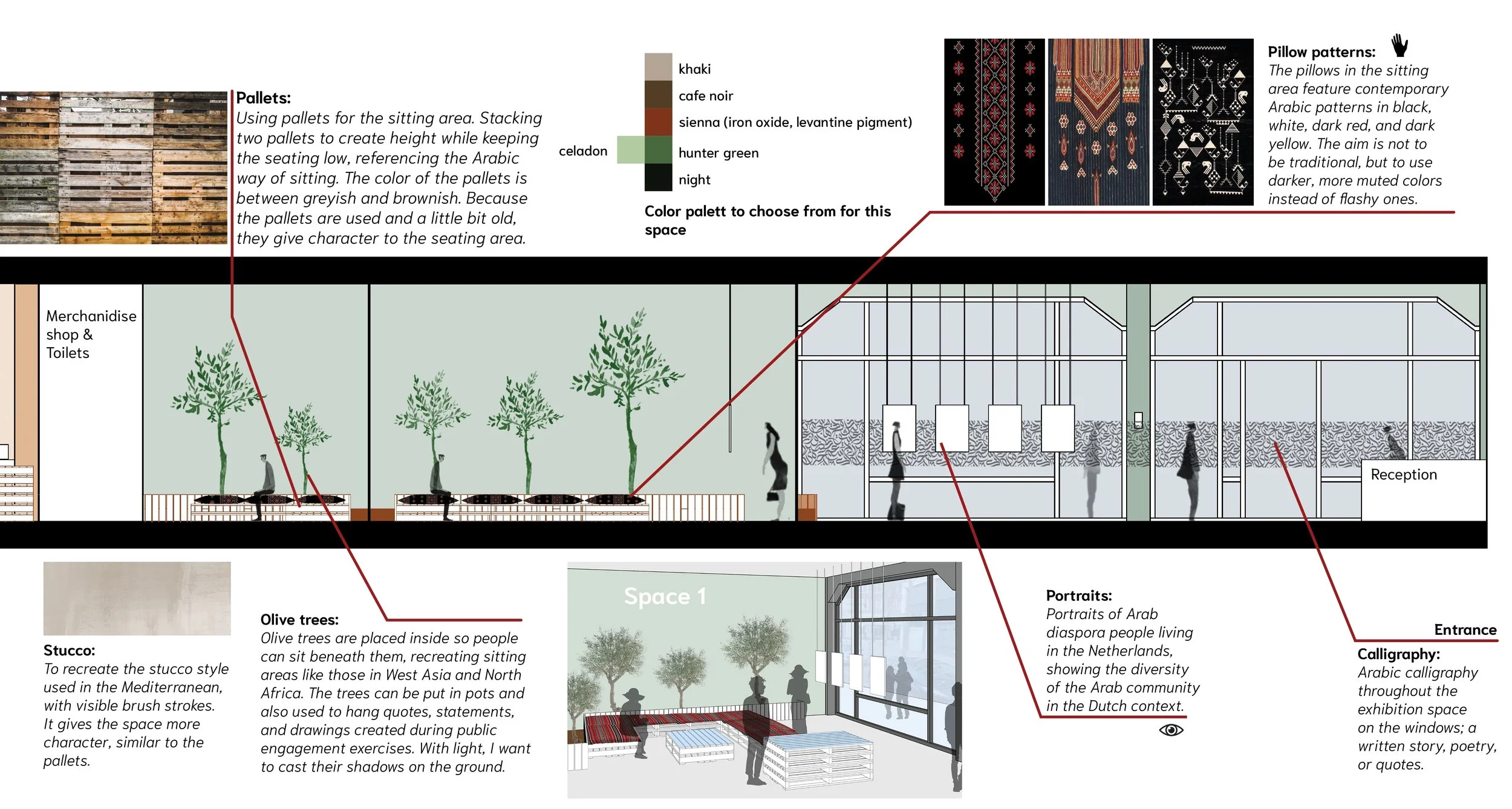
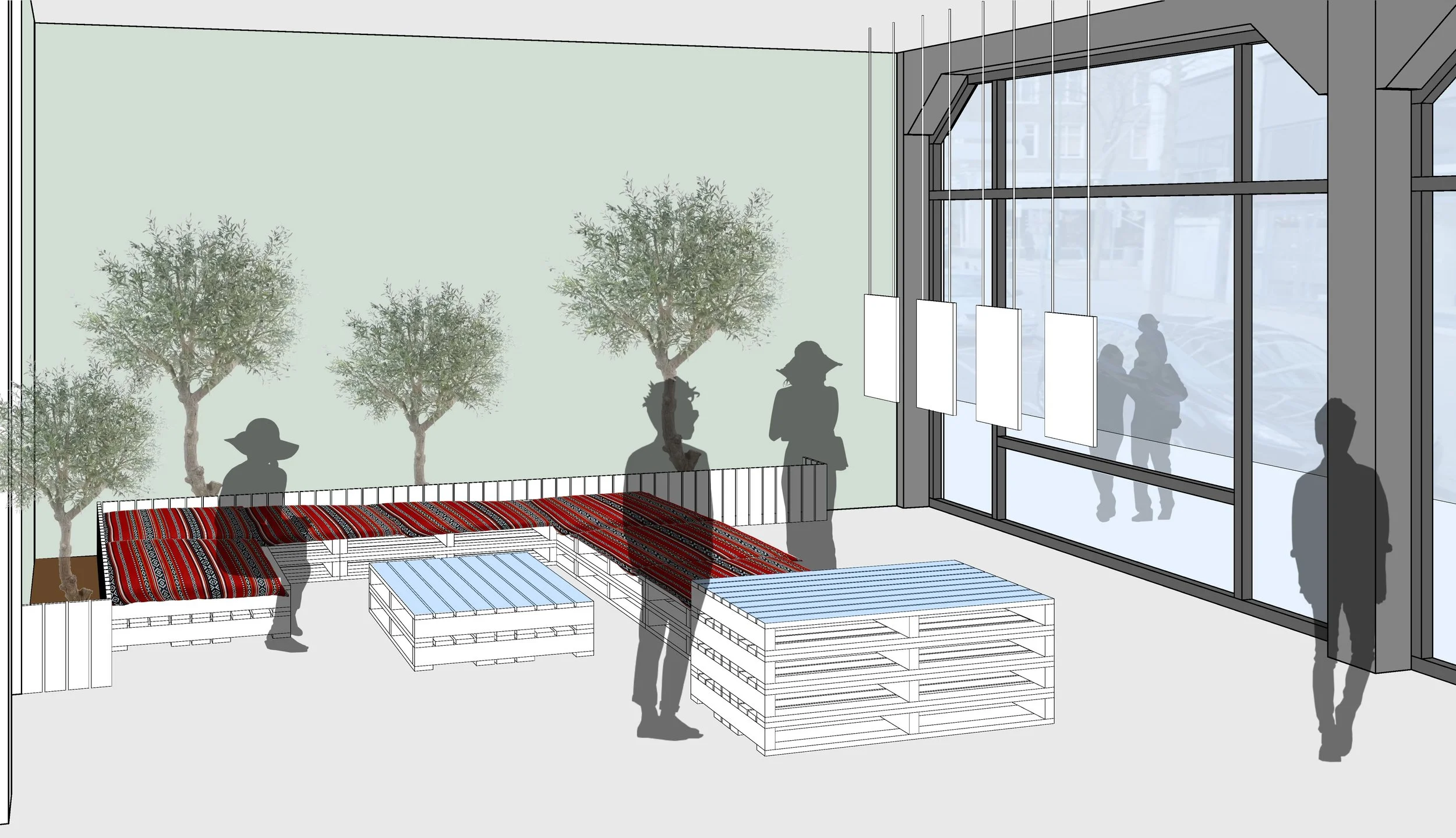
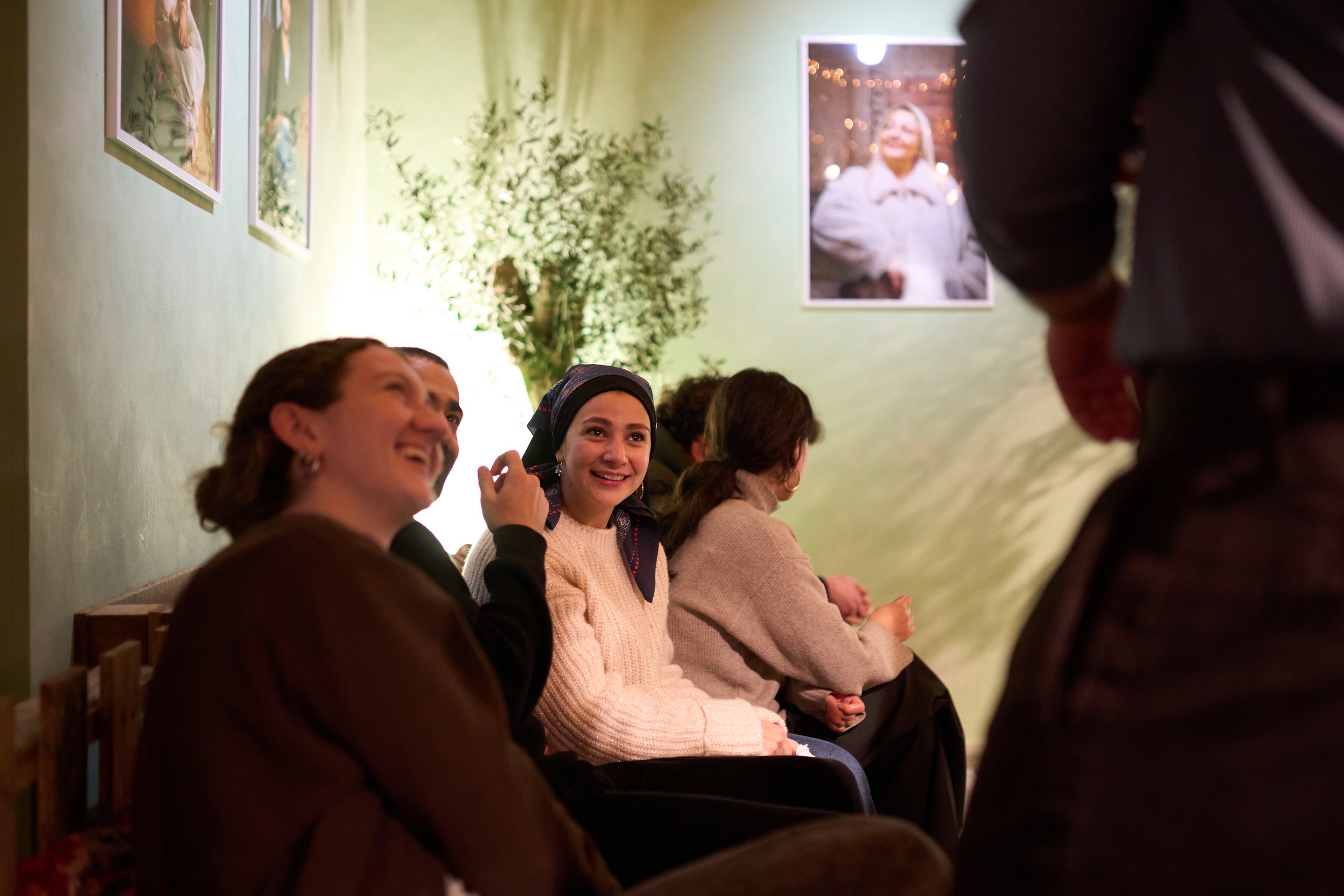
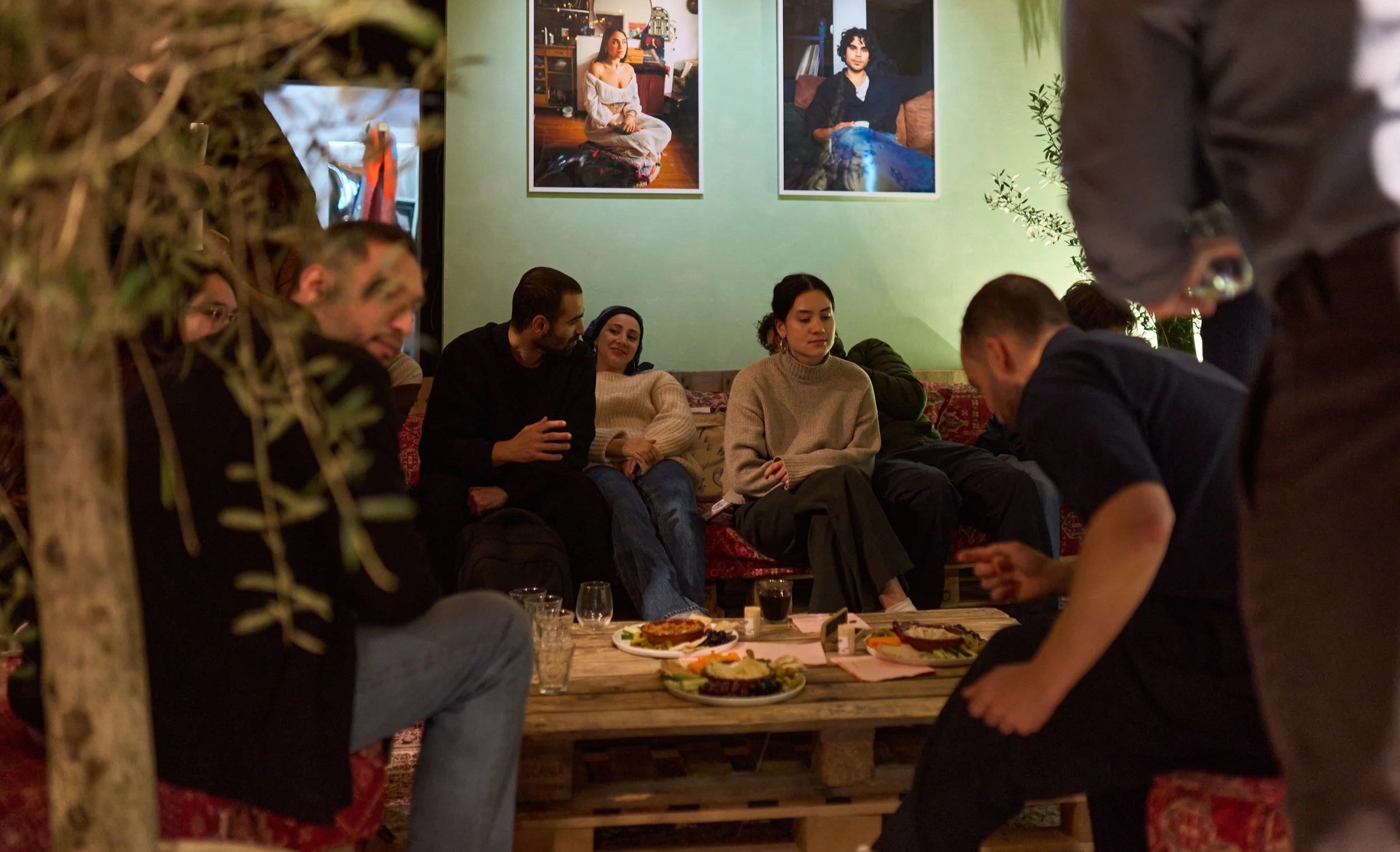
The first space is the living room of the exhibition. Here, a sitting area will be placed with a table in the middle. On the table, there will be a set of cards with questions, challenges, and tasks for the visitors to undertake. The host of the exhibition space will encourage visitors to sit down first and start a conversation. This space serves as a connection point for sharing stories, concerns, and ideas. These conversations can continue throughout the entire exhibition experience.
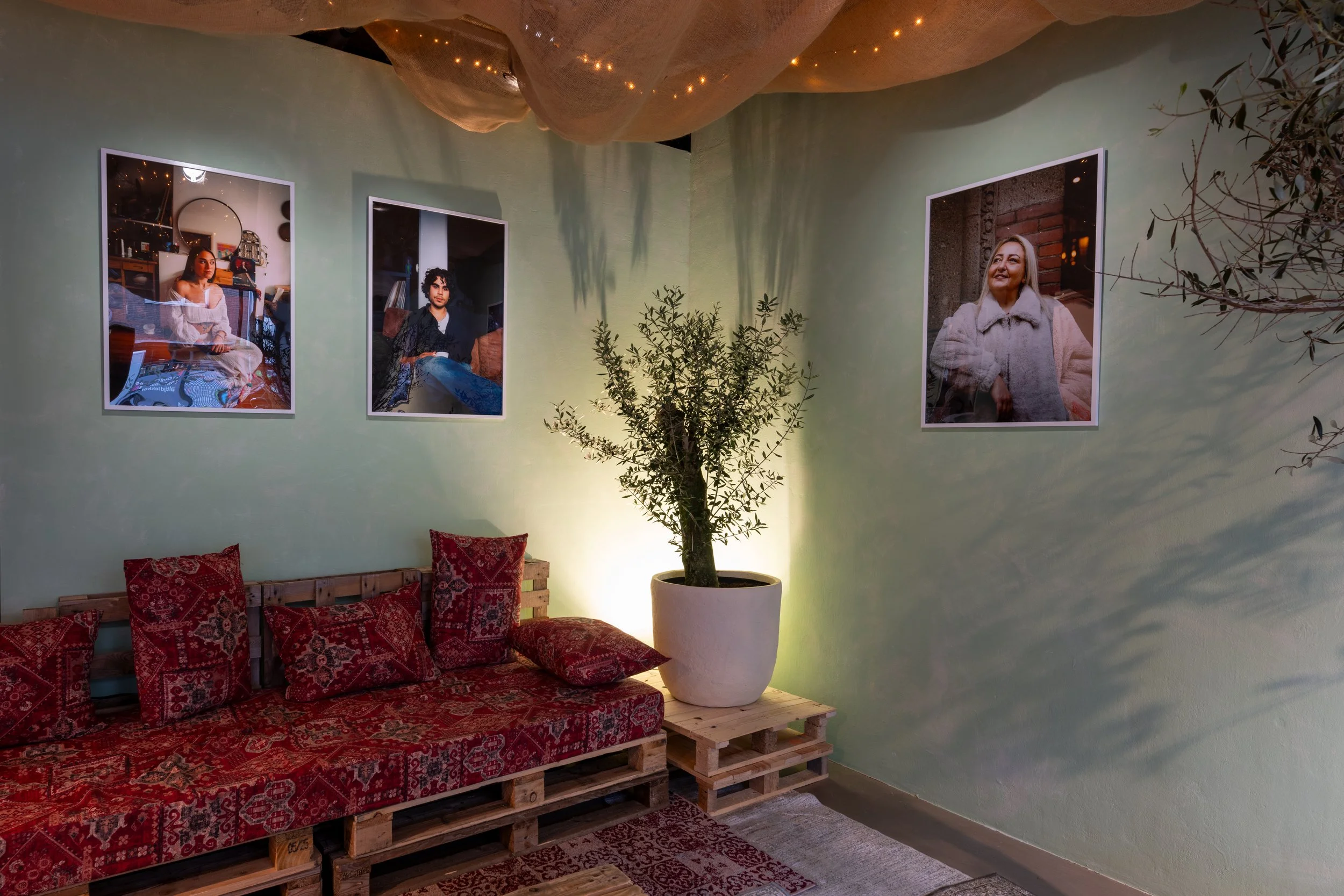
The sitting area will be placed beneath a few olive trees, and on the wall, portraits by the artist Joelle Deeb will be presented. These portraits portray the diversity of people in the Arab world. In this space, there could also be a Sebhiye every morning: a morning ritual with Arabic coffee, sharing conversations about life.
Social spaces are essential to Arab community life, like the living room, it is a space of connection, exchange, and belonging. It is where guests are welcomed, conversations unfold, and connections are made.
In the exhibition, the living room is both the beginning and the end, a place to slow down, share opinions, and reflect after engaging with the art. Inviting someone into your living room is an invitation into your life; this is why seating is central to the exhibition, encouraging visitors to become part of the space.
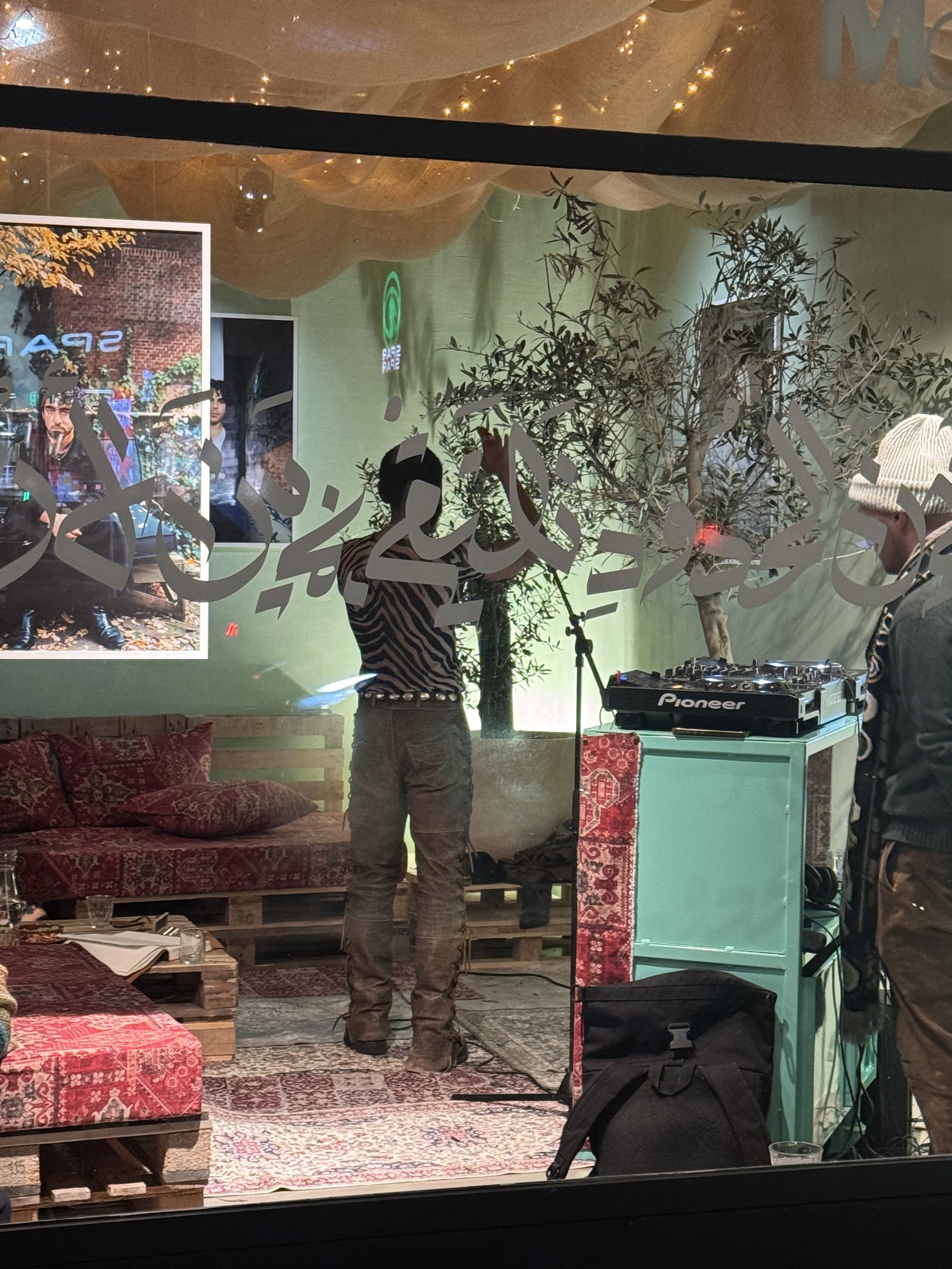
The living room is simply designed using patterned fabrics sewn by Elnaz Assar and wooden pallets, combining traditional patterned fabrics with contemporary assembly, using the same dimensions as the pallets. Visitors are invited to sit beneath olive trees, a symbol across Arab countries that evokes landscapes of the homeland. A collection of rugs is arranged like a collage on the floor, giving character to the space and creating a soft, homely atmosphere. The hanged ceiling with star lights, lowering the space visually and enhancing a warm, intimate feeling.
Within the living room, the work of Joelle Deeb is presented: photographs of the Arab diaspora living in Rotterdam. Positioned in a space meant for gathering and connection, the work invites visitors to encounter the stories and faces of the Arab diaspora, strengthening a sense of familiarity and shared presence.
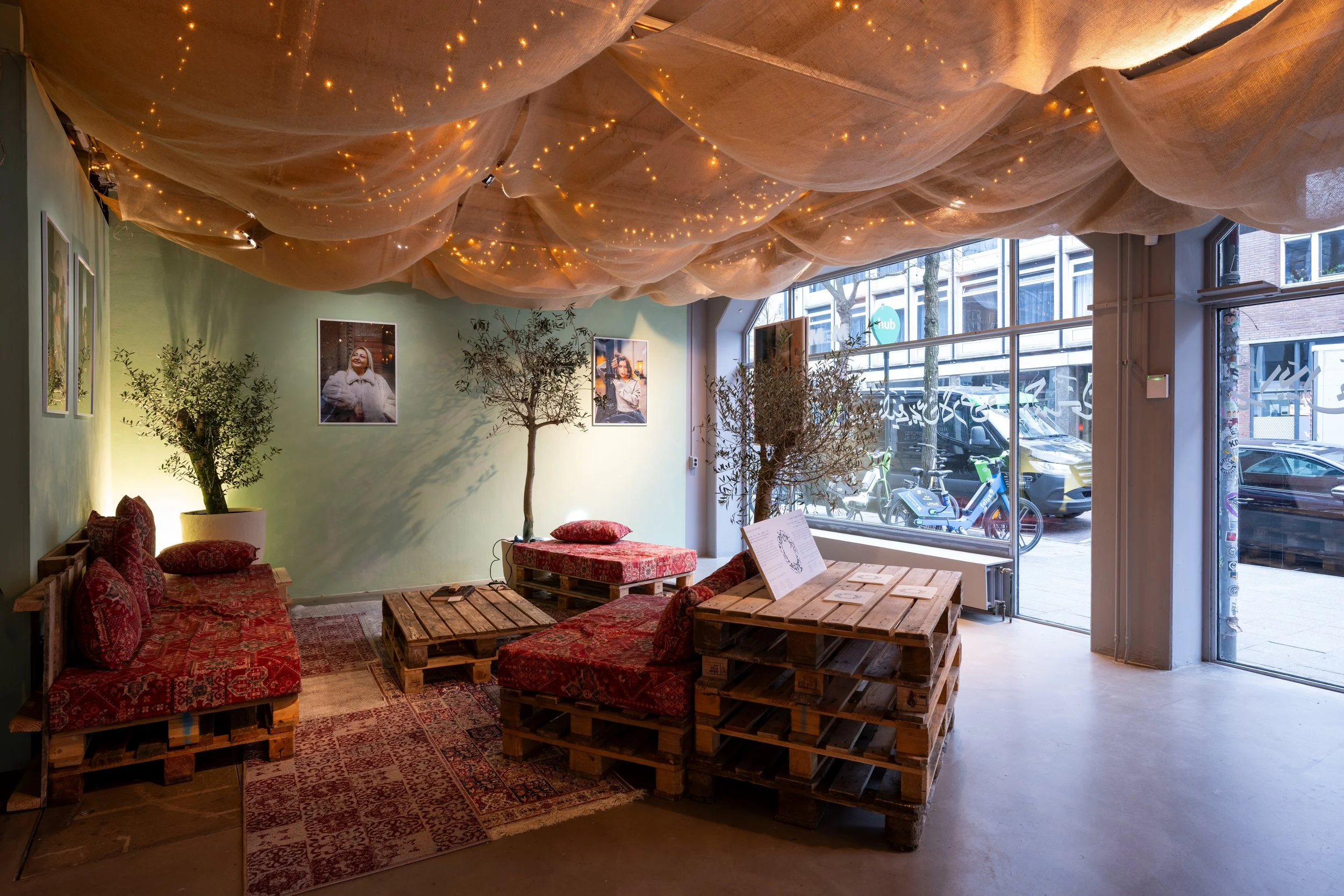

event photo's by Tomas Mutsaers
installation photo's by Lotte Stekelenburg
Space 2 North East Africa
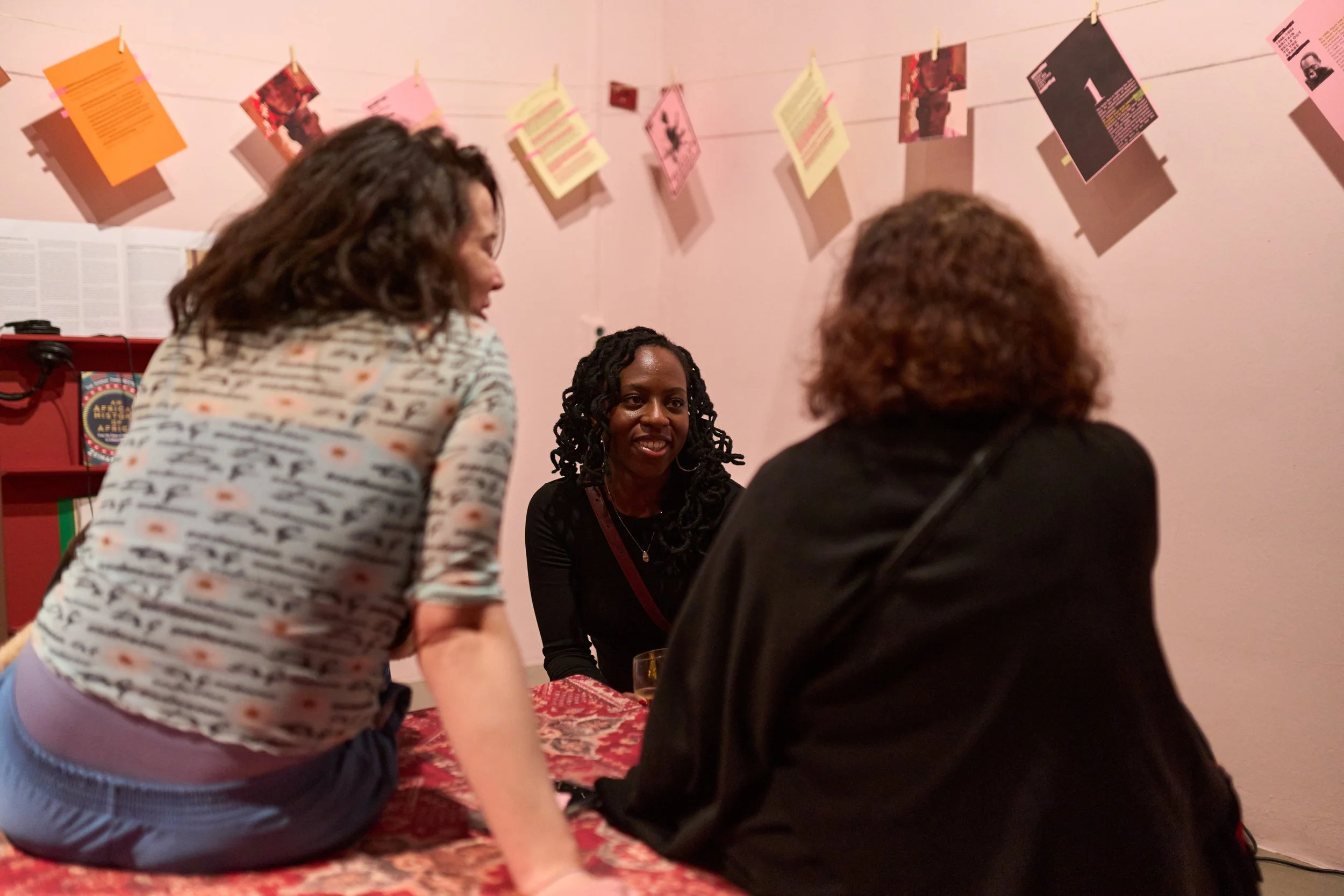
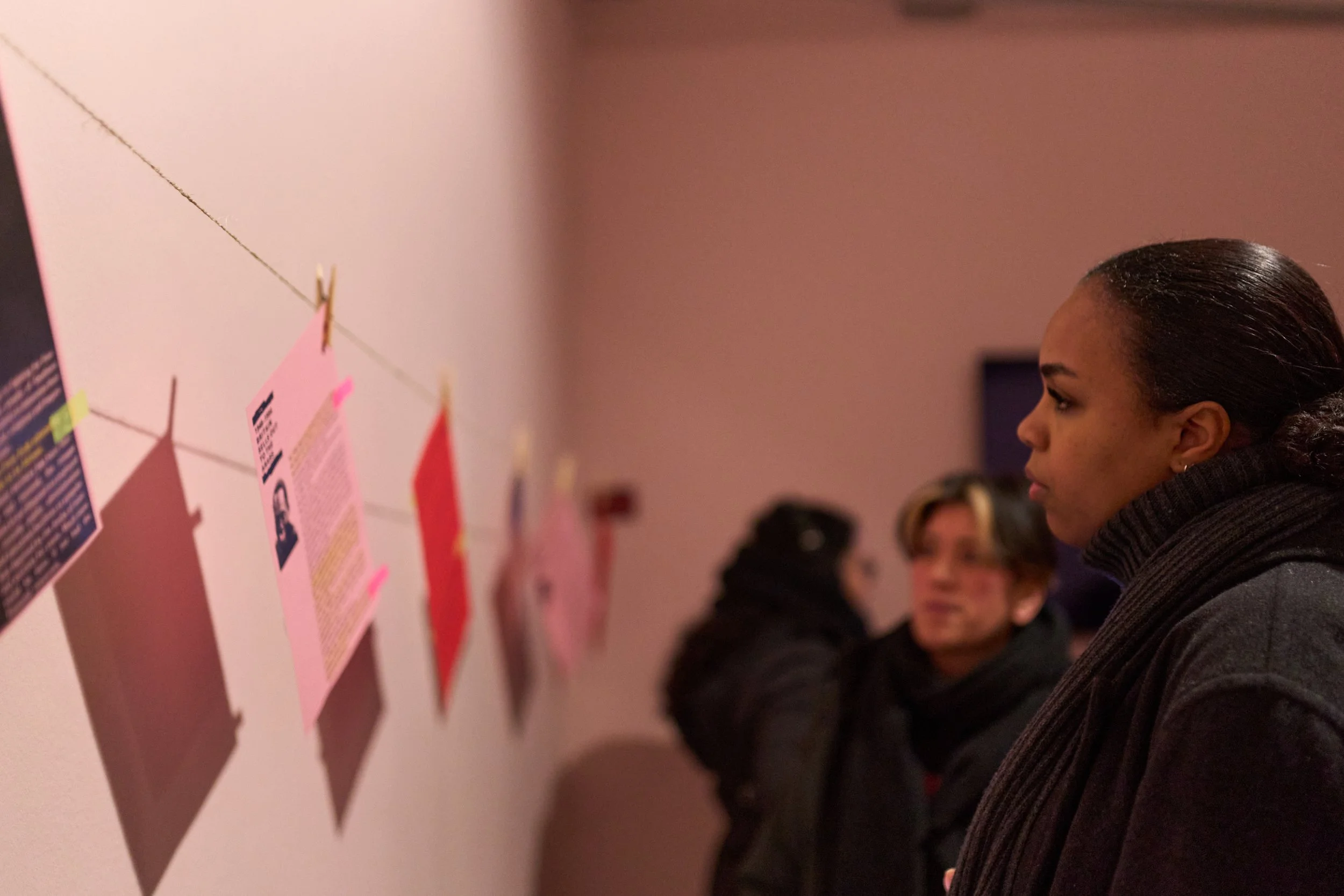
The second space presents archive materials about Sudan and its history with the Arab world, especially music in Sudan and the impact music has on memory, such as protest music. This space emphasizes the diversity of the Arab world, stretching into Africa. It also highlights the importance of migration and its effects on the Arab world, beyond the borders that have been drawn.
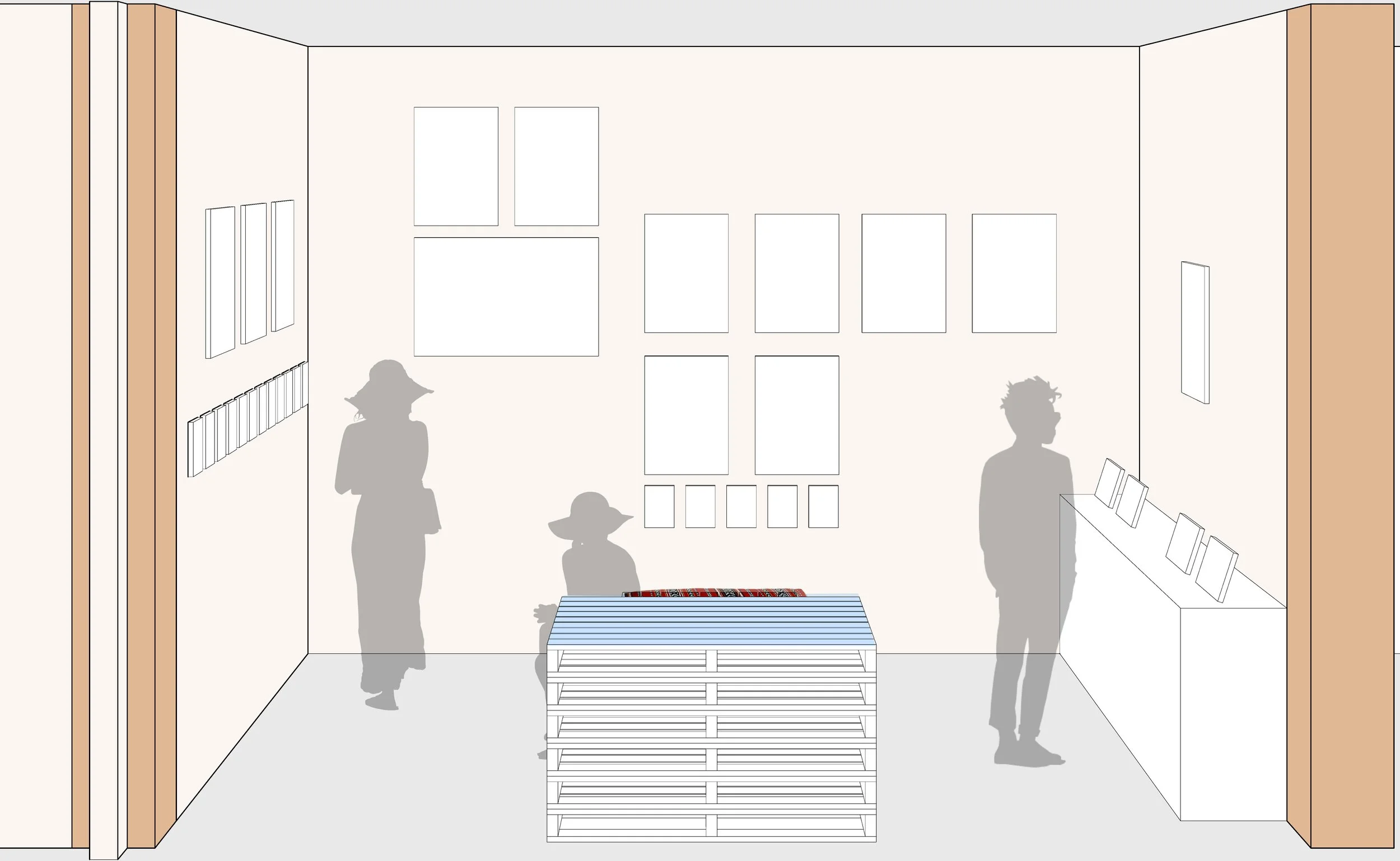
Arab identity in our contemporary time stretches beyond only West Asian countries. African countries that are part of Arab identity show how rich the culture is, with many different Indigenous peoples. Like Sudanese culture, which is a hybrid of Arab influence and Indigenous culture in Sudan.
In this space, Saffa Khalil has extracted archive material about her understanding of her Sudanese identity. Using materials from her family archive and documents tracing Arab identity in Sudan, the work explores how music, from popular music to protest songs, holds stories of belonging and becoming. It’s a way of looking at heritage not as something fixed, but as something that shifts, travels, and gets remade across generations. It is fluid in nature; everything sits together as a conversation between memory and movement.
It makes us reflect on our Arab identity and how diverse and rich the culture can be, using archive materials, sounds, especially Sudanese music, poetry, books, and literature to show Sudanese culture in relation to Arab identity.


event photo's by Tomas Mutsaers
installation photo's by Lotte Stekelenburg
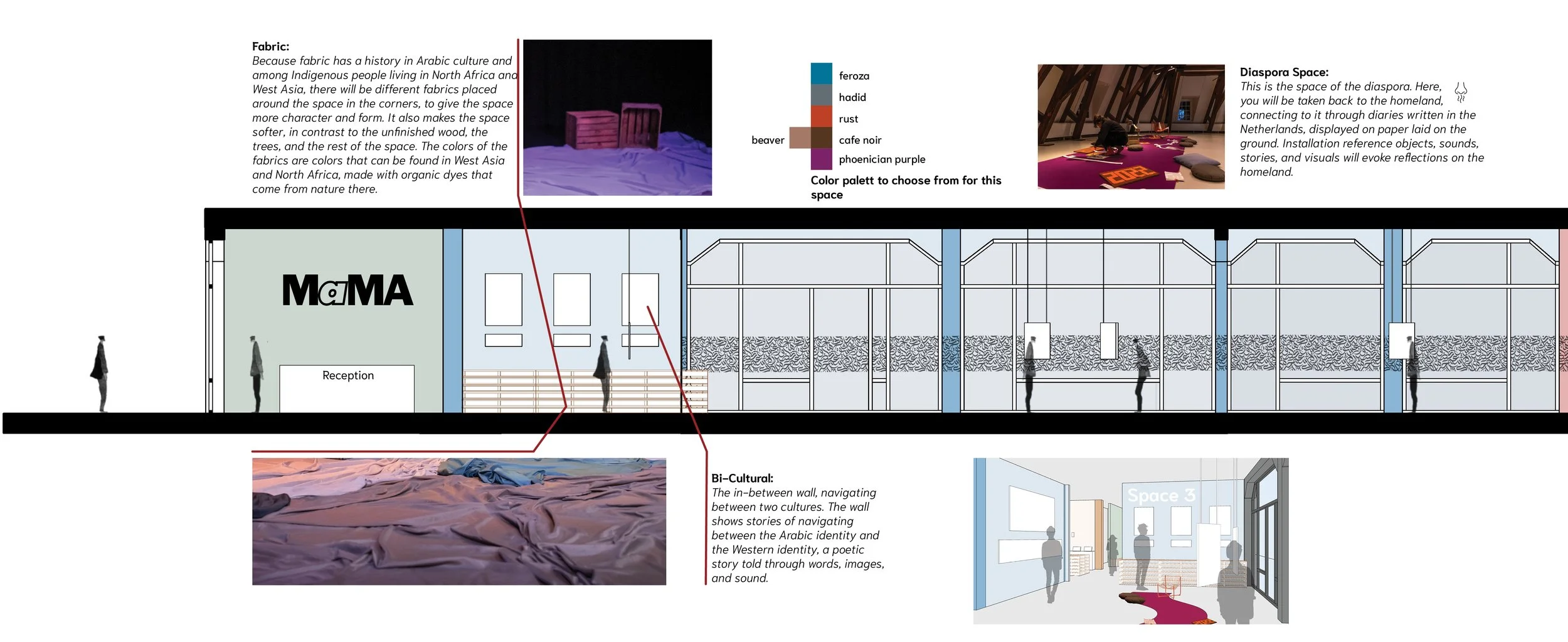
Space 3 West Asia
The fourth space is the second living room. The first living room serves as a reference to home in the motherland, while the second living room represents a home in the diaspora. This space shows how Arabs live in the diaspora, how they have adjusted their lives, and how they have created a new home without undermining their culture, religion, or identity. It reflects the layered identity of the Arab diaspora.
Siwar will share a story about the Lebanese diaspora living in the Netherlands and her experience as part of the Arab diaspora, taking visitors on a nostalgic and activist journey. She will share the space with Leila Jane, who will present a sound and video installation about her perspective of being bi-cultural and her connection to her homeland in Syria. Together, they represent the current generation of youth living between two worlds, creating their own.
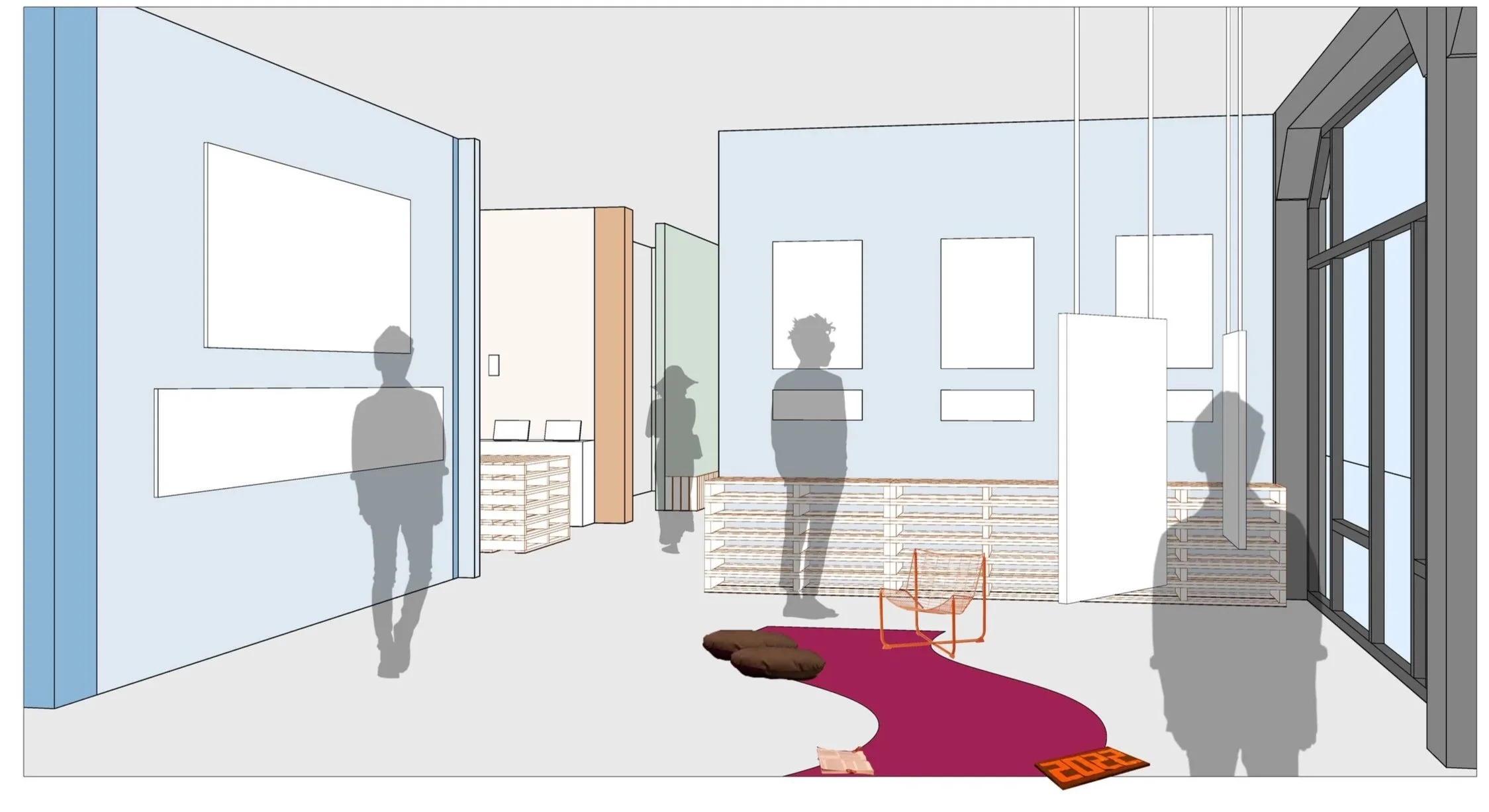
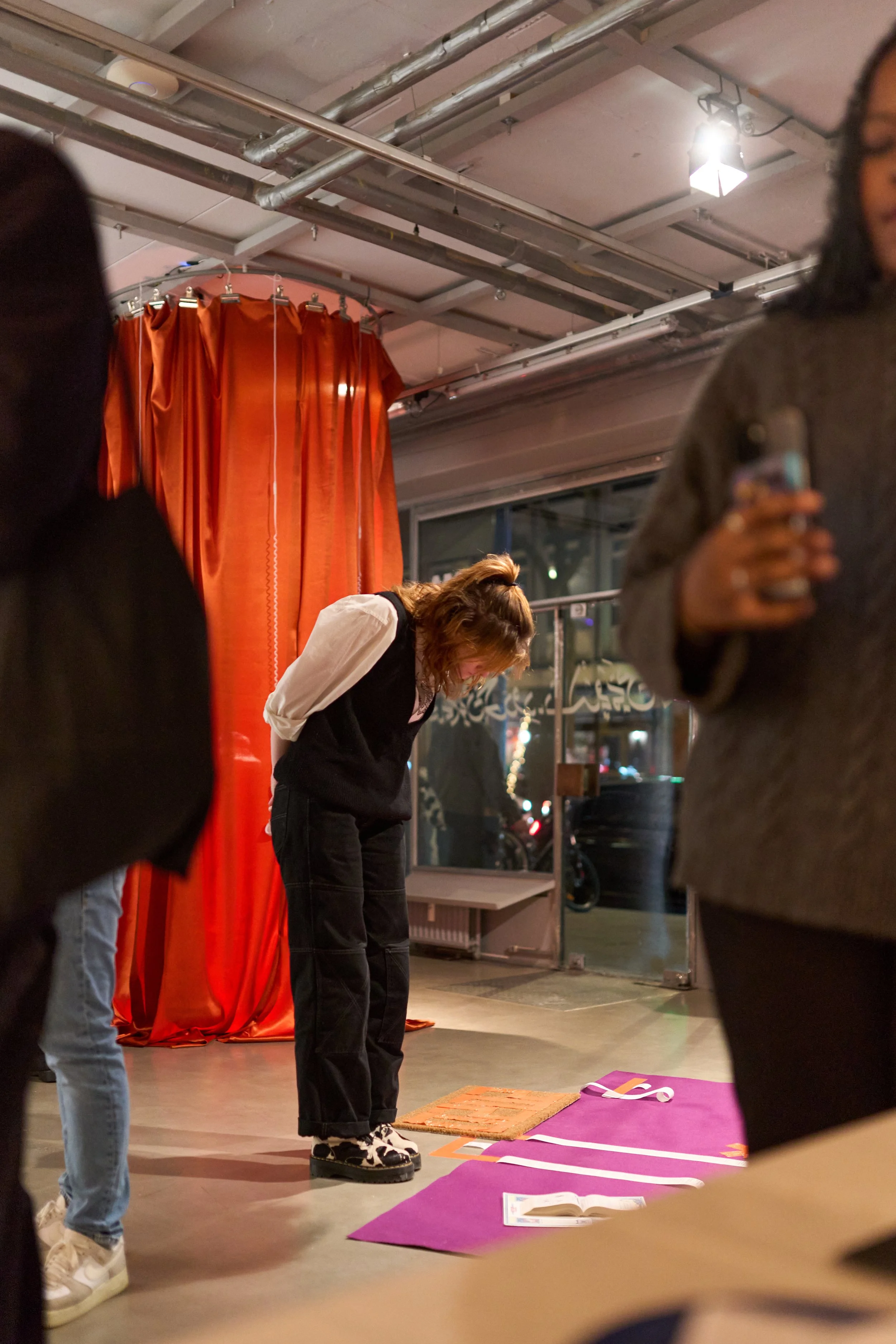
Time and distance have defined this space, hosting two artists. Both talk about the home through different lenses and different mediums: stories about preserving memories and how memories have shaped us. The installation by Siwar Kraytem which tells a story through written diaries witnessing time in the diaspora. Using the calendar, an object engraved in our memories as Arab diaspora, tearing away the passing days and noticing how time sometimes moves fast and sometimes slowly.
Changing context and migrating to a different country, time passes differently. Calendars feel different, and memories become unrecognizable, sometimes forgettable. Diaries become a way to archive and witness these memories, and to stay connected to the homeland in times when even the homeland itself feels disconnected and in pain.
The installation reflects a universal experience many in the Arab diaspora live through: switching homes, reflecting on identity and belonging in the Netherlands. An experience that cannot be fully described through traditions or fixed narratives, one that is individual to each one of us.

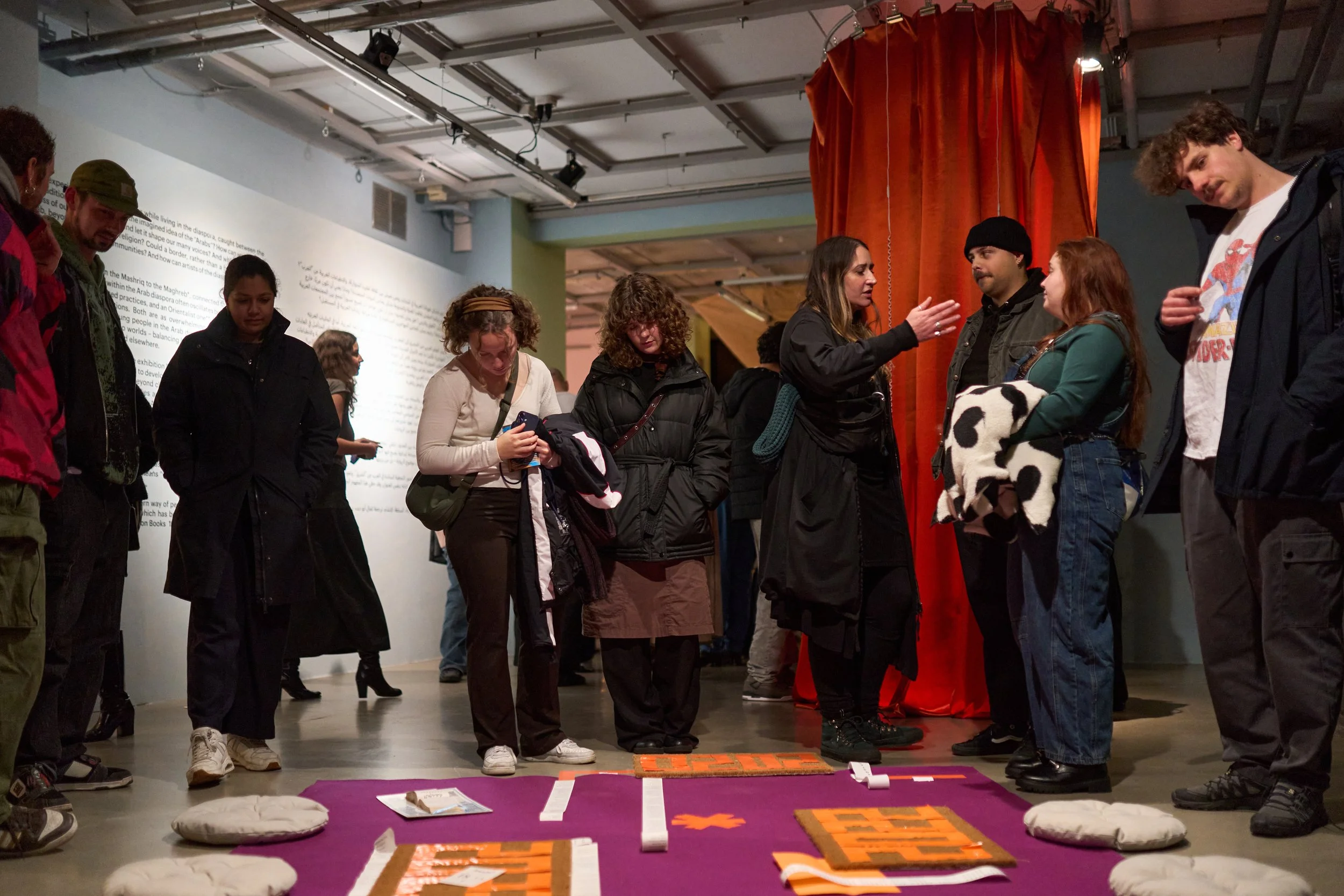

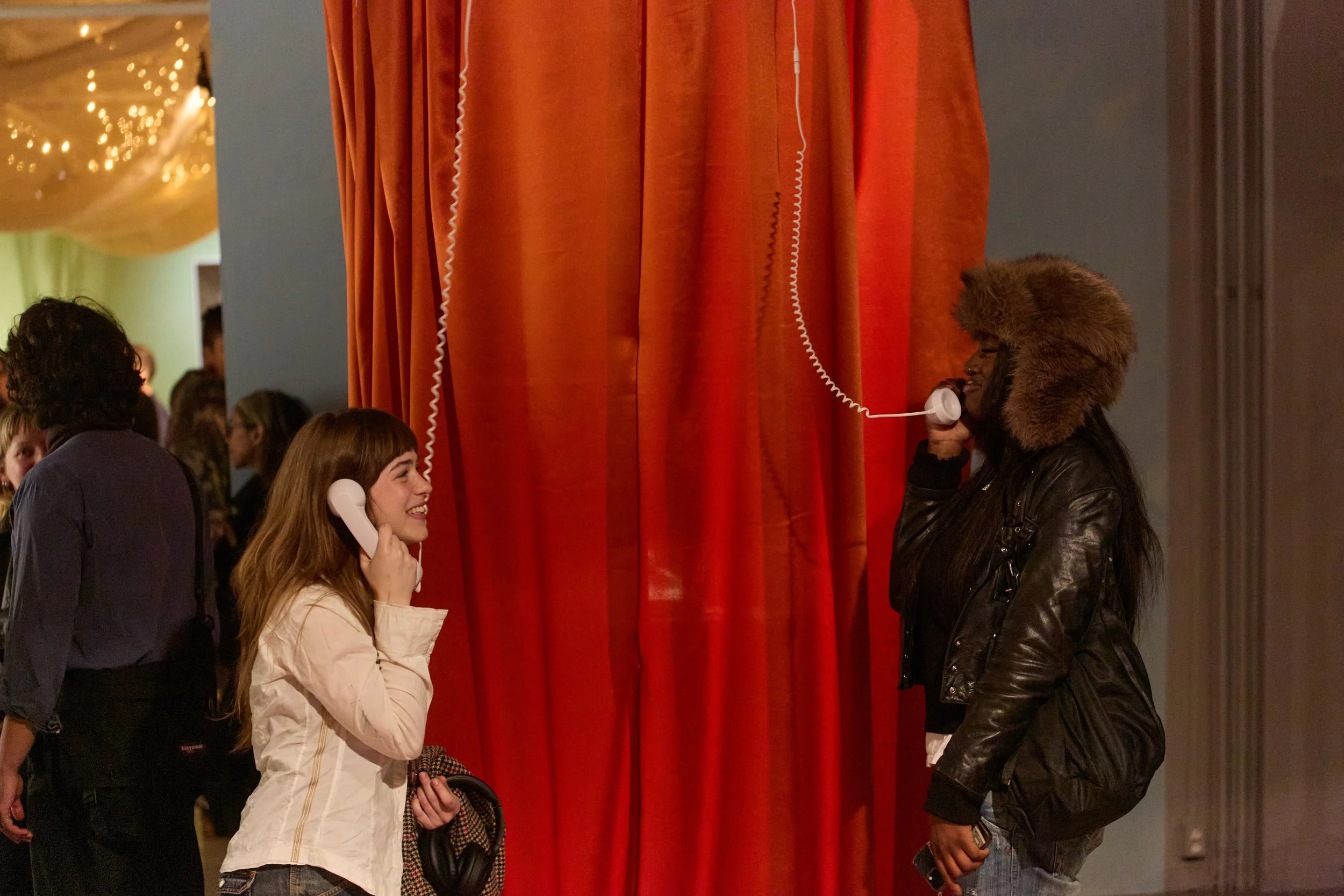
At the end of the line you hear the voices of your home. The phone as the only connection you have to your roots and the people who once made your home. A conversation through a phone about the spoken and the unspoken. Audible stories about identity, longing, and childhood memories, told by Leila_Ali Deeb . She reveals personal stories about quiet longings and imagined futures.
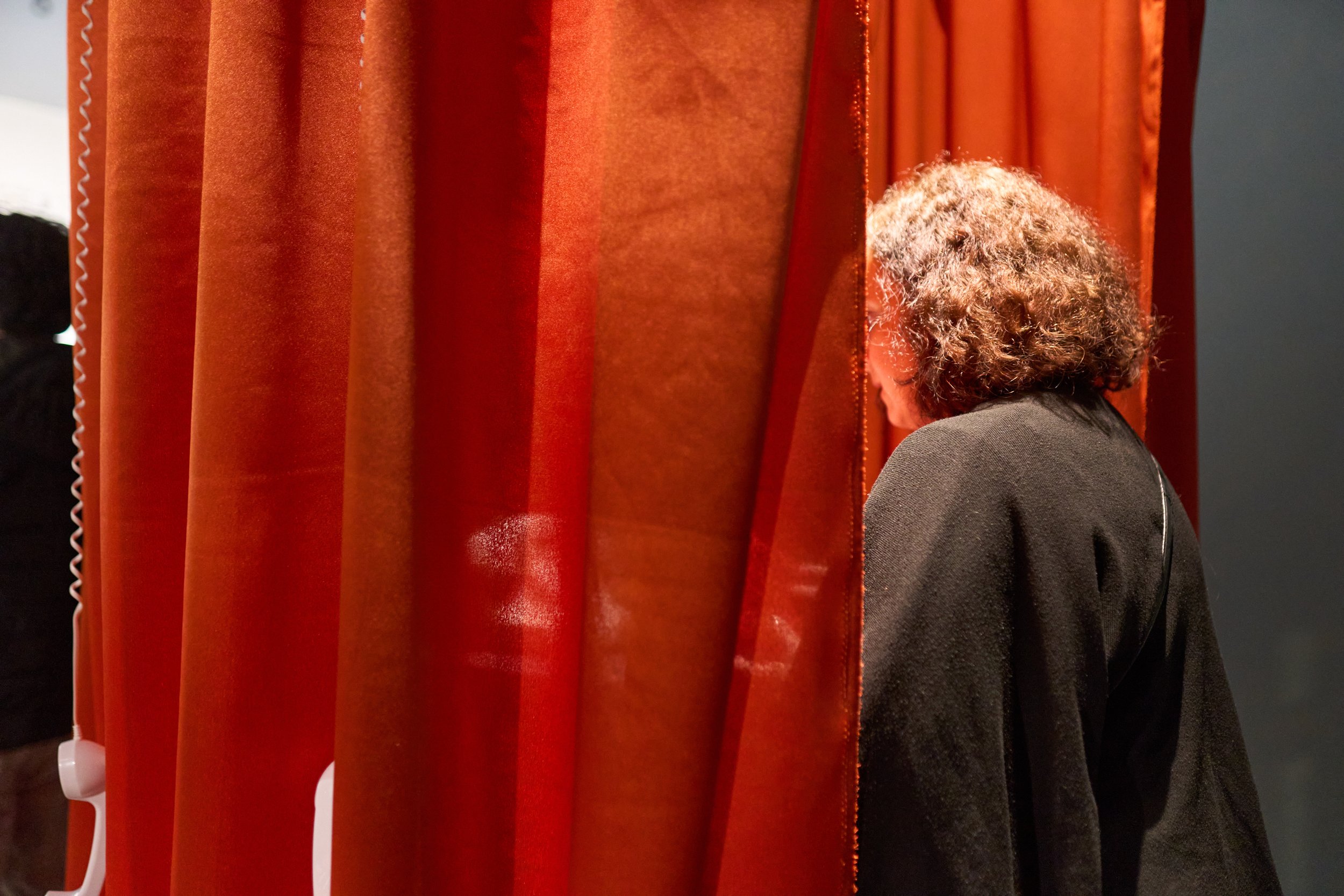
In an intimate phone booth, space is created for the visitor to leave a message behind, adding their voice to this shared search for belonging and home.
Away from identity politics, the feeling of belonging becomes the only valid feeling, even when there is no choice but to engage with identity politics, since we as diaspora are by default part of it.


event photo's by Tomas Mutsaers
installation photo's by Lotte Stekelenburg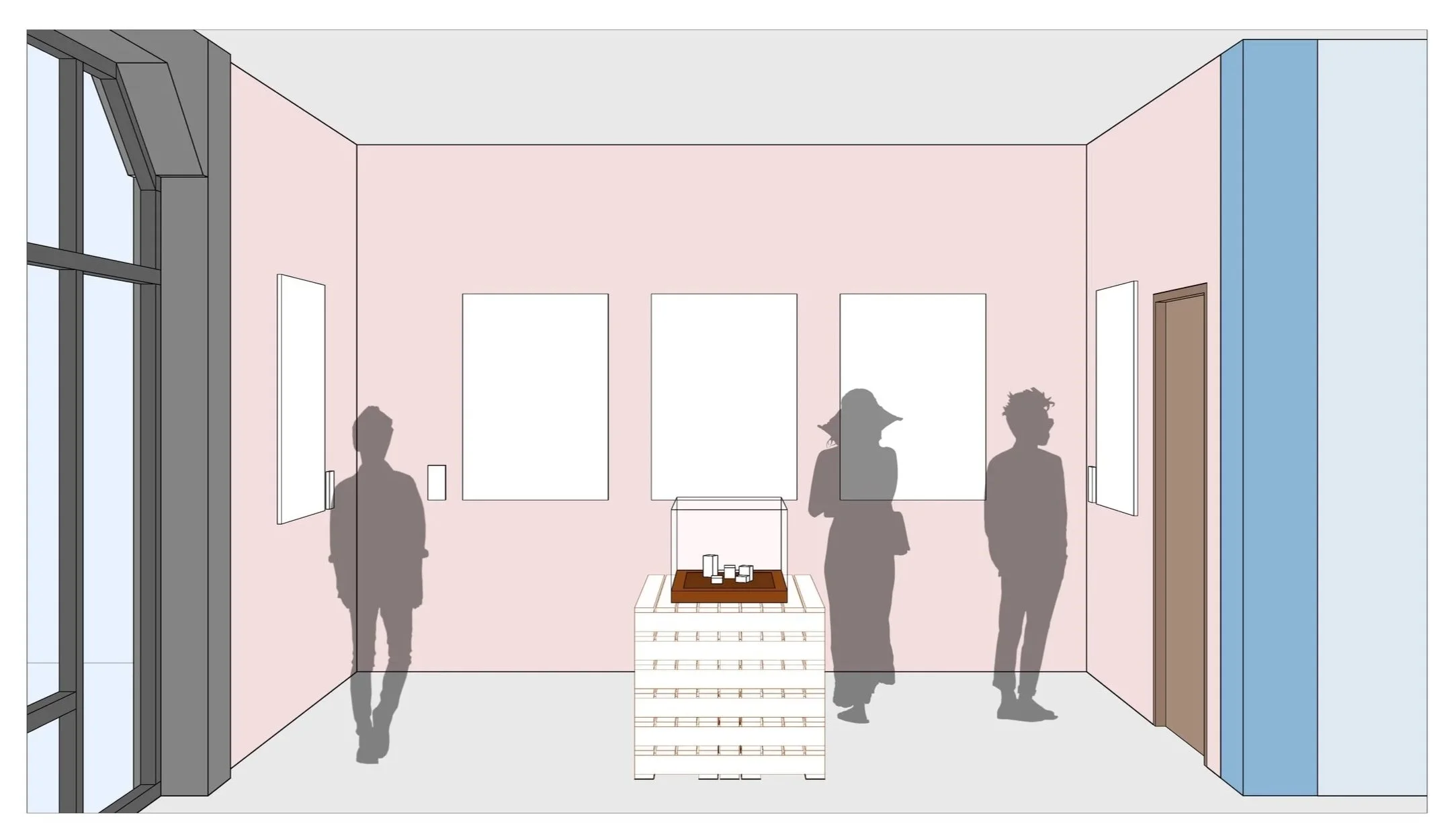
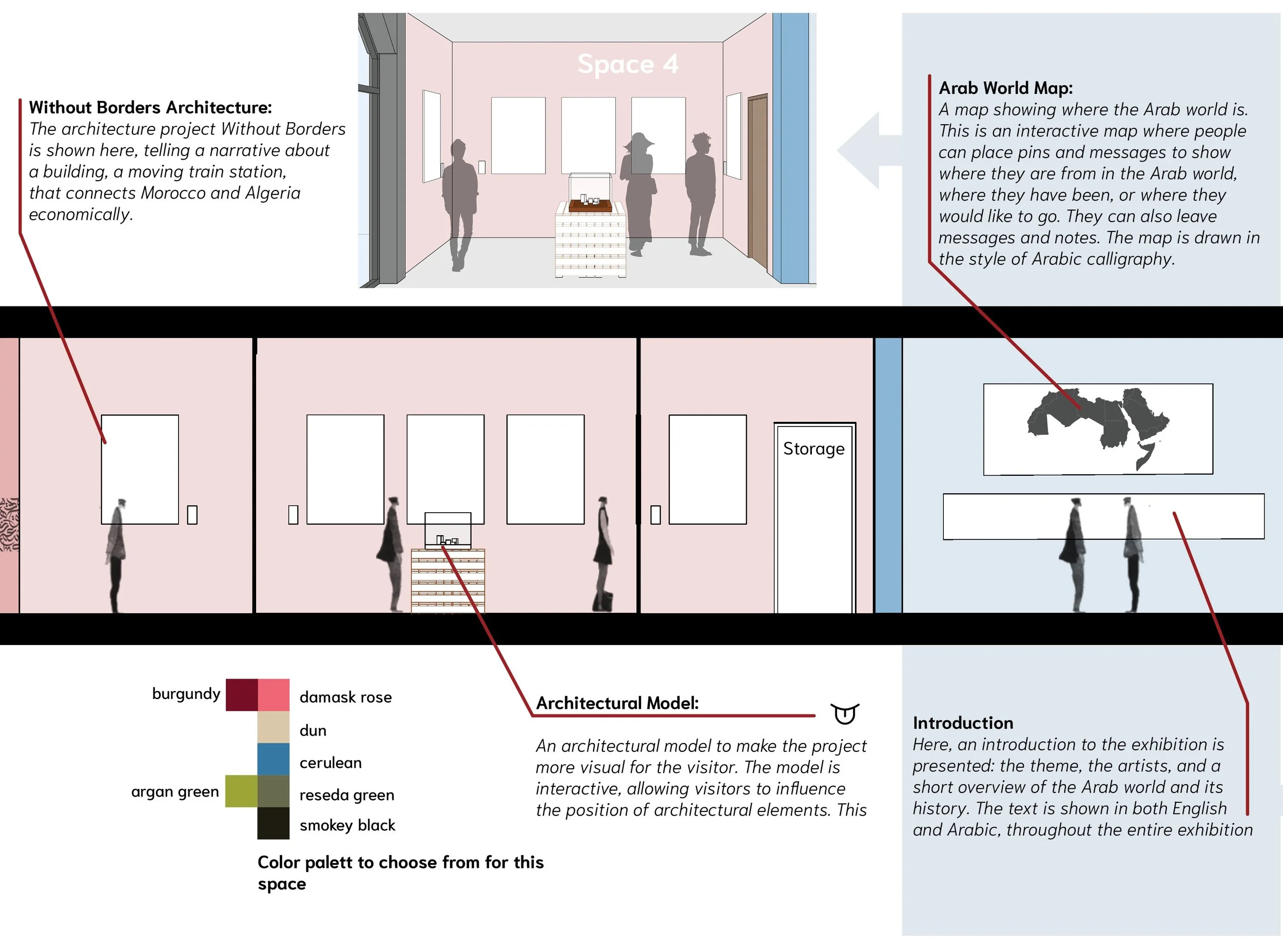
Space 4 North West Africa
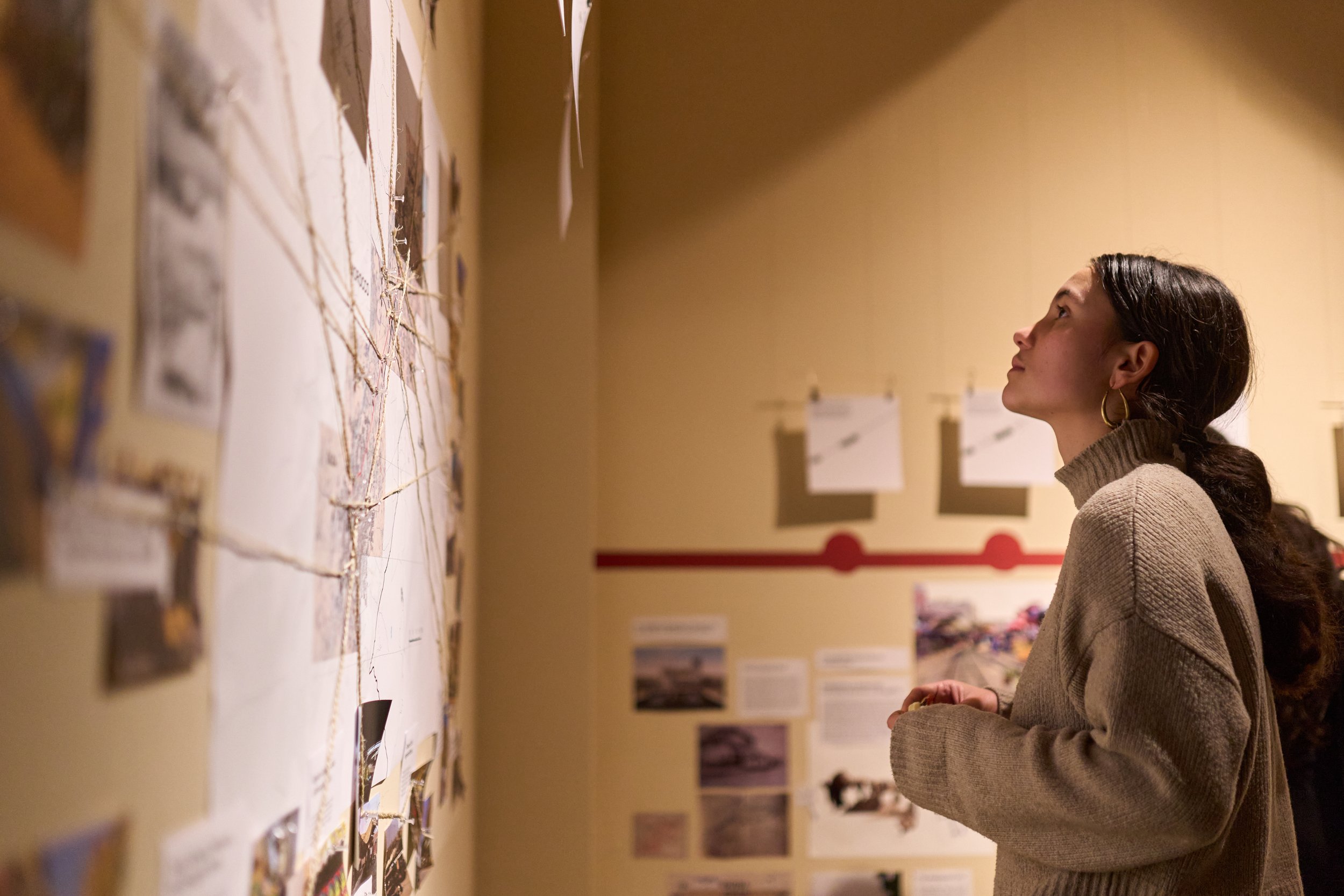
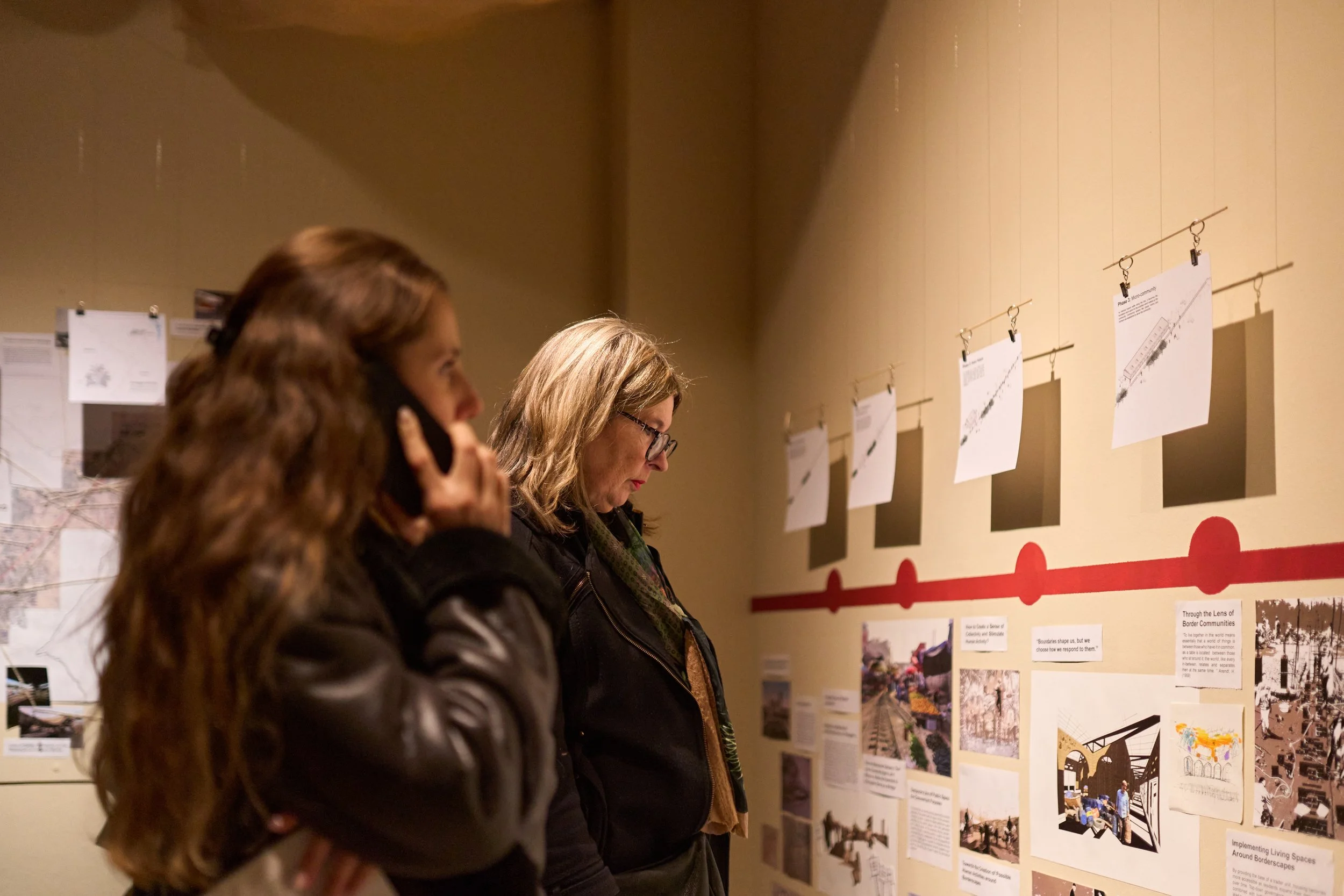
The fourth space presents architectural research and design through drawings and models of a project connecting Morocco and Algeria with a train station on the border. It shows how architecture can play an important role in connecting communities and economies beyond borders.
Through history, architecture has been a place that hosts communities and connects people. During conflicts, architecture can also be used to separate countries and people. It is a powerful tool to control the masses.
Younes’ architectural research and design proposes a solution at the border of Algeria and Morocco: a connection of exchange rather than division. Despite decades of closure due to political conflict between these countries, border communities continue to find ways to cross and connect through informal trade networks, creating informal markets and self-regulated systems in Oujda.
These practices inspired his design to support such activities through an urban strategy that transforms the abandoned Moroccan–Algerian railway into a network of spaces for social and economic exchange, leading to a step toward reopening the border. Connecting communities beyond borders and political conflict, meeting between the border.



event photo's by Tomas Mutsaers
installation photo's by Lotte Stekelenburg
Visual design
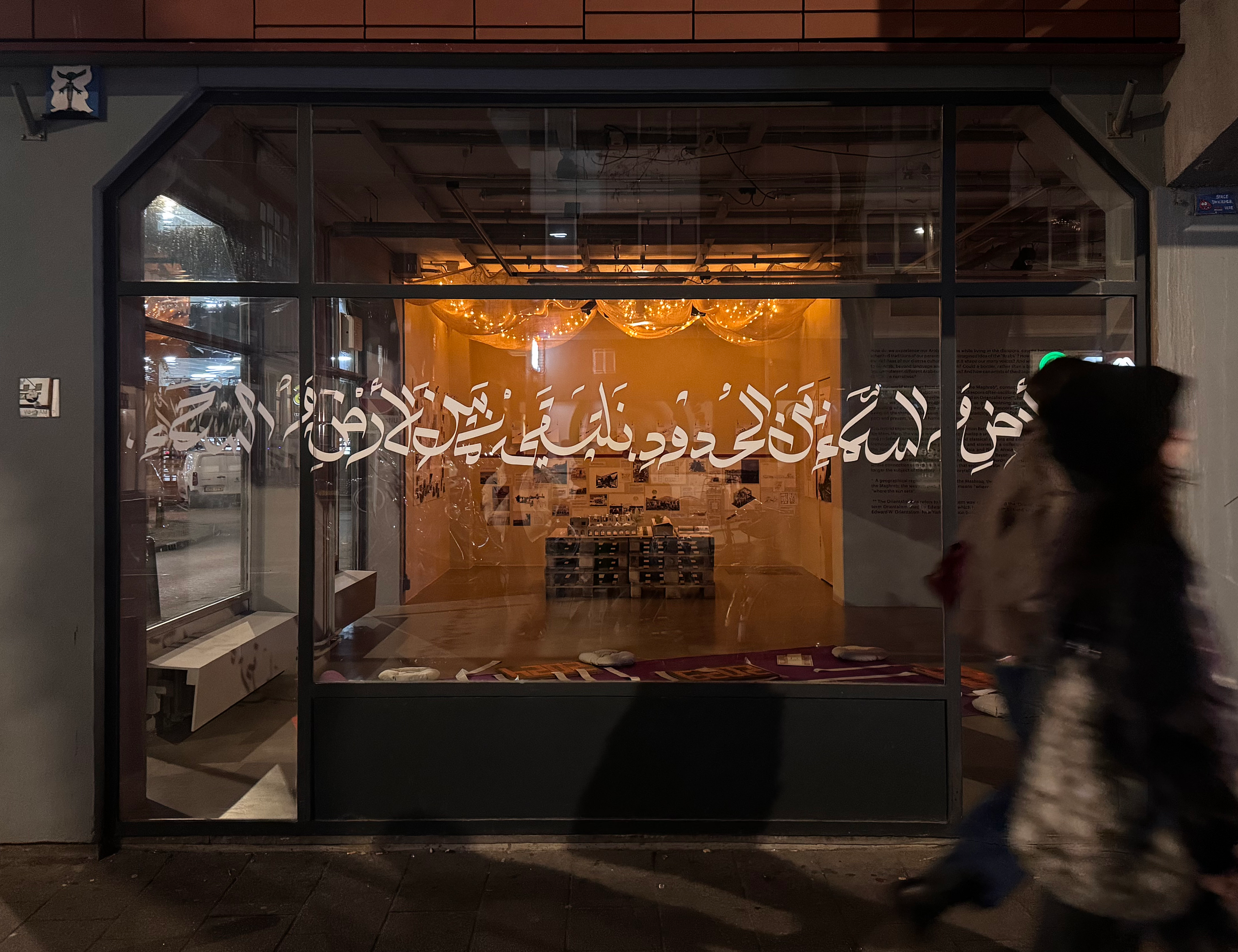
The Arabic language was one of my main inspirations when curating the exhibition "Between land and sky, between borders, we meet." It is an expressive language, rich in vocabulary, and it connects Arab countries beyond their borders. The language itself is an art form, especially through Arabic calligraphy. This became the foundation of the visual identity of the exhibition. The calligraphy and the visual identity of the exhibition is designed by @fareswhby
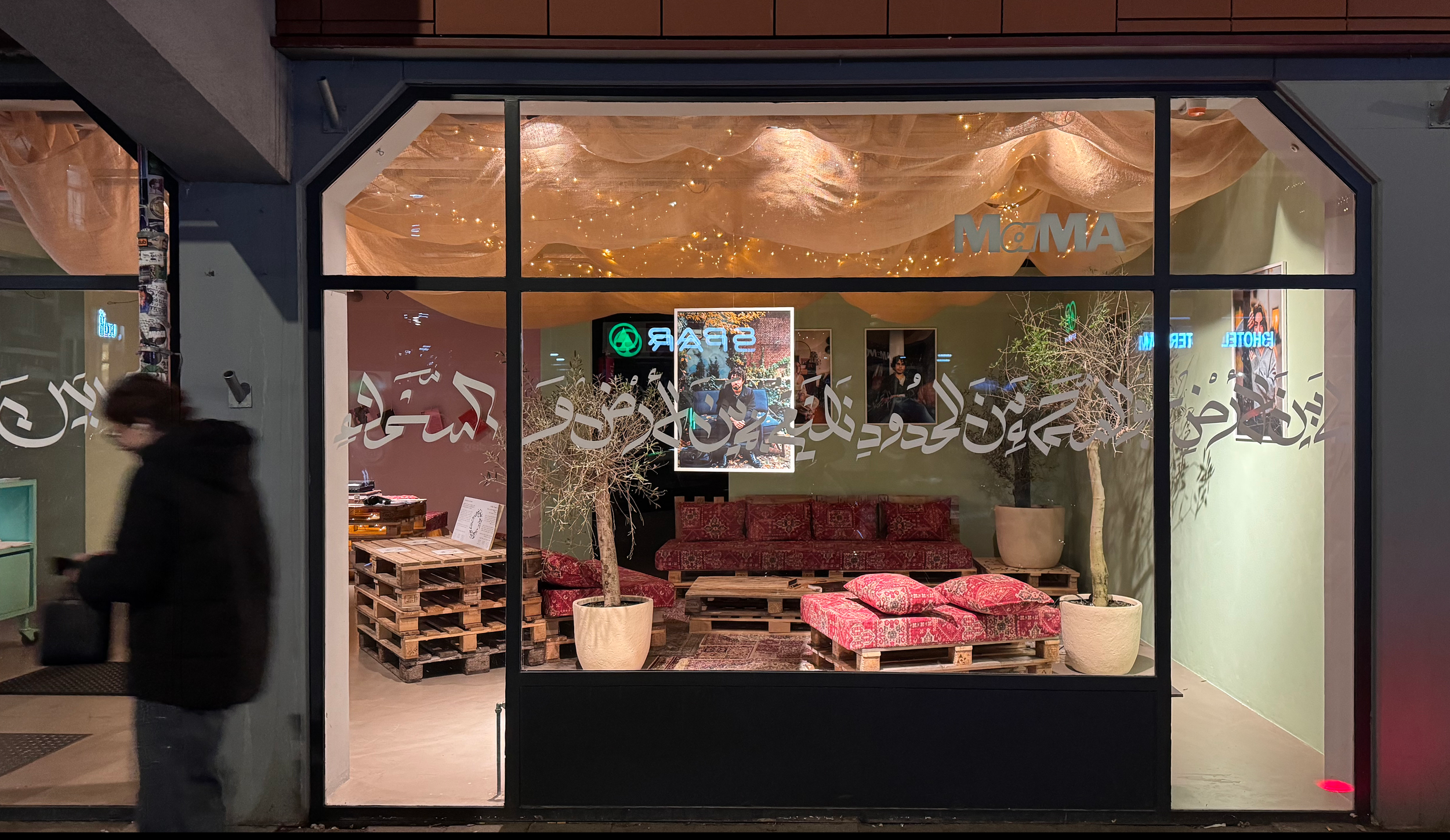
By placing the calligraphy, the title of the exhibition written in Arabic, on the windows, following the façade around the corner, the space at MaMA became an eye-catching presence for people passing by on the Witte de Withstraat in Rotterdam. It allows passersby to encounter the theme and atmosphere of the exhibition before even entering the space.
Especially for people who are familiar with the Arabic language, the calligraphy acts as an invitation to come inside: seeing and reading something familiar in a place where Arabic is usually unexpected.
Furthermore, the calligraphy on the glass façade creates shadows inside the space and on the installations when the sun shines through the windows, allowing the language to physically shape the exhibition space.



Feature
Operator radio
Between land and sky, on Air, we meet is a conversation about Arab identity in the Dutch context. The podcast is rooted from the exhibition Between land and sky, between borders, we meet, which is on display at MaMA until 1 February 2026. A conversation in which Arab identity in the Western context is discussed, reclaimed, and redefined, with musical intermezzo and poetic narration. The conversation reflects on the stories of the Arab diaspora in Rotterdam and how these communities have made the Netherlands their second home. It also reflects on the diverse Asian and African cultures within Arab identity, looking back at memories through phone calls and calendars. The conversation ends by exploring how we can use architecture to create bridges between our Arab cultures, rather than borders.