_no ground zero
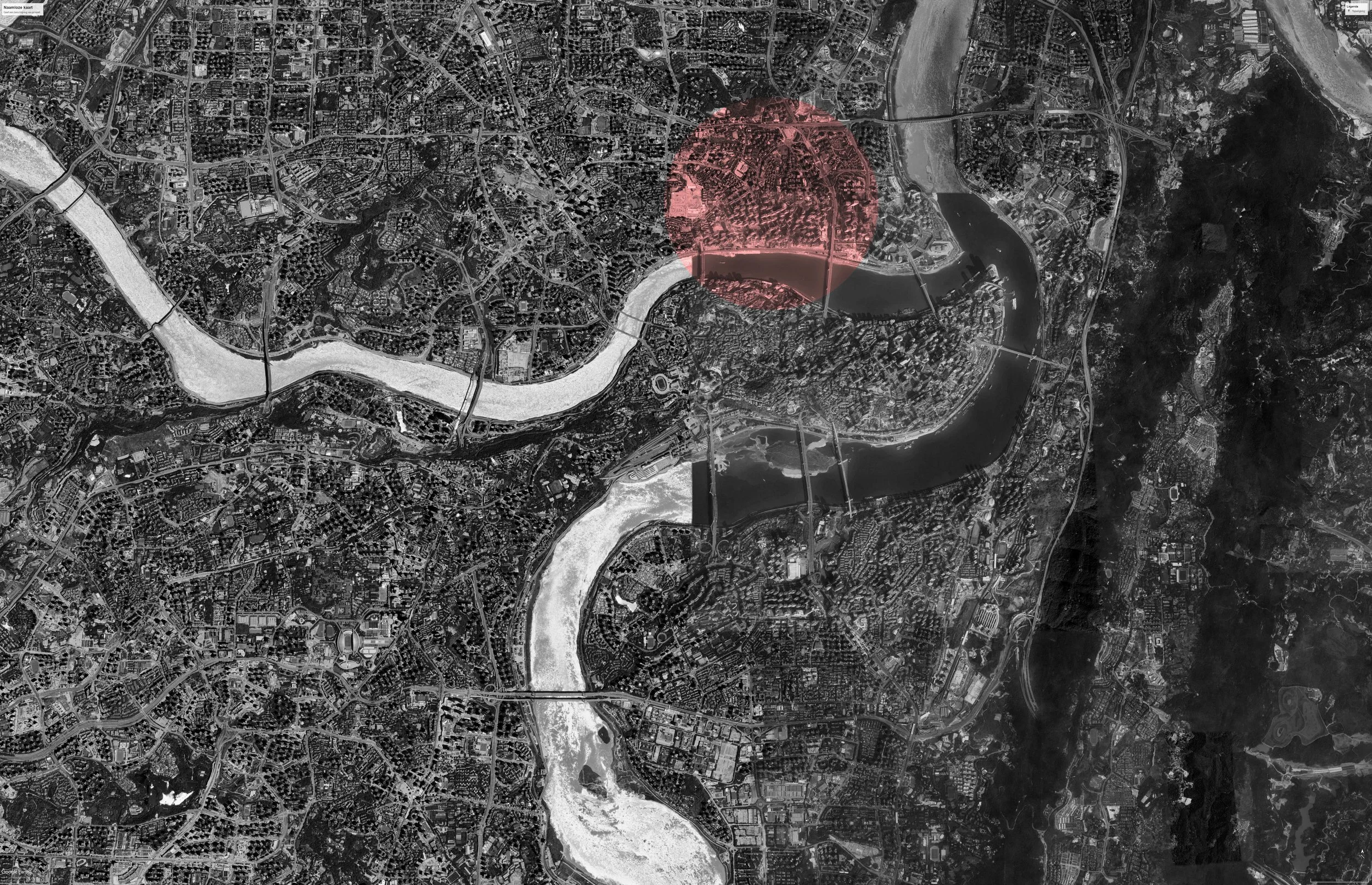
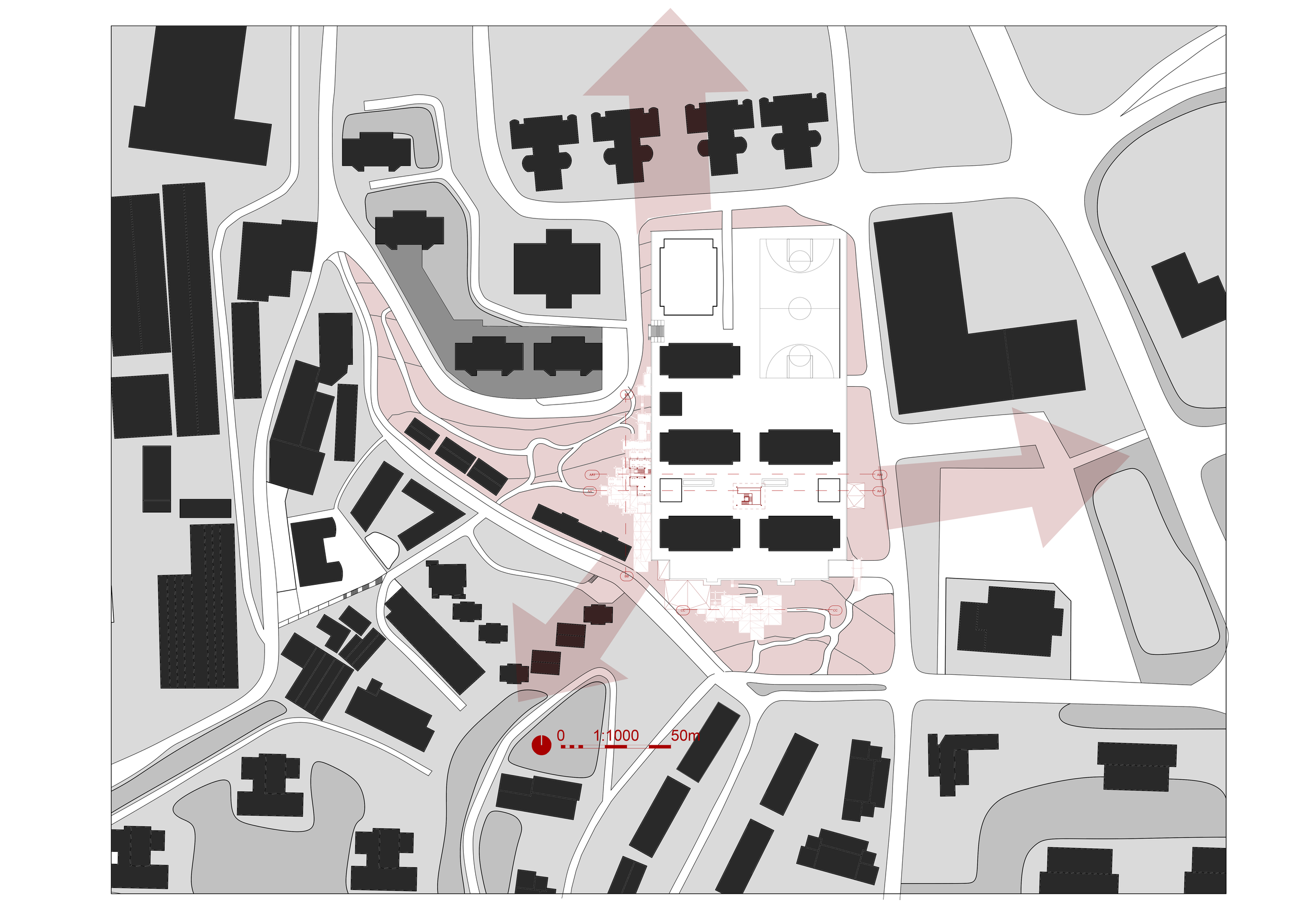
The site is located on the northern side of the Yangtze River in Jiangbei, an area currently undergoing rapid transformation. Situated outside the city center and surrounded by future developments, the site was chosen for its strategic position within an expanding urban context. Research conducted in Chongqing on connectivity and accessibility in a changing mountainous landscape indicates that this area is likely to face similar challenges in the future.
The wider area once included Hung Village, which is now being redeveloped through large-scale housing and commercial programs. This points to a future of increasing density and urban potential. However, such rapid redevelopment often overlooks issues of connectivity, especially in complex topographies. This project therefore aims to anticipate these challenges by proposing solutions before or during the development process, translating research into a spatial design proposal.
Location
Chongqing, China
Year
2023
University
Delft university of technology
Role
Designer
Project
Urban interventions
Architecture
Chongqing - China 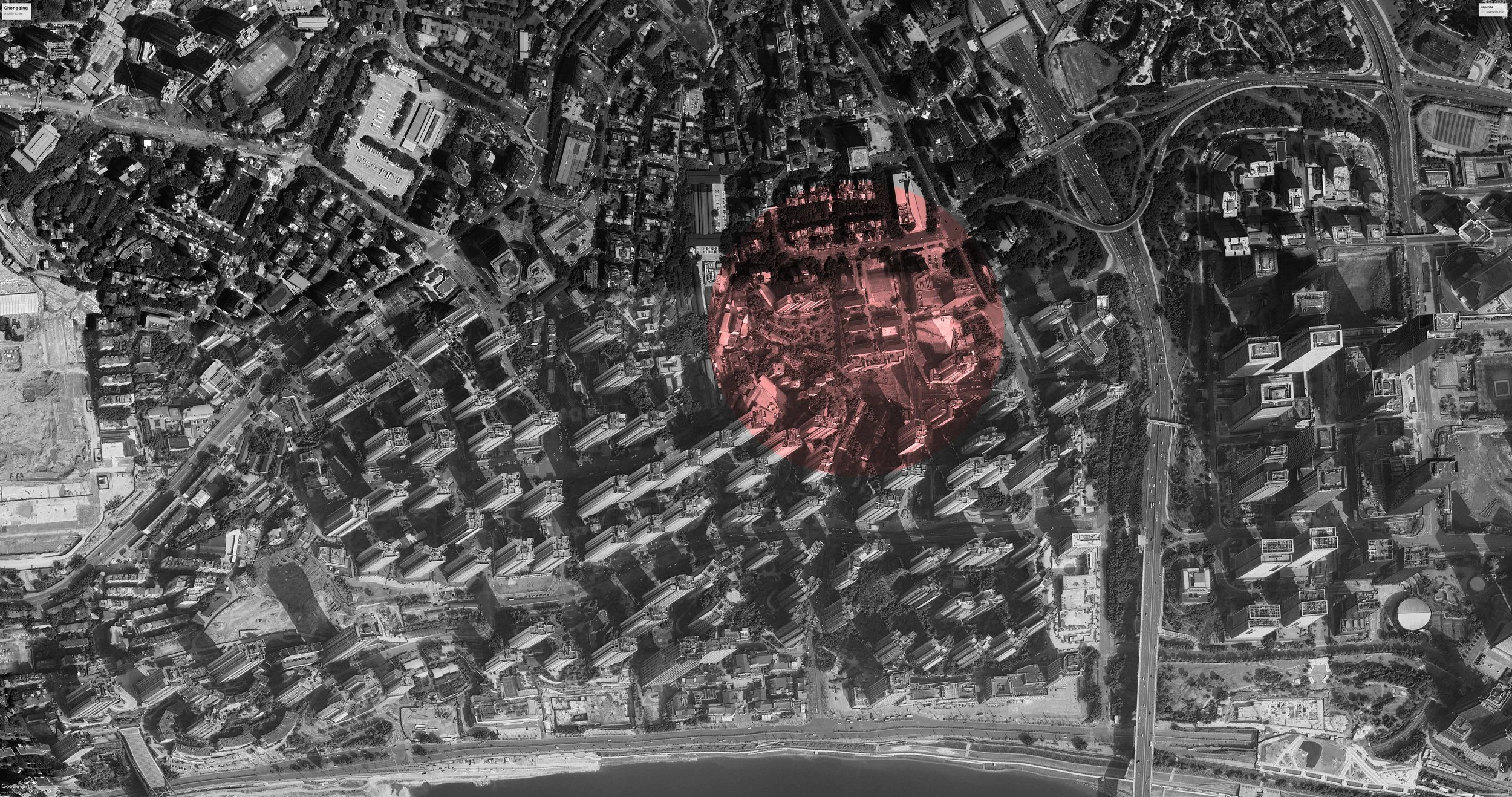
Jiangbei - Chongqing 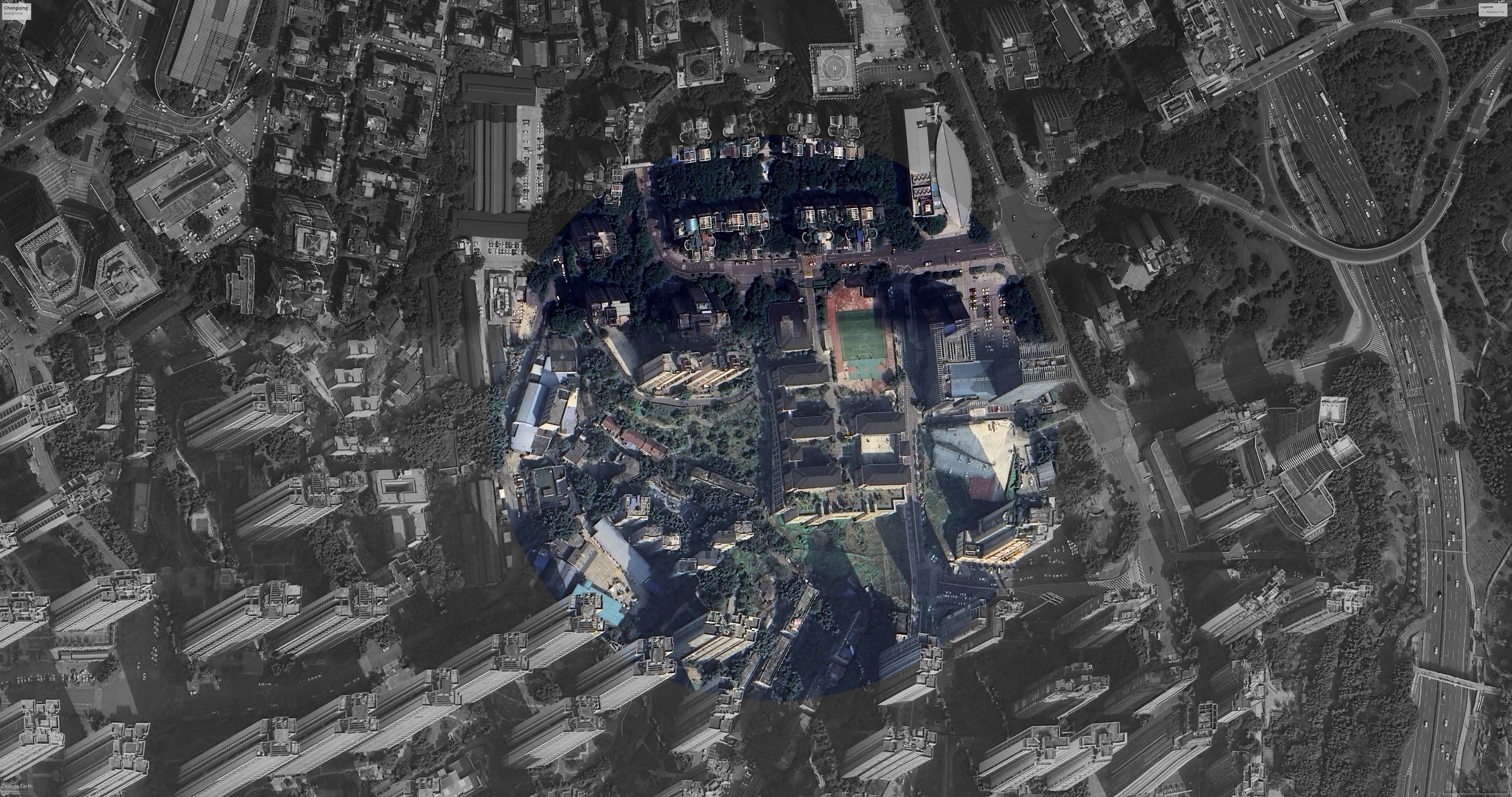
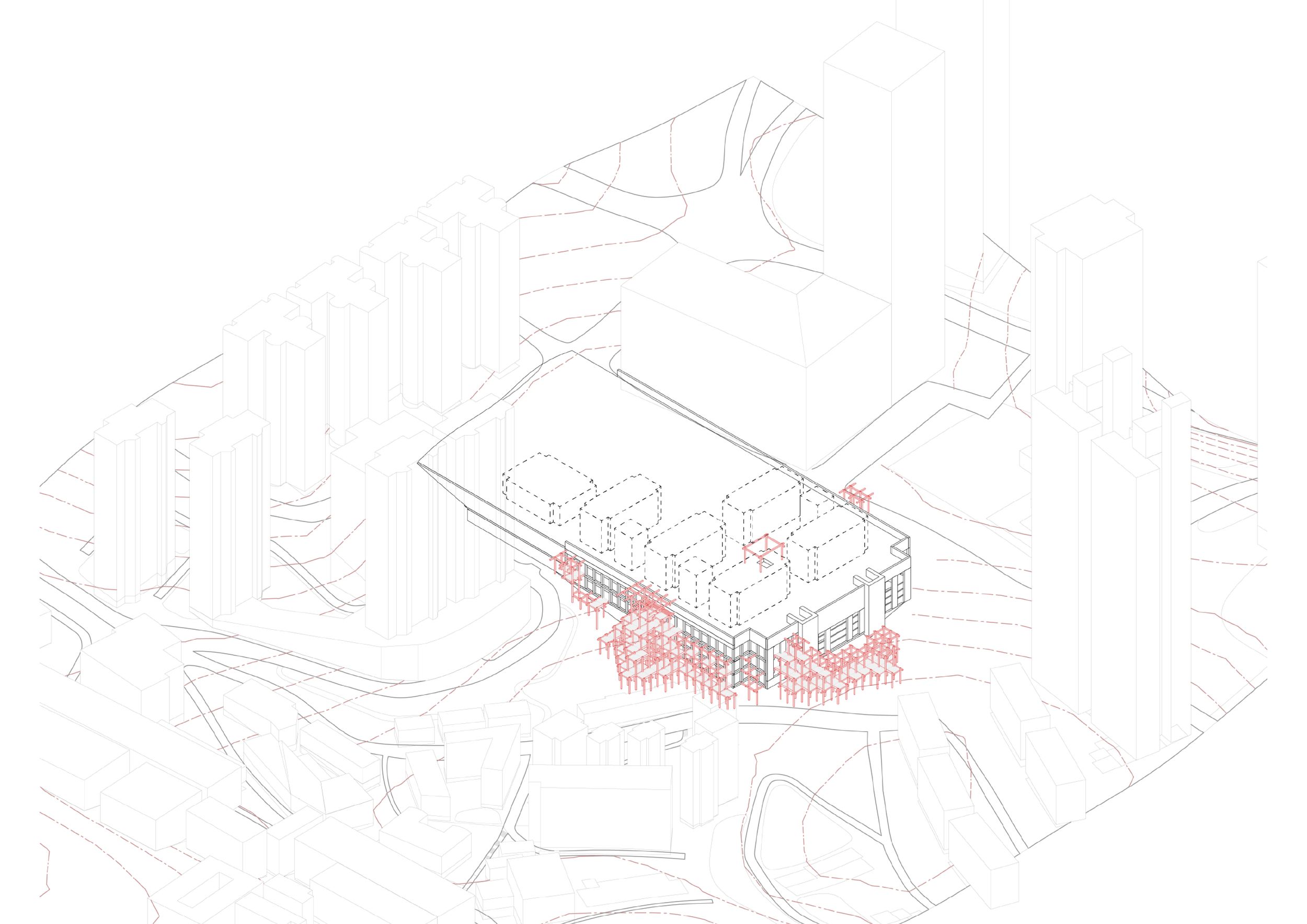
Hung Village - Jiangbei The chosen site is an existing school building with a parking garage beneath it. The building is massive and positioned on the edge of a hill, currently interrupting neighbourhood connectivity. The redevelopment plans for the area do not sufficiently address the height differences between the higher and lower parts of the village, resulting in spatial fragmentation.
The building sits on a hill, facing a lower neighbourhood on one side and connecting to a road on the other. This condition intensifies the height differences across the site and limits opportunities for connection. The topography varies significantly, with a maximum height difference of 25 meters, presenting a considerable design challenge.
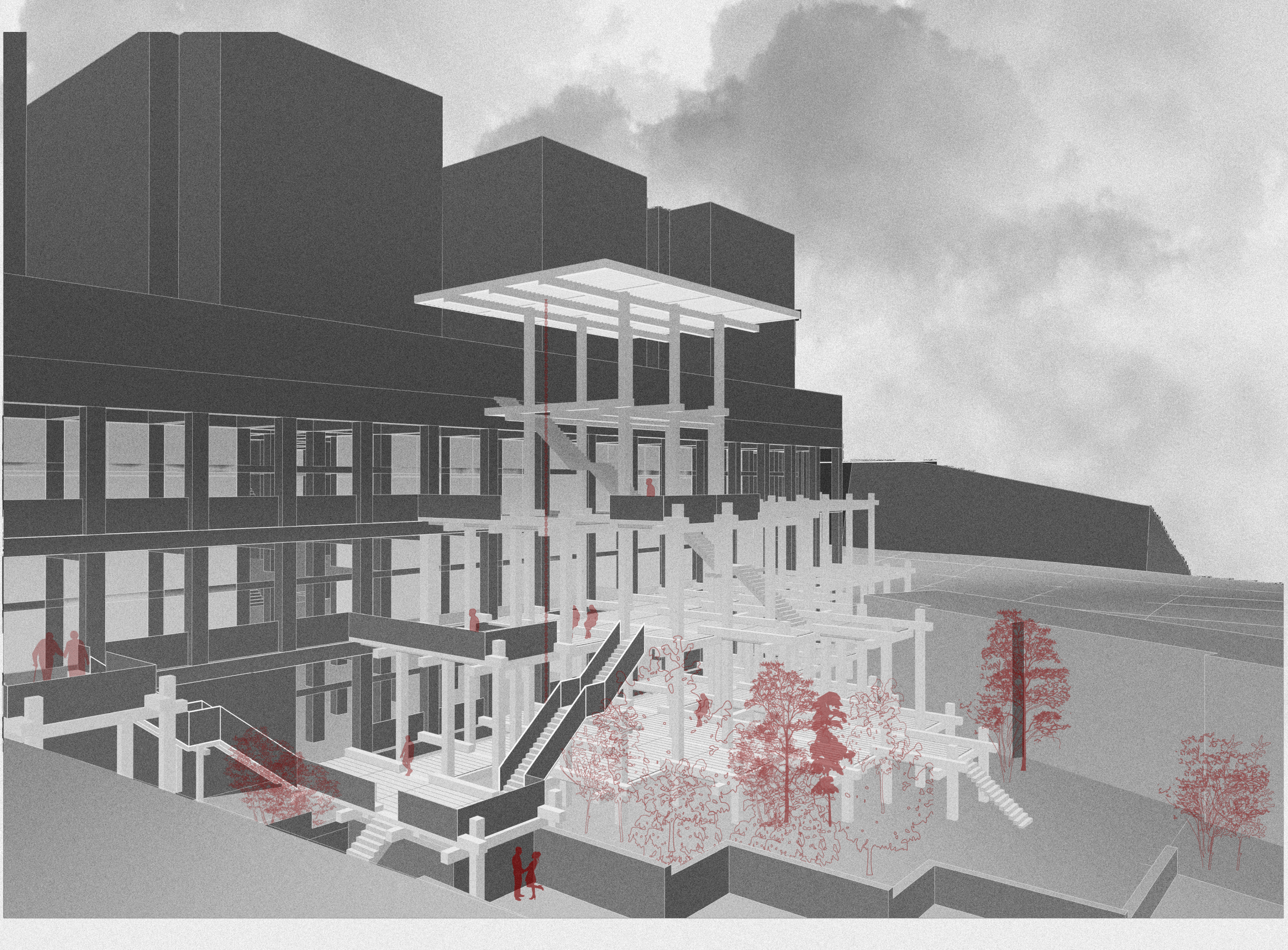
Despite ongoing development, the area still contains patches of nature, although limited. Preserving these green spaces is one of the project’s key aims. Rather than introducing new buildings that would reduce the natural landscape, the design focuses on reusing and transforming the existing structure. The project investigates how a building that currently hinders connectivity can be reimagined as a connective node that links different elevations and parts of the neighbourhood.
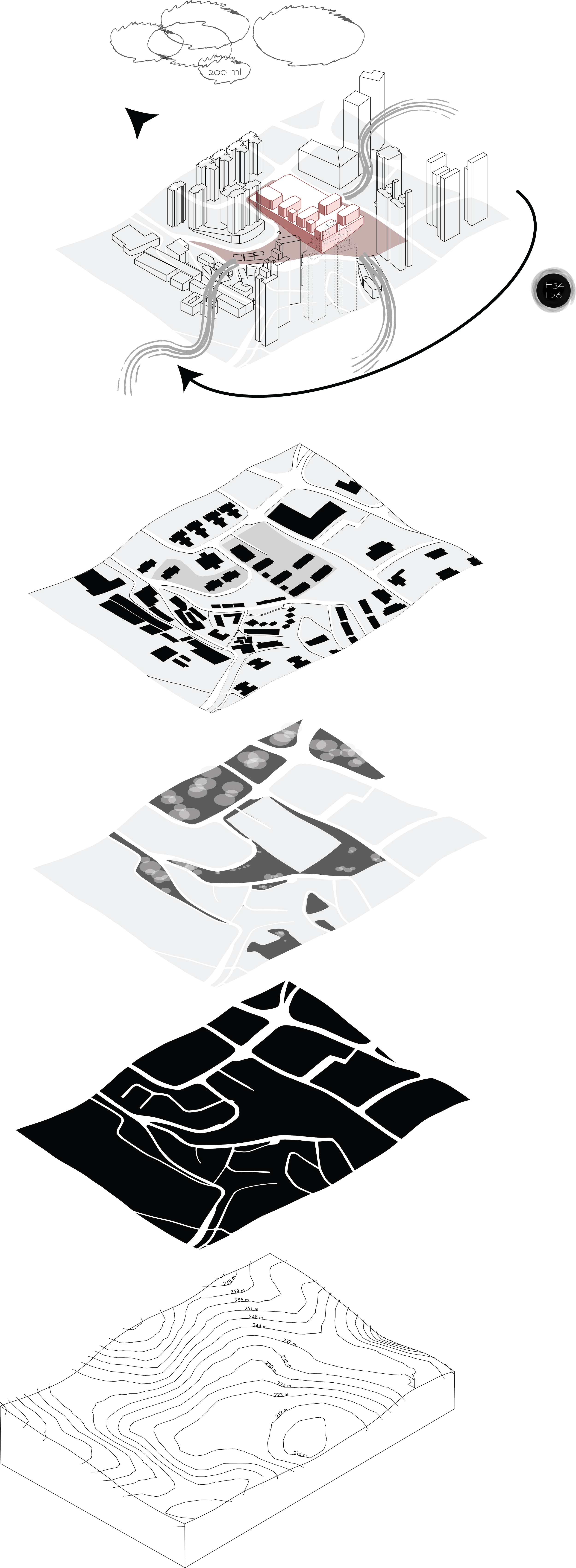
Existing building
Density
Nature
Connectivity
Topography
Interventions
In order to address the massiveness of the existing building and connect the surrounding neighbourhoods through the building, there is a need for intervention in the building and for breaking it open in the following aspects.
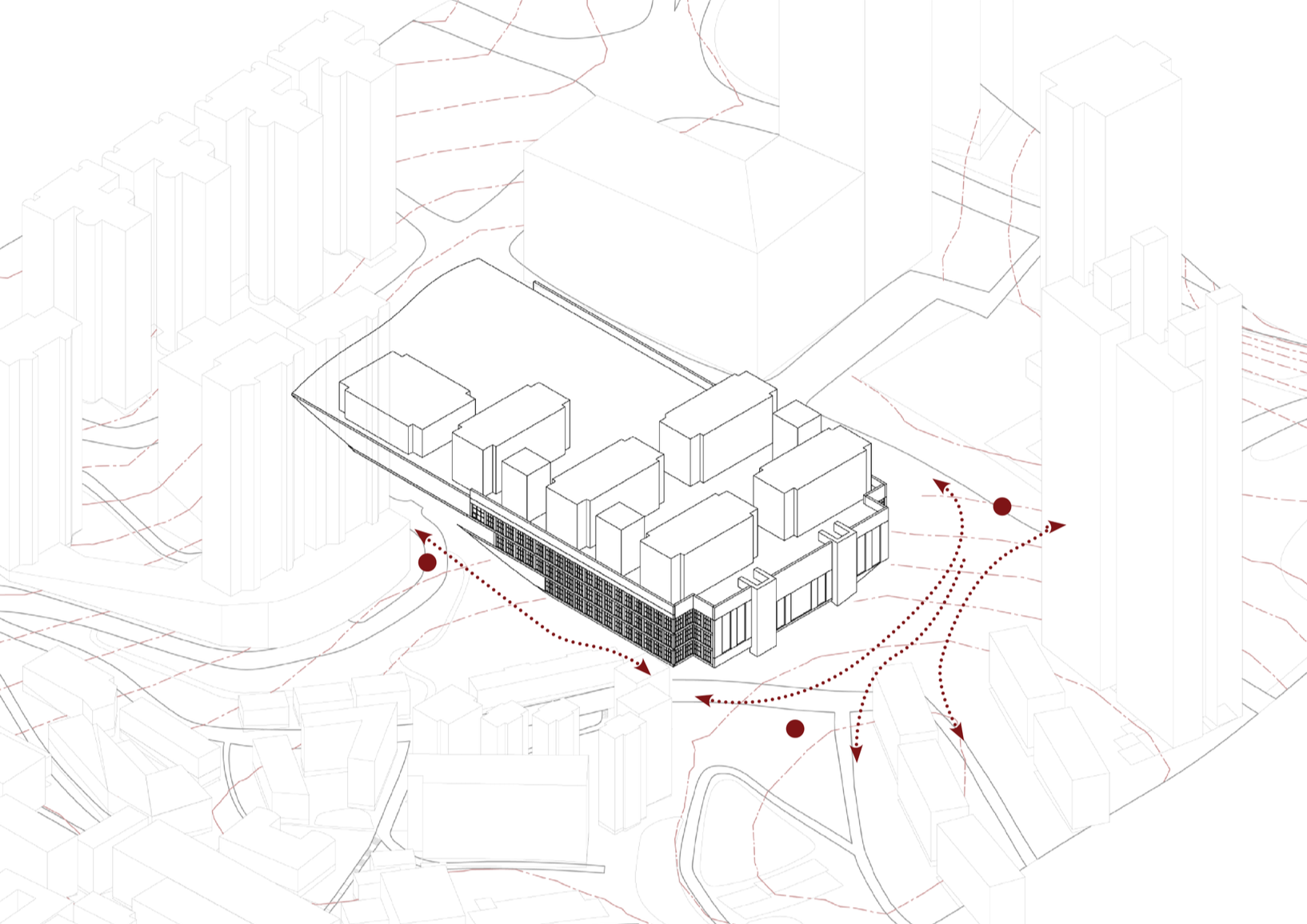
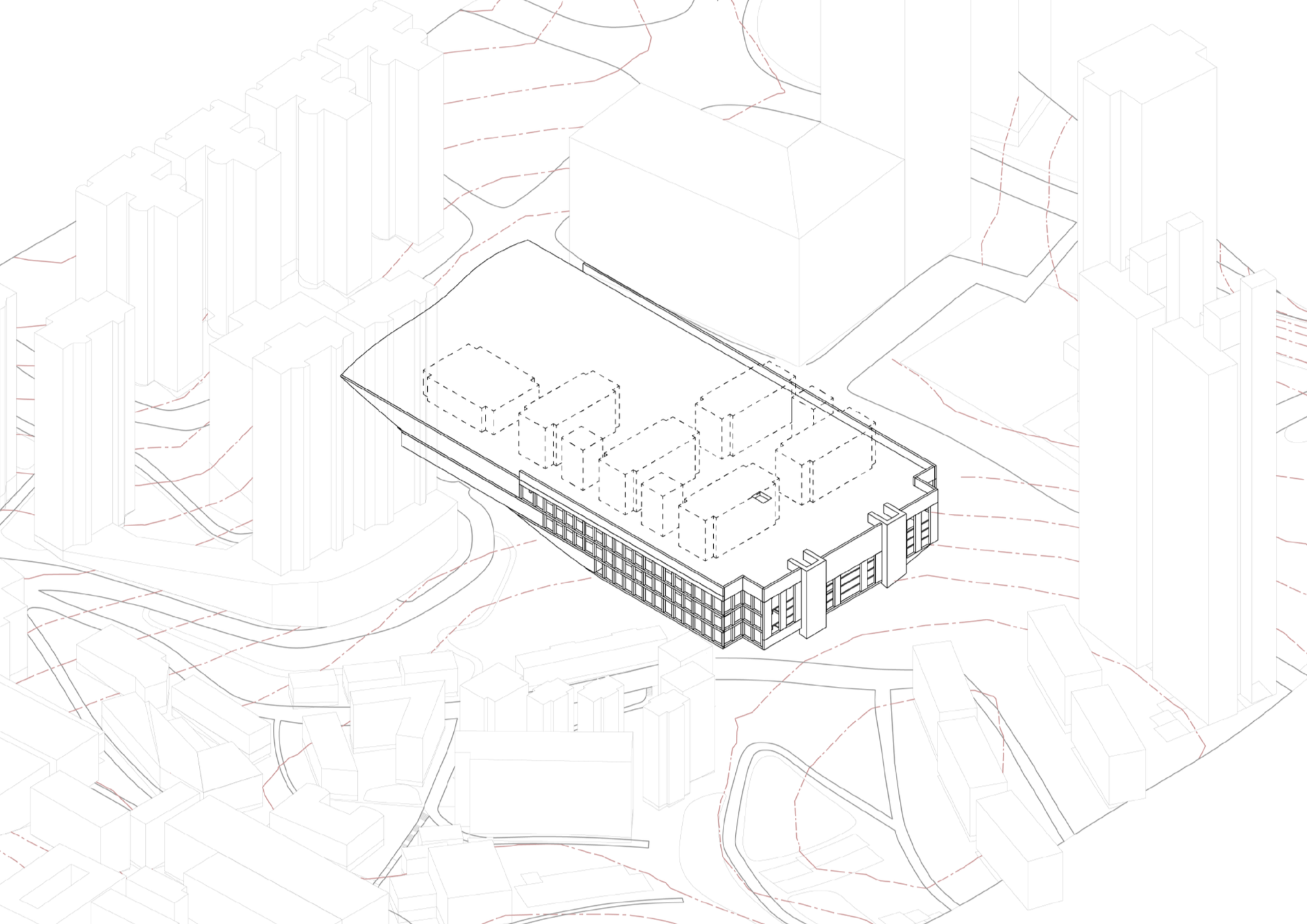
The building blocking connectivity.Using the parking garage beneath the school to extend and connect the existing city infrastructure.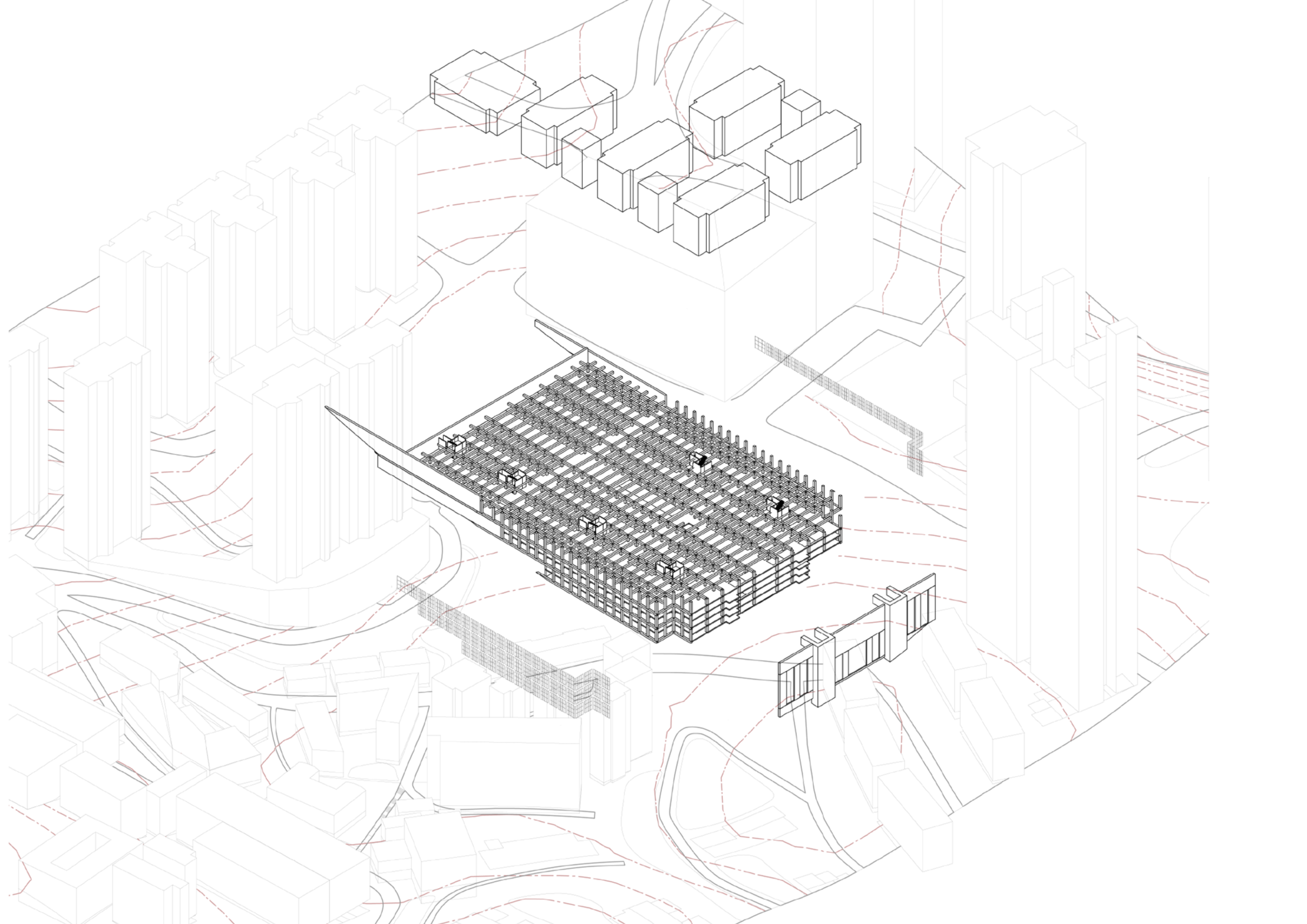
Dissecting the façade and opening it up to create entries, improve sightlines, and admit sunlight into the parking garage.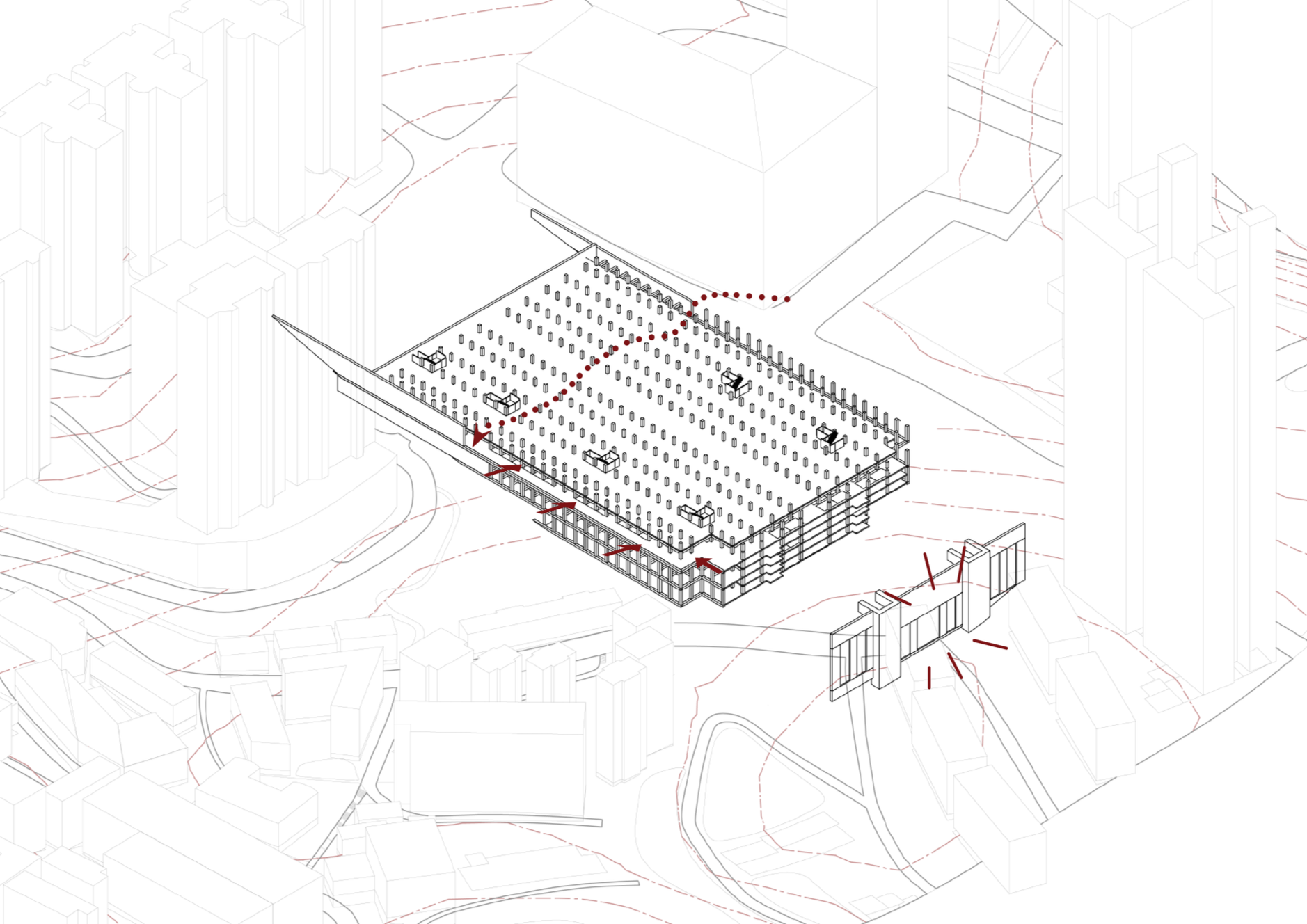
With an open façade, creating horizontal connections from one side of the existing building to the other. Opening up the front façade for connectivity, sunlight, and sightlines.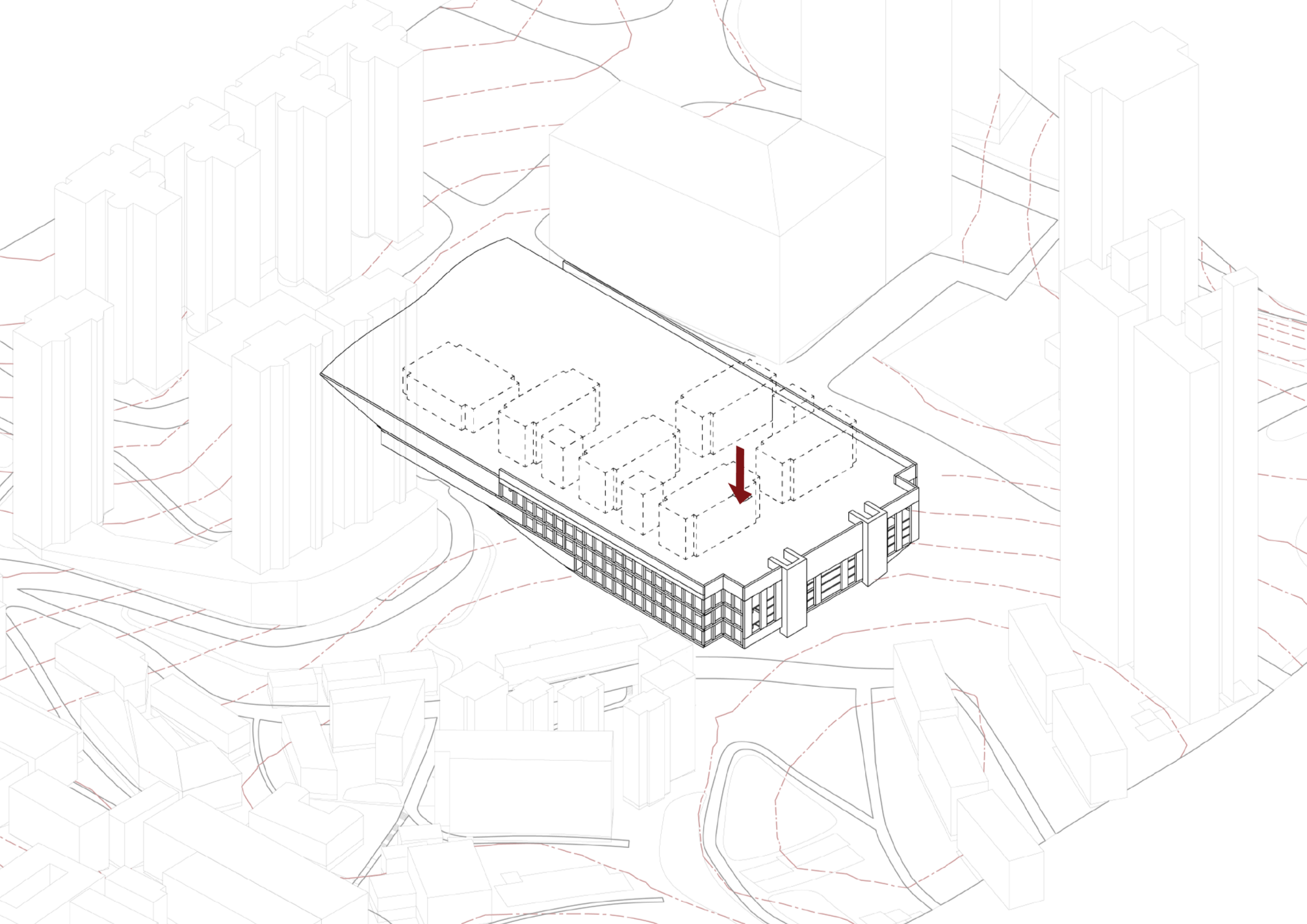
Besides horizontal connections, creating vertical connections that link the parking garage roof, and thus the school plaza, with the horizontal infrastructure below. Establishing both vertical and horizontal circulation throughout the building.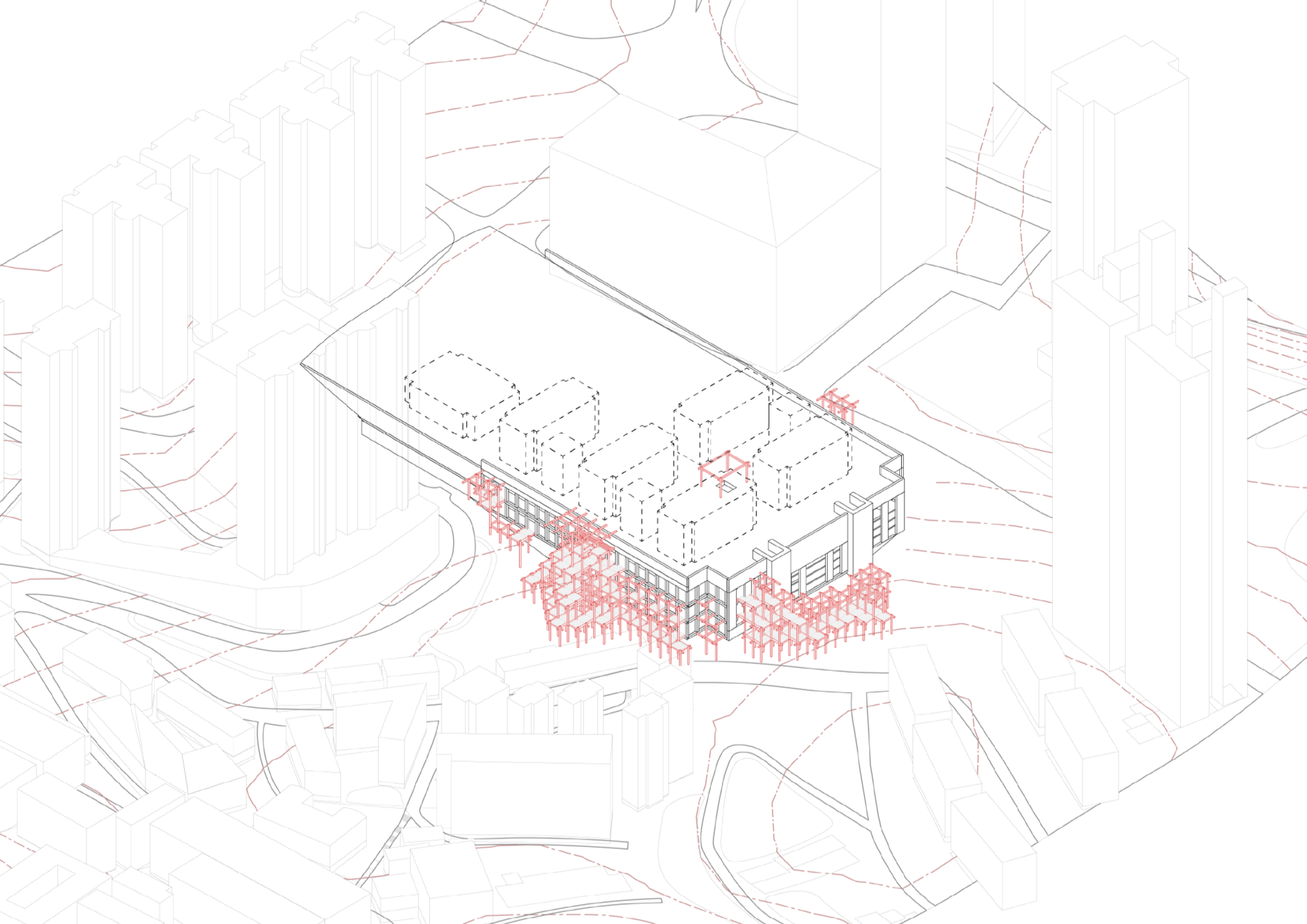
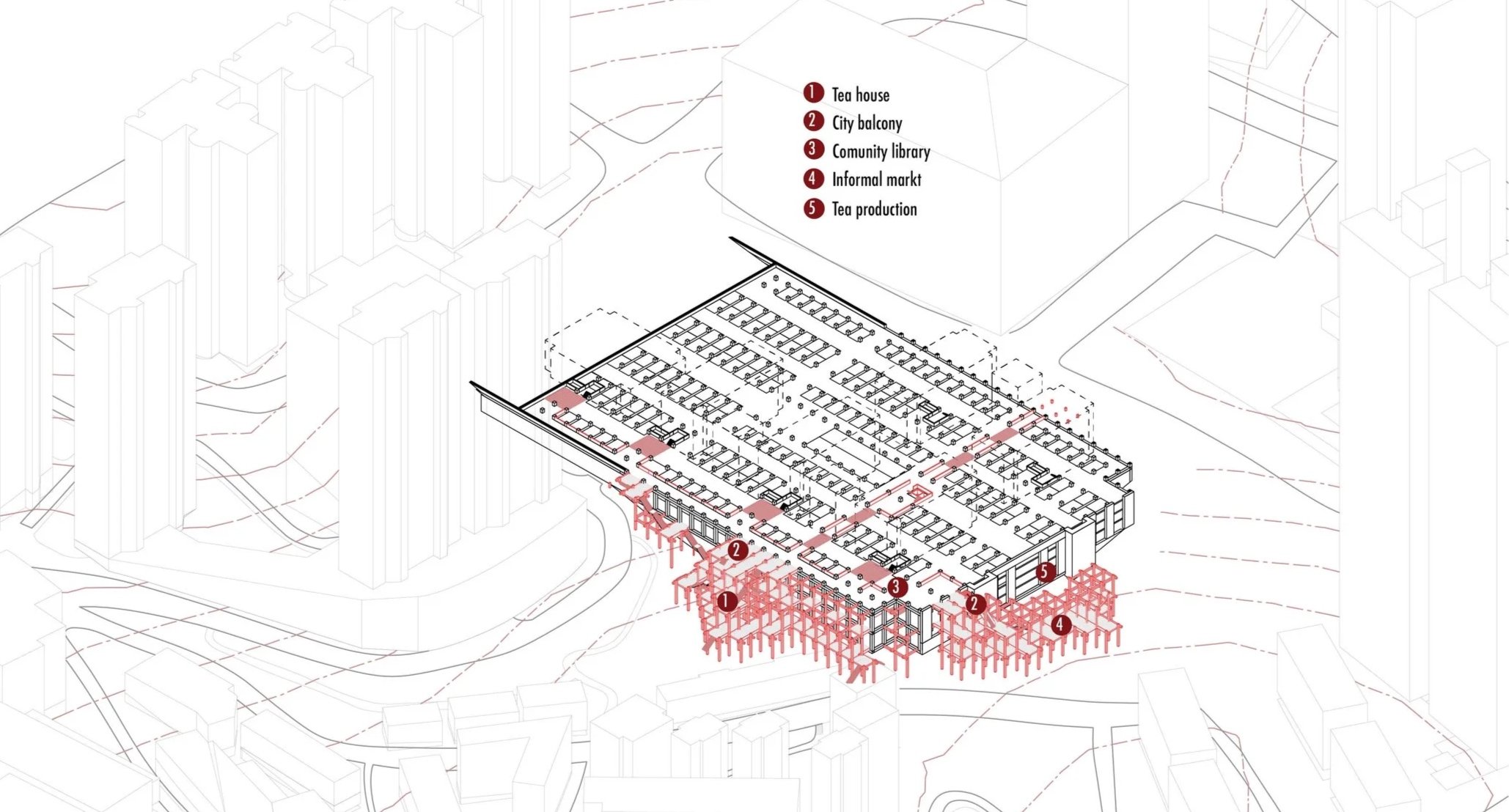
With a parasitic structure running through the parking garage and thus connecting all sides of the building horizontally and vertically, moments are created where program can take place. The structure expands and contracts.Construction
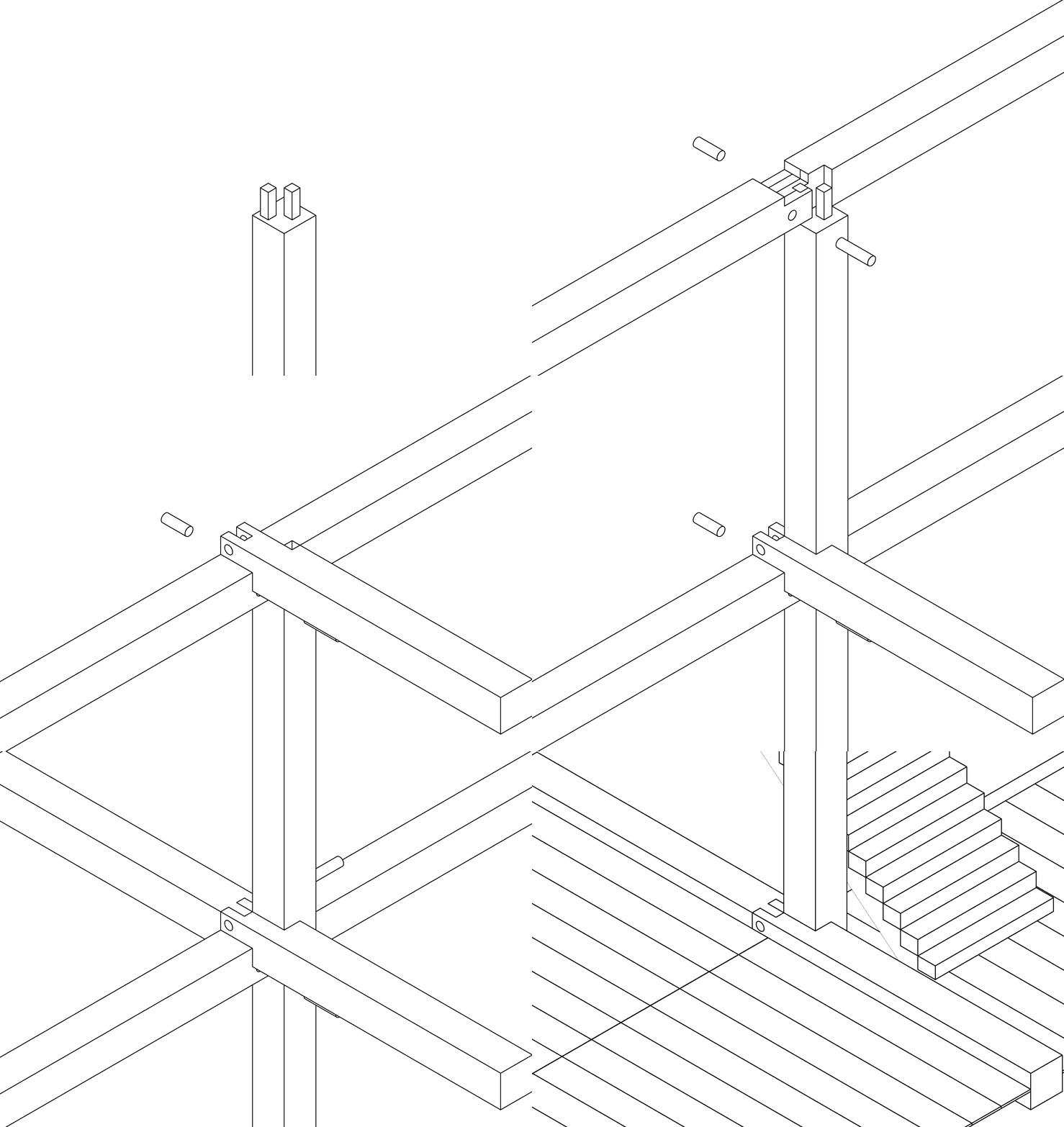
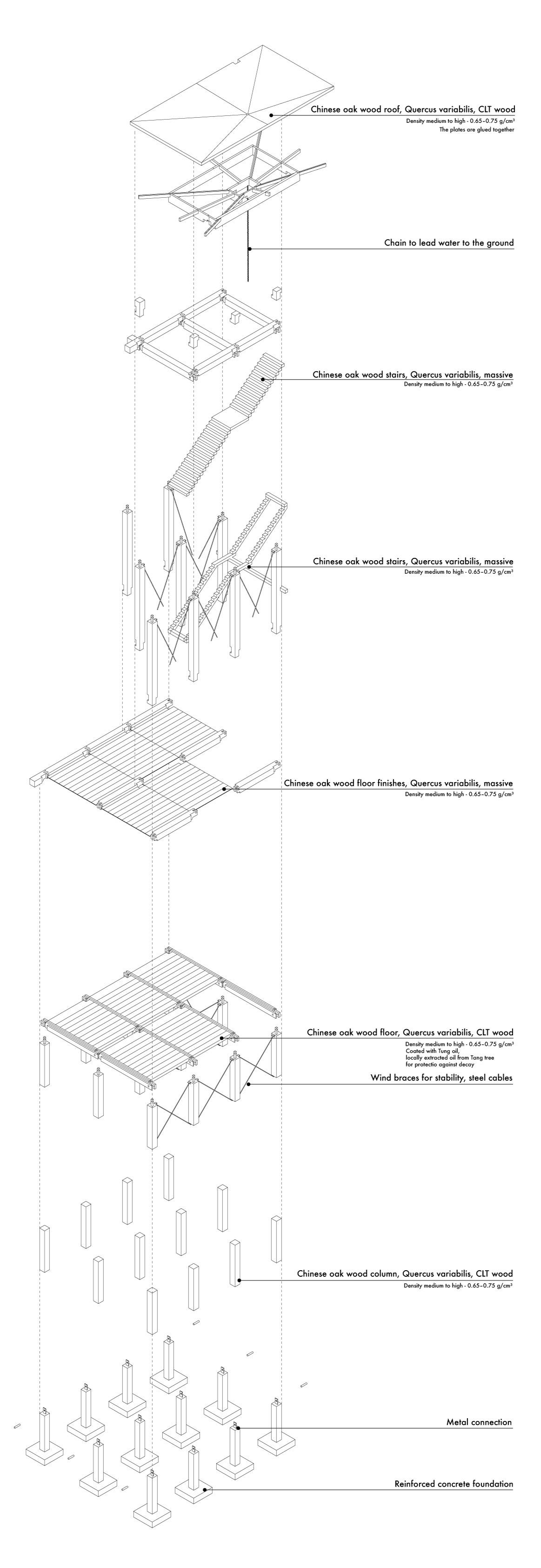
For a parasitic structure that moves through the existing building and can increase or decrease over time, a modular construction system is required that is easy to assemble, expand, and dismantle when it needs to change. Wood is proposed as the primary material, as it can be locally sourced and China has extensive knowledge and technology in its production. It also creates a beautiful contrast with the concrete material of the existing building and supports the temporary character of the parasitic structure.
To minimize on-site production, a dry connection system is chosen, avoiding metal components. Another question was whether the construction could also be aesthetically integrated and used for seating, instead of introducing additional furniture.
Combining these aspects, structural performance, dry and aesthetic connections, and user seating, resulted in the following combination of timber joints.
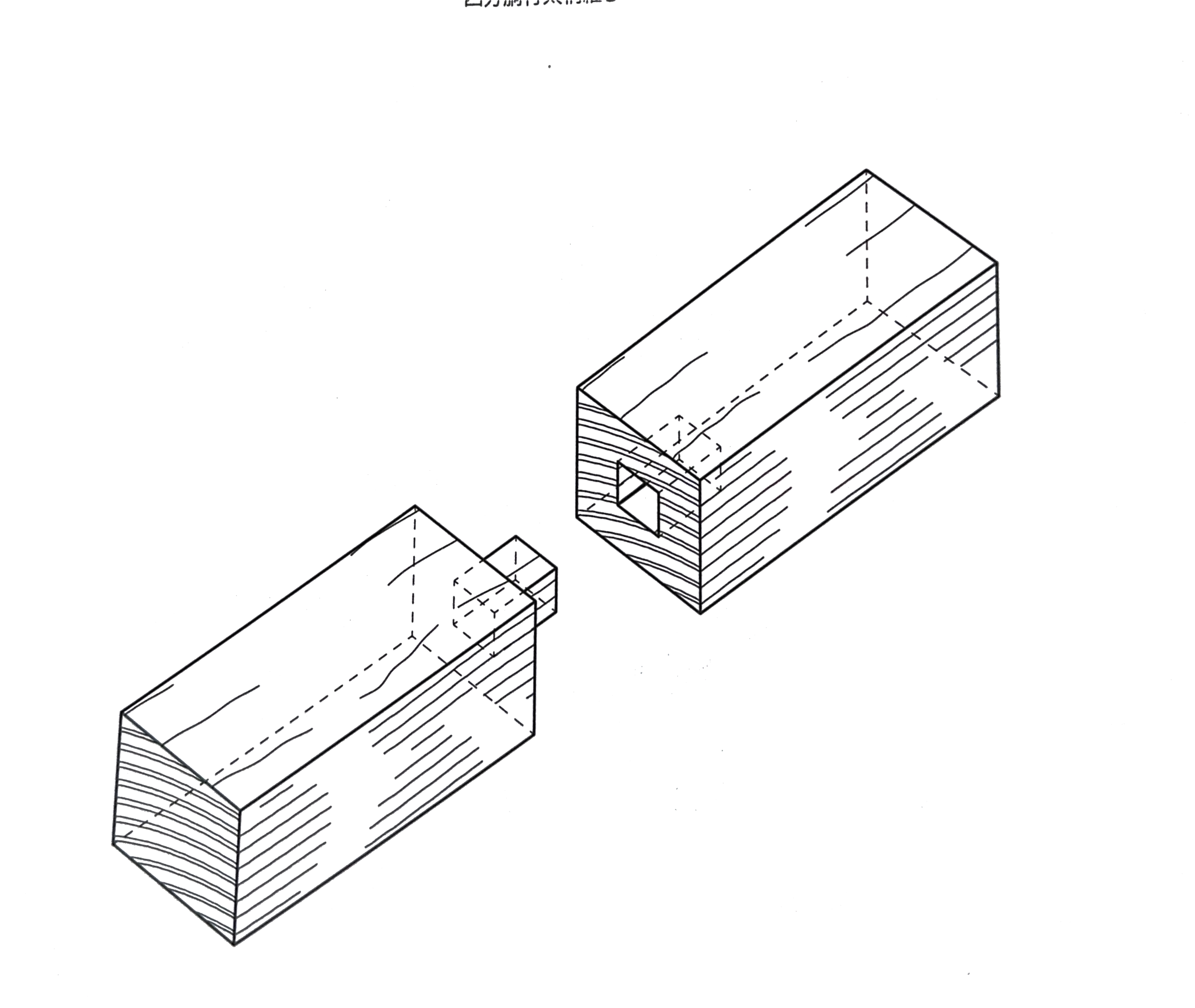
Blind square stub tenon joint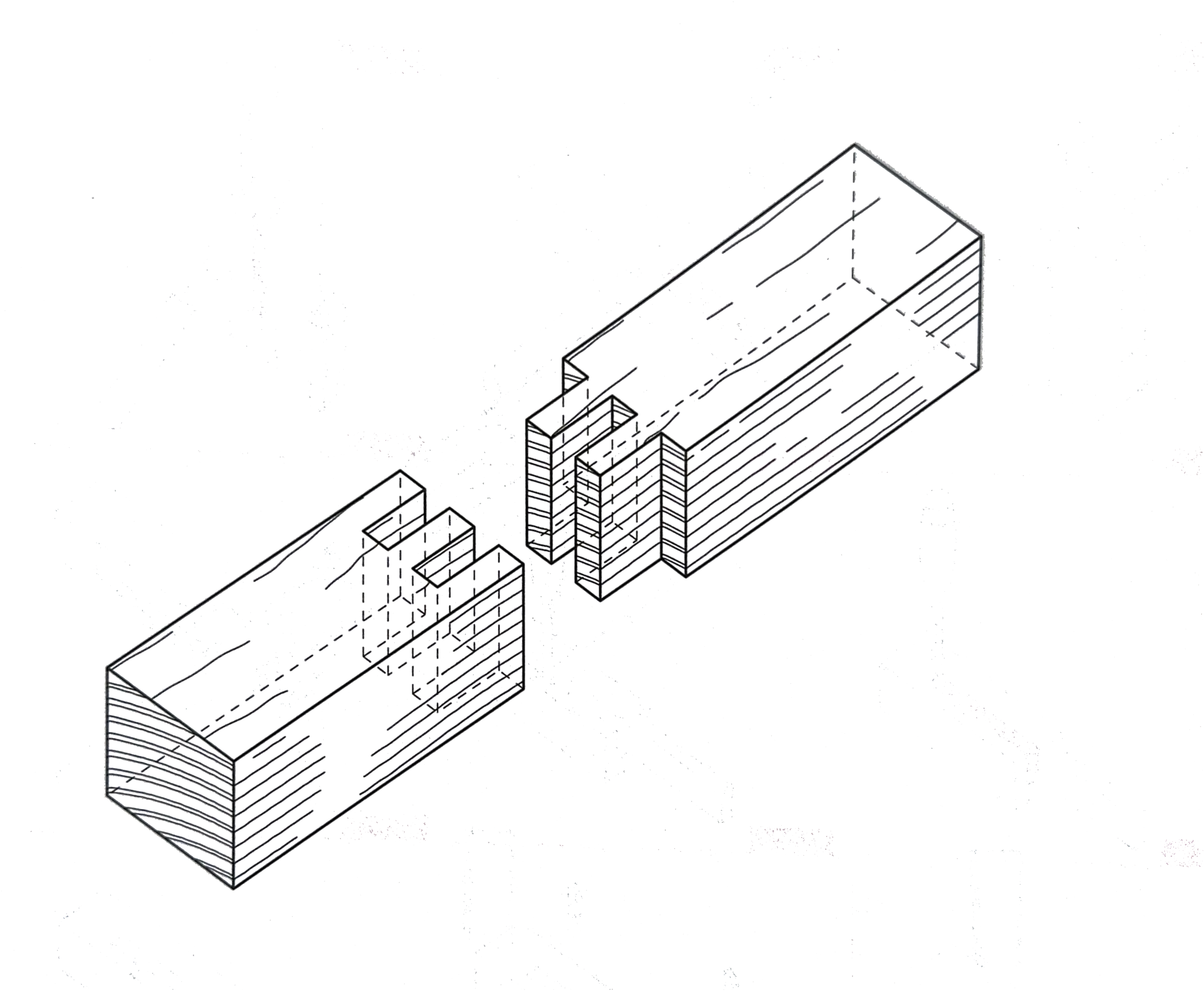
Double tenon joint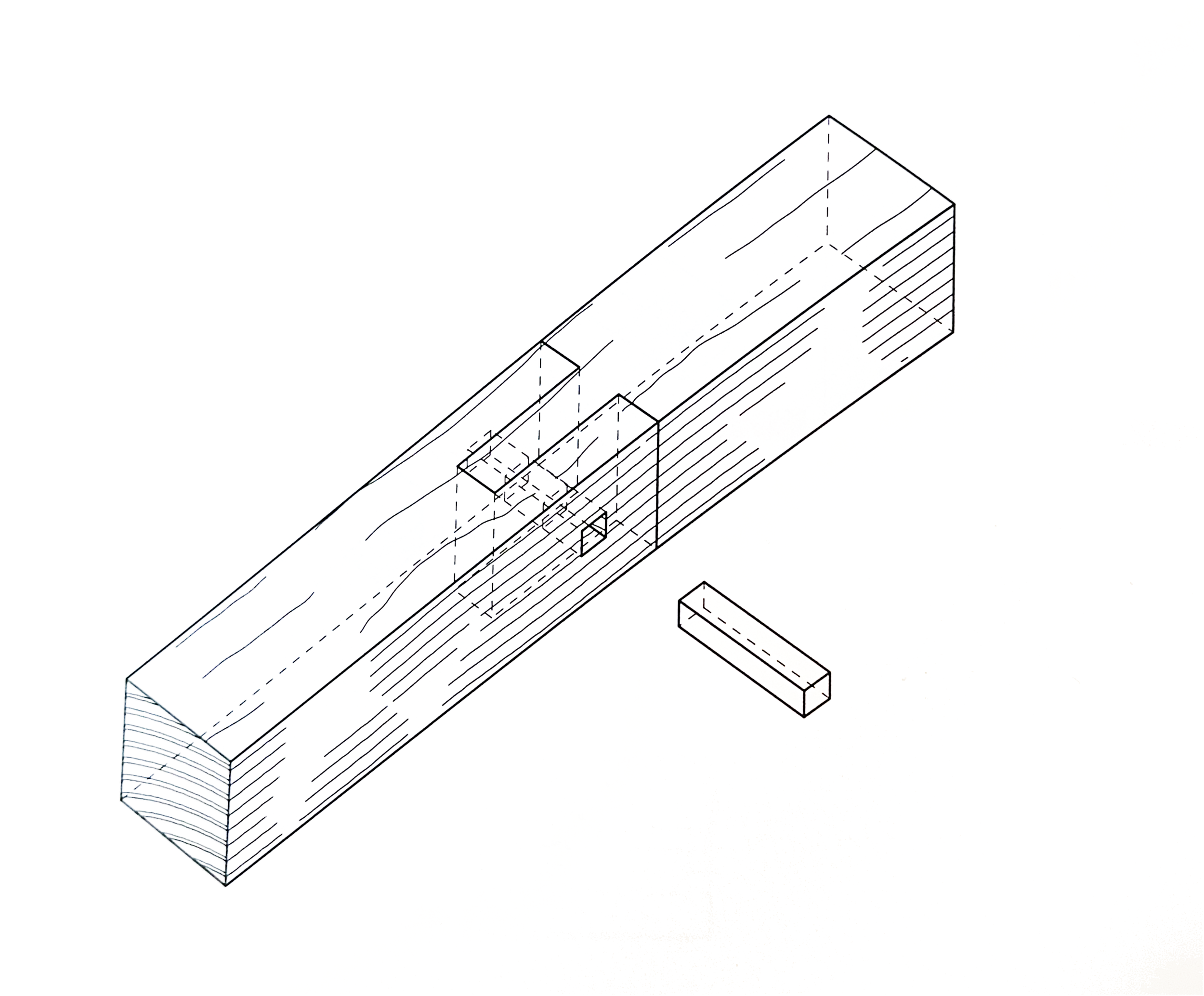
Pegged bridle jointParasite wooden structure
Extending and connecting cities' infrastructure.

Soft urban transition.

Social connectivity by social programming.

Connectivity
Using the site and the existing building, the parasite structure connects through the parking garage to the neighbourhood despite the difference in height. The parasite structure overcomes the height change and provides a gentle urban landing for users offering spaces for programming.
Program
The parasitic structure moves through the building and extends over the untouched landscape, where the environment is natural and quiet. This offers users moments to pause and relax. A tea house therefore fits the program well, as tea culture in China is strongly connected to socialising. Therefore boosting social connection between inhabitants.
The parasitic structure also creates spaces for weddings, business meetings, and gatherings of friends and family. These moments can all be linked to tea rituals connected to different life events, which further supports the logic of a tea house as the core program. The project is complemented by a small tea production facility and an informal market where tea can be sold, contributing to the local economy.
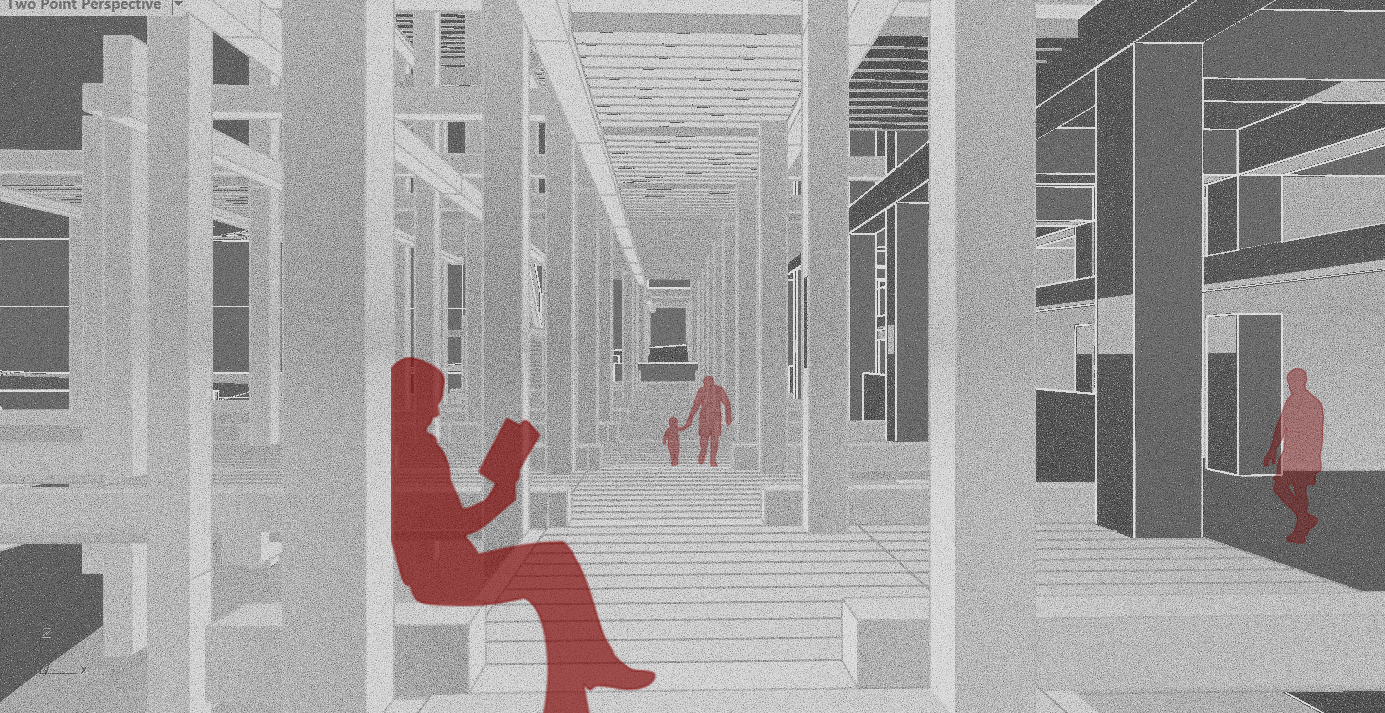
The structure offers view lines that allow for a city balcony overlooking the surroundings. The program also includes a community library , a public space where people can leave books for others and read.
Tea production
To keep production local and easy to transfer to the teahouse, production is in the same building. We are reviewing the tea production process and keeping the entire operation nearby.
Growing in the fields of China.
Withering or drying out to soften the leaves and remove the water.
Fixing the eaves by heating them to stop oxidation.
Oxidising the leaves by letting them to wither again.

Bruising causes the leaves to oxidize.

Drying the leaves to leave residual moisture.

Tea serving
On special occasions, the serving of tea is accompanied by ritual. In Chinese culture, these rituals are associated with blessings for marriages, friendships, family gatherings, and business relations. For this reason, the tea house is designed around the tea ritual, creating spaces that support such occasions. A central tea bar is included where the ritual can take place and be shared.
The tea house offers private rooms that can be closed for intimate events such as family gatherings or business meetings. These spaces can also be opened and combined to accommodate larger occasions, such as celebrations and weddings.
Located within nature and shaped by the parasitic structure, the design allows existing trees and landscape to remain and become part of the interior experience. Rather than bringing nature inside, the project moves around it and embraces it. This approach creates a quiet atmosphere where visitors can pause and relax.
Heat the water till it’s boiling.
Warm the teaware so the cups are warm and the tea stays hot.
Add the leaves in the pot
Rinse the leaves in the pot for 15 seconds to wake them up.
Infuse the tea by pouring hot water over the leaves and steeping for the appropriate time, depending on the tea type.
Pour the tea in cups and serve it.
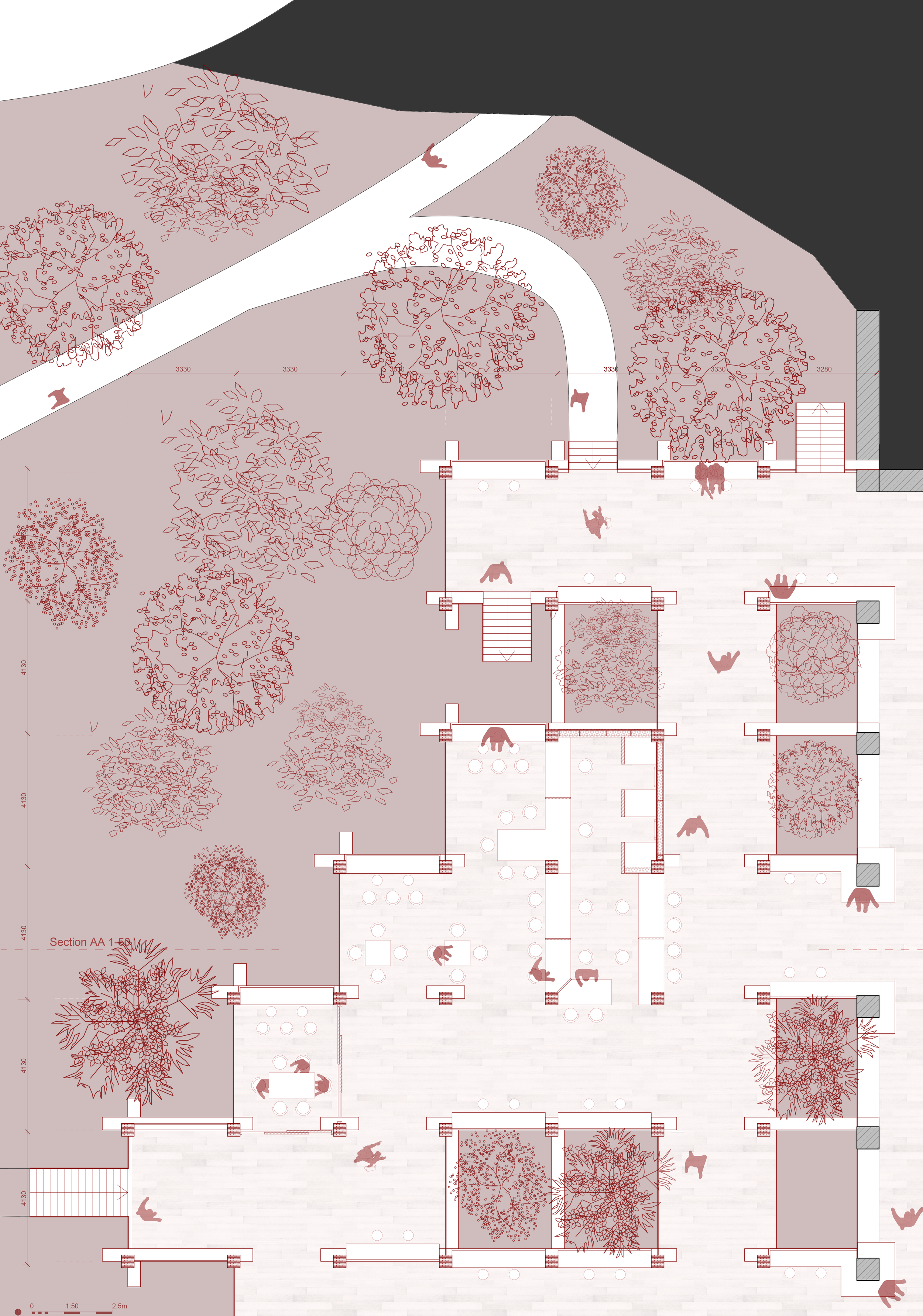
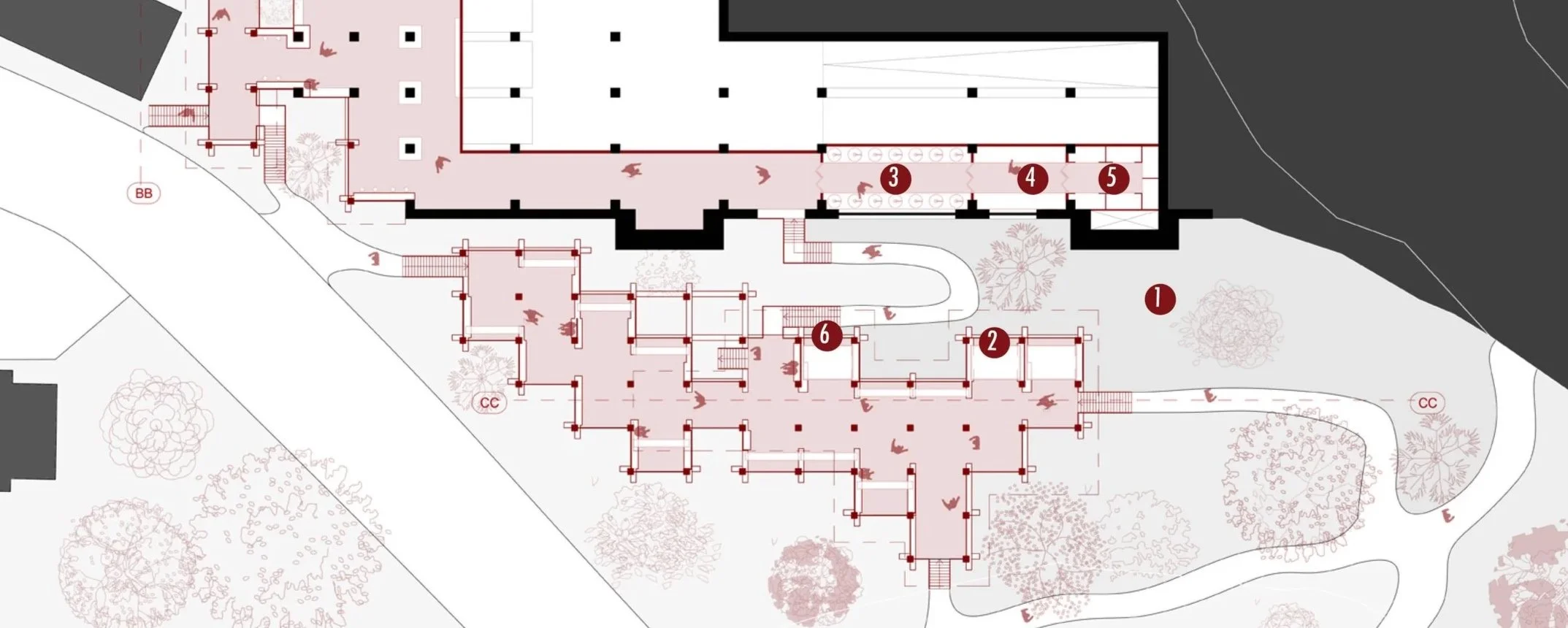
Tea house on first floor -2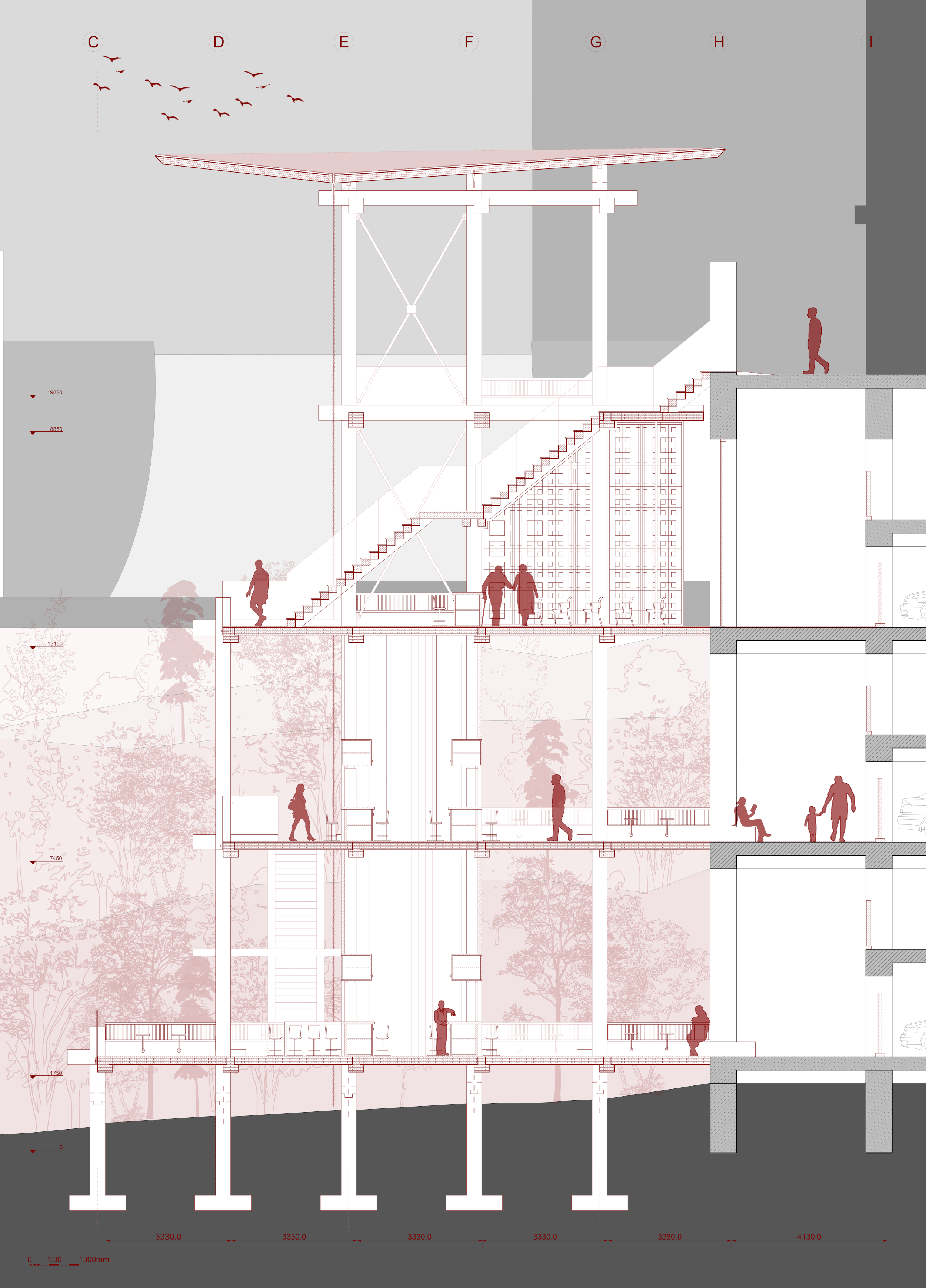
Tea house fragment showing the tea house on floor -2, connected to the parking level. The first part of the parking is opened to a double-height space to create a softer transition from the parking area to the new structure. This also makes the space more generous and usable, allowing visitors to walk through and occupy it comfortably.
Floors
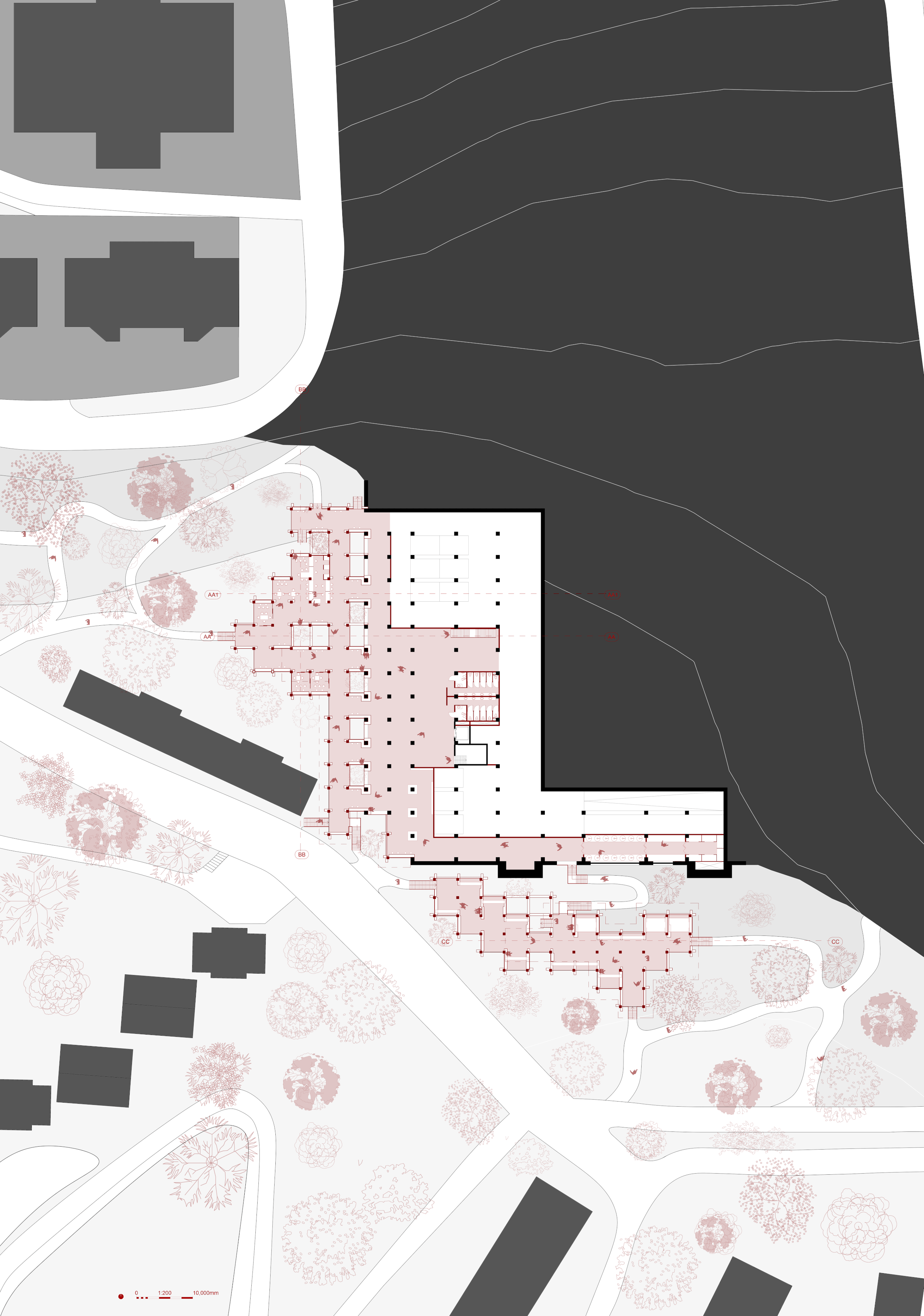
Floor -2
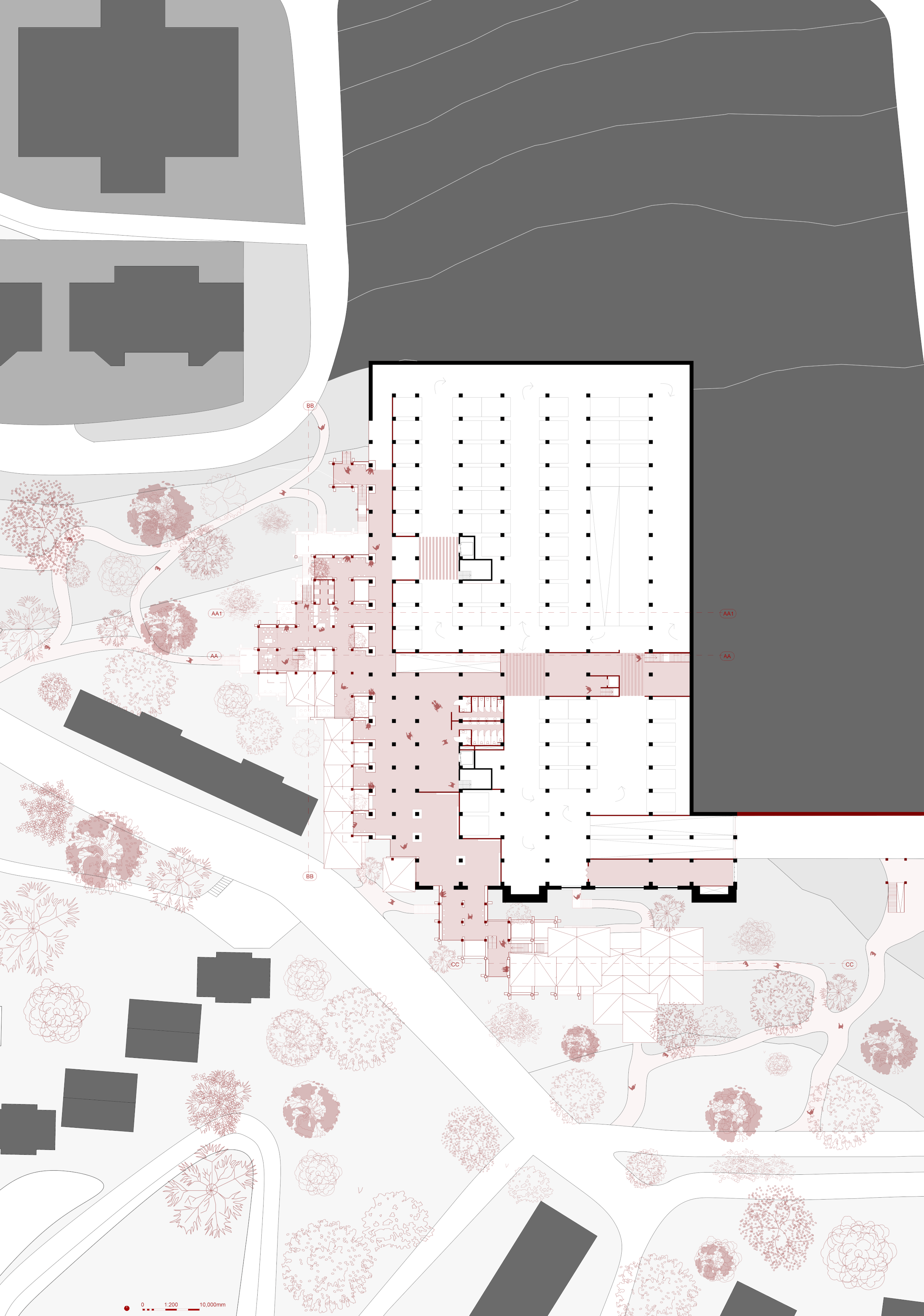
Floor -1
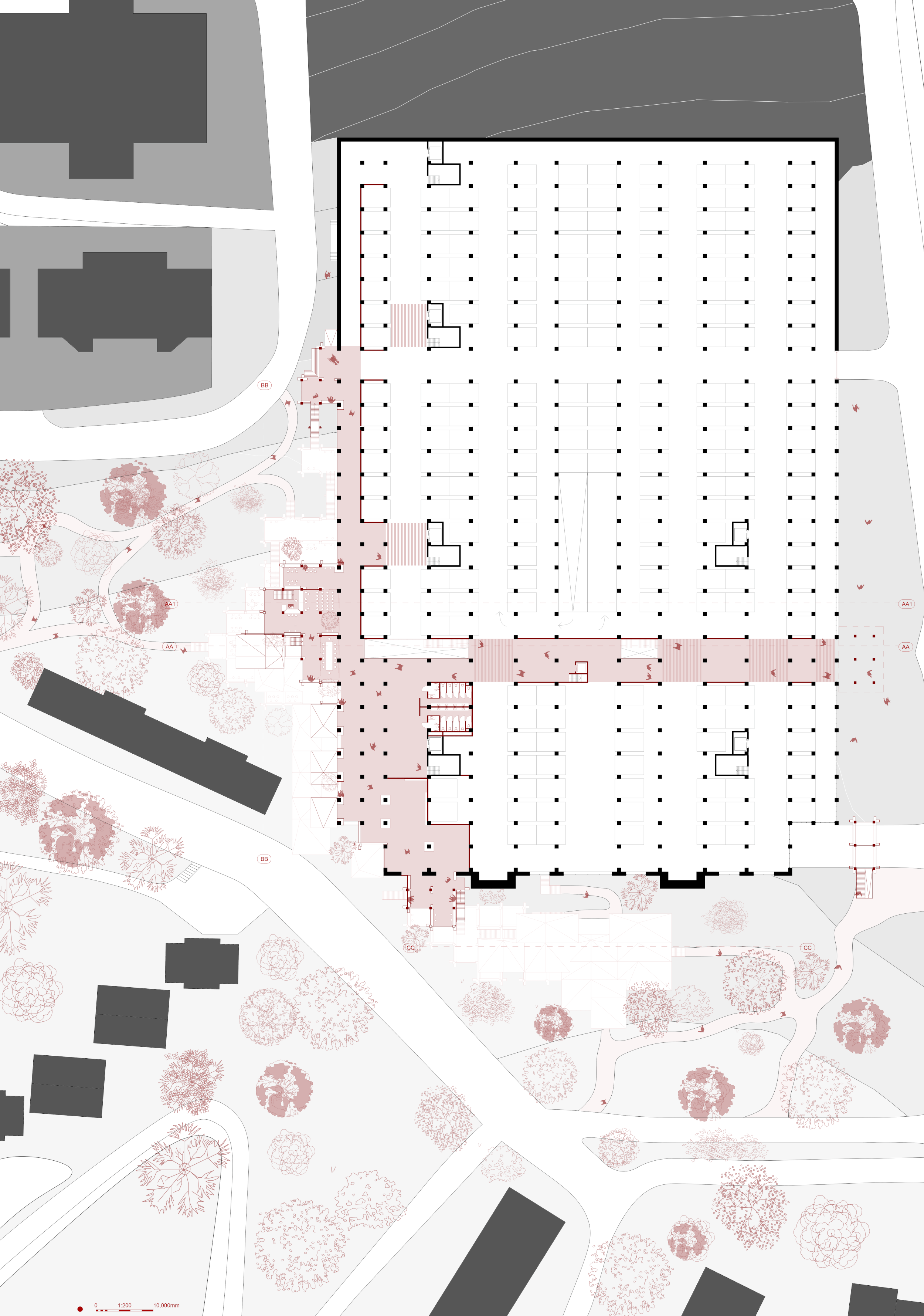
Floor 0
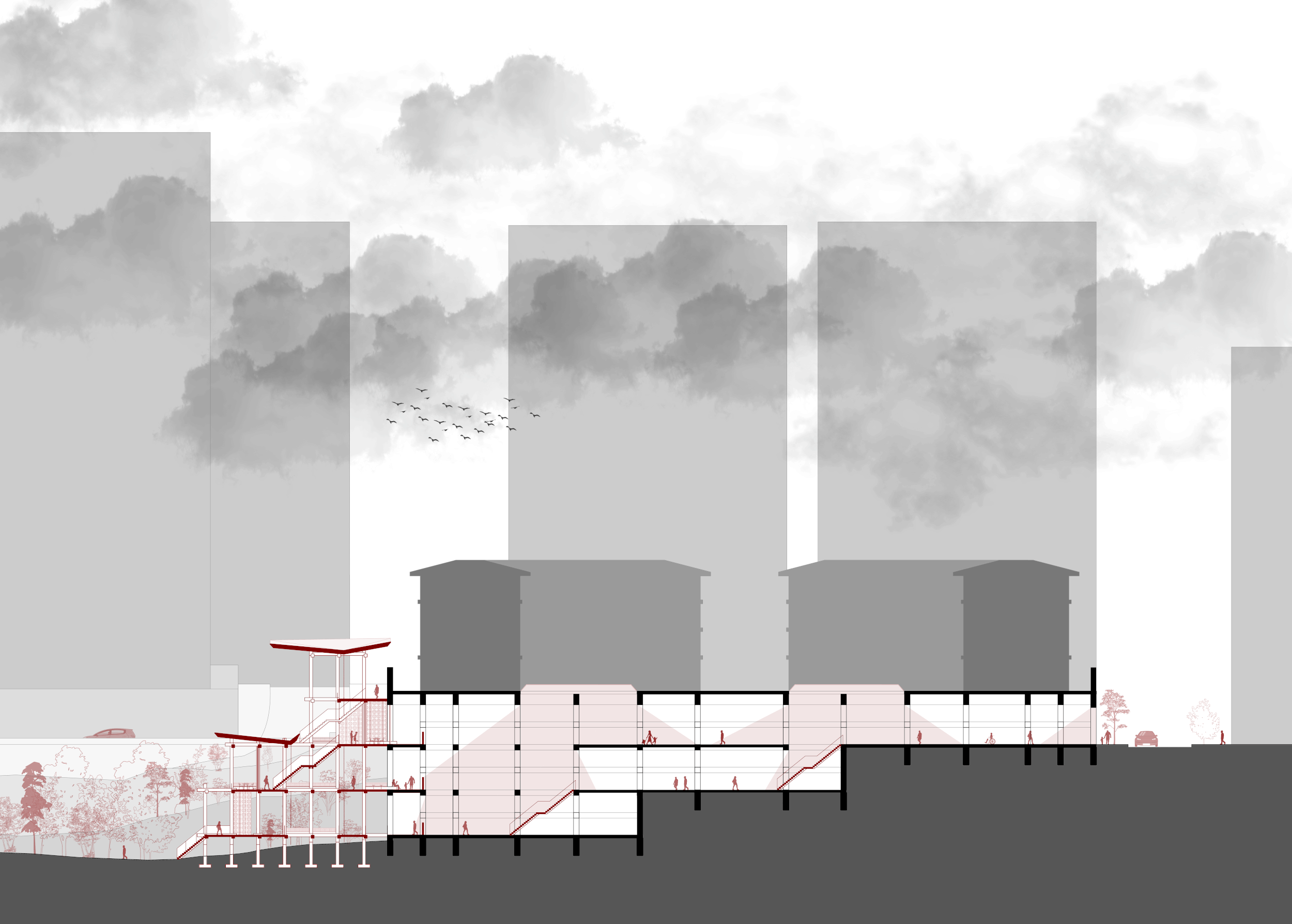
Section AA
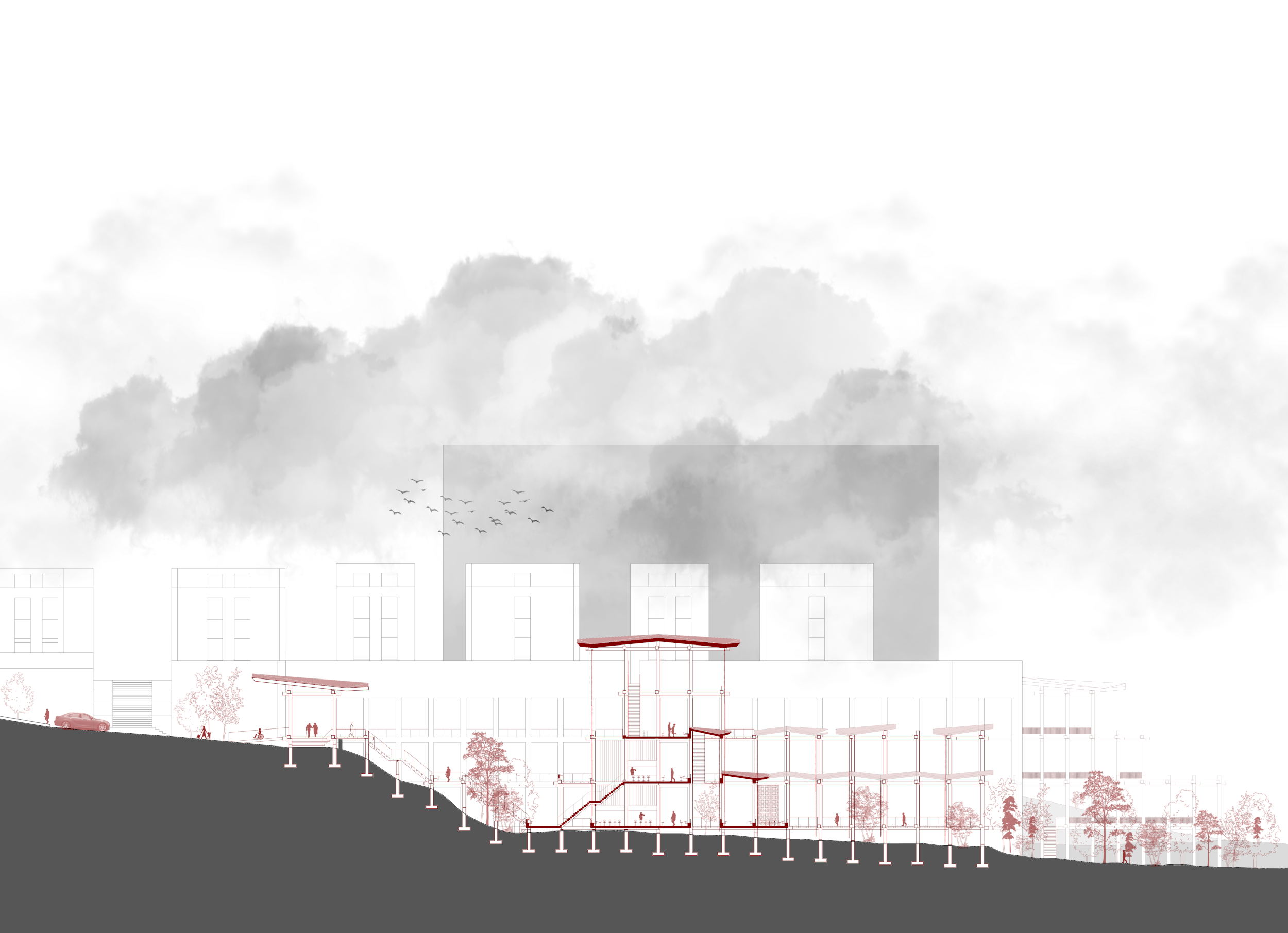
Section BB
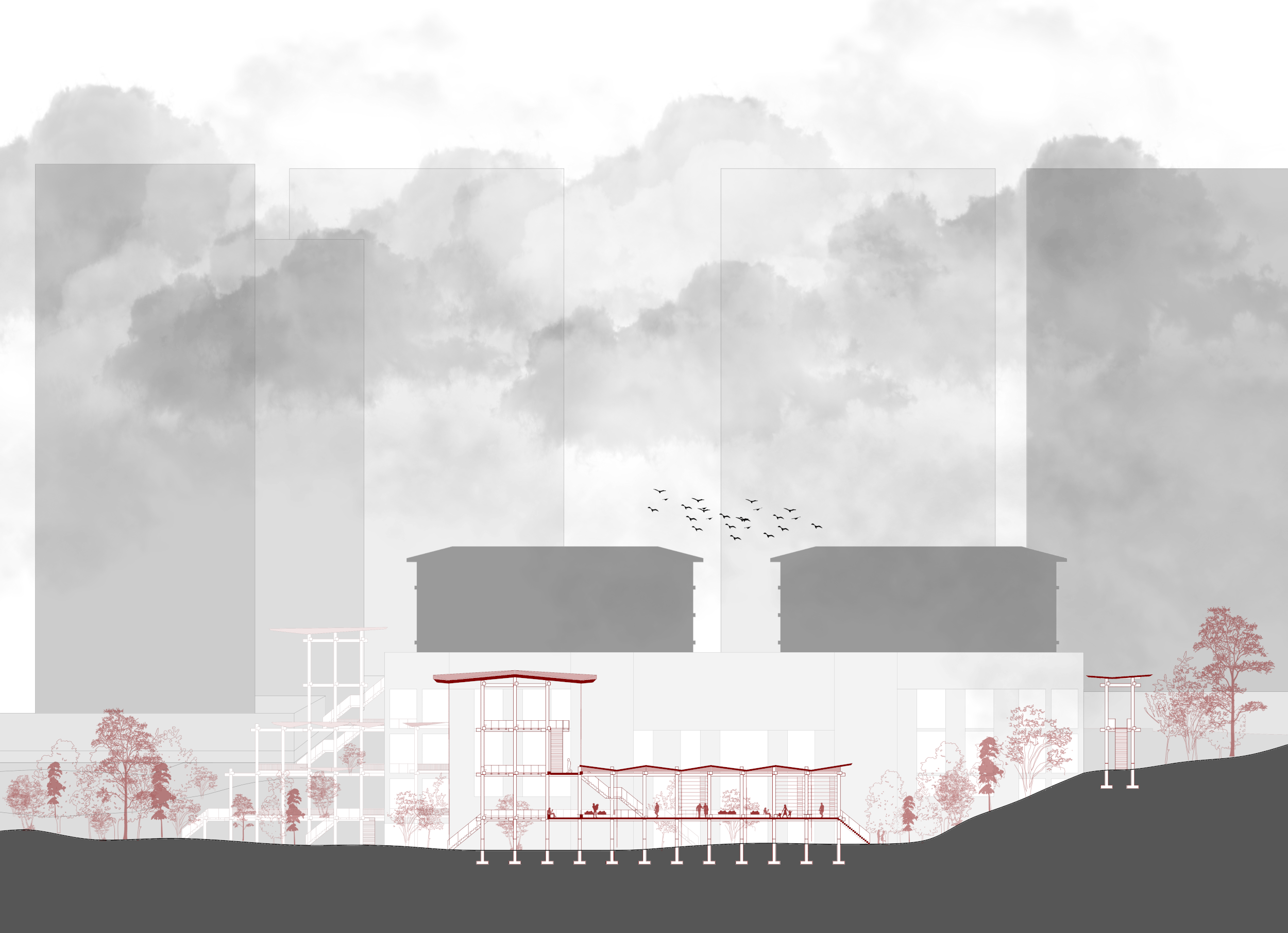
Section CC
Modular element
Environmental solution
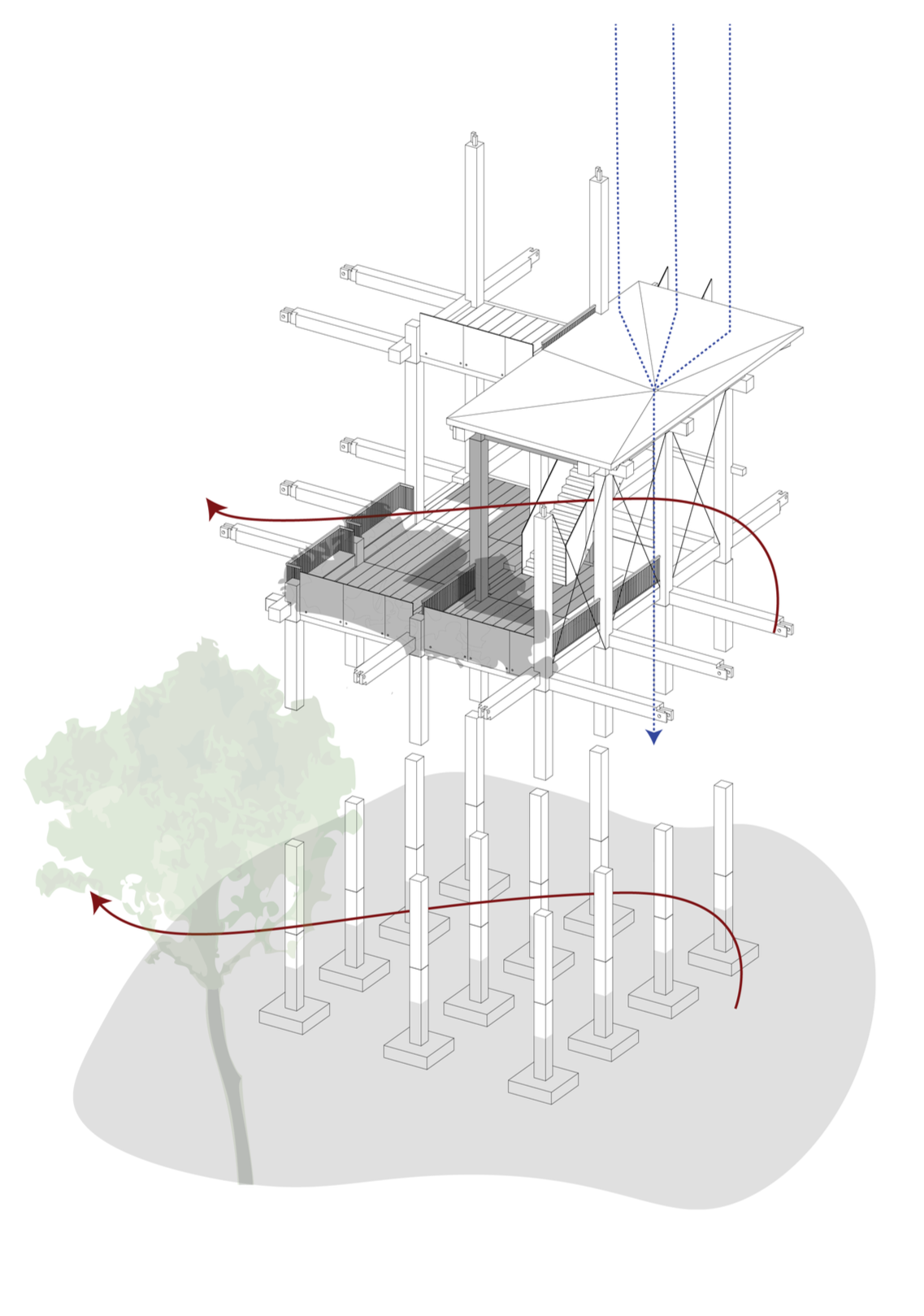
Besides the structure being made of wood with dry connections, which is environmentally beneficial, the foundation is concrete, preventing the timber from decaying over time. Metal braces are selectively introduced for additional stability, while maintaining visual openness and preserving key views rather than fully enclosing certain areas.
The structure is lifted from the ground, allowing wind to pass beneath it and cool the spaces. Trees are used for shading and additional cooling as well. The roof is sloped to collect rainwater, which is guided to the ground through chains, creating both a functional system and an aesthetically calming effect.